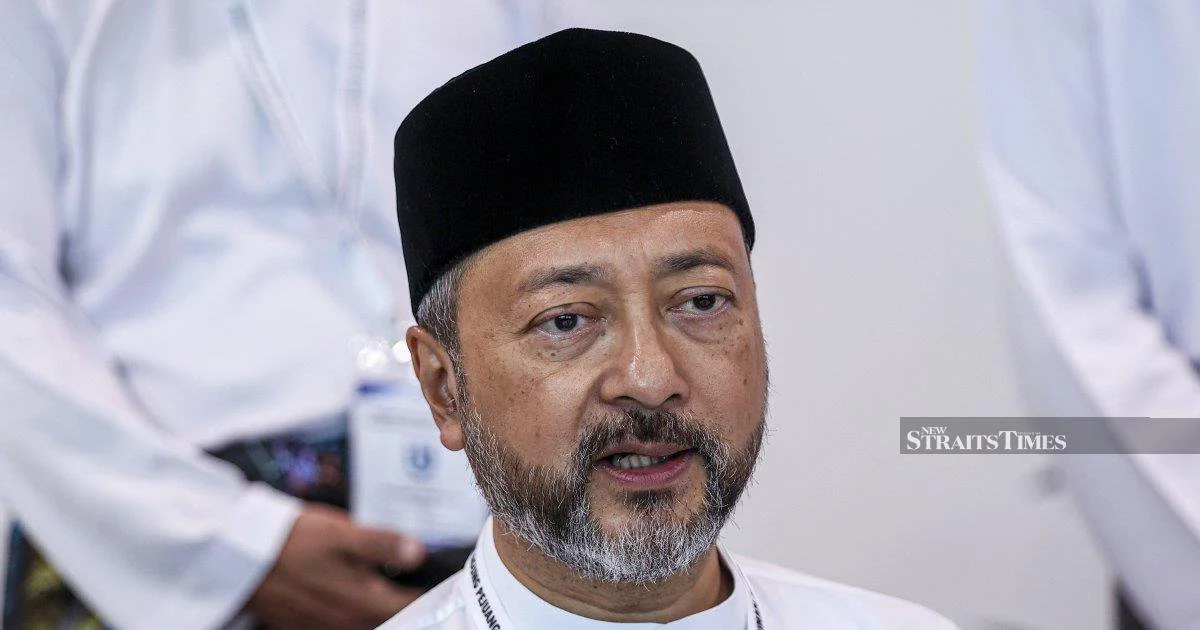
Parti Pejuang Tanah Air's (Pejuang) formal entry into the Perikatan Nasional (PN) coalition signals the beginning of a more expansive campaign to bring disparate political actors together and confront pressing governance challenges across Malaysia. The development, announced by party president Datuk Seri Mukhriz Mahathir, underscores growing momentum behind alternative political groupings as the country navigates economic pressures, institutional reform debates, and shifting electoral dynamics in the post-2022 political landscape.
Mukhriz framed the admission as a strategic move extending beyond mere party arithmetic. The Pejuang leader characterized the consolidation as integral to constructing a unified response to multifaceted national problems that require coordinated policy positions and broader parliamentary consensus. This positioning reflects how contemporary Malaysian politics increasingly emphasises coalition-building and ideological alignment rather than narrower transactional mergers between political entities.
The timing of Pejuang's PN entry arrives amid broader realignment efforts within the opposition bloc. Since the 2022 general election, various non-government coalitions have jostled for political relevance and electoral viability. Pejuang's historical trajectory—founded in 2020 by Mahathir following his departure from Bersatu—had positioned the party as an independent operator capable of acting as kingmaker in fragmented parliamentary scenarios. Integration into PN represents a strategic recalibration, prioritizing consolidated strength over the flexibility of tactical independence.
For Perikatan Nasional, the addition of Pejuang enlarges its parliamentary footprint and deepens its claims to represent a legitimate alternative governing coalition. PN has steadily accumulated members from various ethnic and ideological backgrounds since its formation in 2019, building organisational infrastructure and policy frameworks aimed at differentiating itself from the incumbent government. Pejuang's accession, bringing its parliamentary representation and institutional experience, materially strengthens these credentials.
The consolidation reflects recognition among opposition figures that fragmentation weakens electoral competitiveness. Malaysia's first-past-the-post electoral system penalises divided opposition votes, a dynamic demonstrated repeatedly in recent electoral cycles. By pooling resources and coordinating candidate placement, PN aims to maximise seat capture and present itself as a credible governmental alternative. Pejuang's membership facilitates this strategic objective while giving the party greater leverage in formulating coalition policy positions.
Mukhriz's emphasis on addressing "growing national challenges" implies that PN's consolidation agenda encompasses substantive policy differentiation. Opposition coalitions increasingly distinguish themselves through concrete governance platforms rather than mere anti-incumbency messaging. Areas of potential focus include fiscal management during economic slowdown, educational reform, infrastructure development priorities, and institutional accountability mechanisms. Pejuang's participation injects additional perspectives into these ongoing policy debates within the coalition framework.
The broader unity narrative advanced by Mukhriz carries particular significance for Malaysian readers given the country's complex ethnic-religious political ecology. PN encompasses diverse communal constituencies, requiring delicate balance in messaging and resource allocation. The emphasis on "broader unity" implicitly signals commitment to inclusive coalition-building that transcends narrow communal or sectarian divisions. This framing matters substantially in Malaysian politics, where perceptions of exclusivity frequently undermine coalition viability and electoral performance.
From a Southeast Asian perspective, Malaysia's political consolidation patterns offer instructive comparisons with regional peers. Countries including Thailand, the Philippines, and Indonesia have experienced similar coalition-building dynamics as established parties face electoral challenges. The mechanics of opposition consolidation in Malaysia—party mergers, formal alliances, policy coordination structures—reflect region-wide trends toward multiparty coalition governance. Pejuang's integration thus participates in wider Southeast Asian political evolution.
Looking forward, the effectiveness of PN's expanded coalition hinges on translating numerical strength into coherent governance capacity. Malaysian voters increasingly demand evidence that opposition groupings possess concrete policy platforms, administrative competence, and institutional readiness. Mere accumulation of parliamentary seats without demonstrable policy alignment or leadership credibility typically fails to alter electoral outcomes meaningfully. The onus on PN becomes demonstrating that Pejuang's addition fundamentally strengthens rather than complicates coalition functionality.
Mukhriz's remarks also signal openness to further consolidation manoeuvres. The characterisation of Pejuang's admission as marking the "beginning" of broader unity efforts suggests ongoing negotiations or discussions with other political formations. Whether additional parties follow Pejuang's trajectory depends on multiple factors including electoral calculations, leadership personalities, and policy compatibility assessments. The political landscape consequently remains fluid, with consolidation processes likely continuing throughout the electoral cycle.
For ordinary Malaysians, these elite political realignments ultimately matter insofar as they influence governance quality, policy direction, and democratic contestation. Coalition consolidation can either produce more stable, coherent governance or generate internal contradictions that undermine effectiveness. The sustainability of PN's expanded structure will reveal itself through actual legislative performance, inter-party conflict management, and electoral results in coming state and federal contests.
The admission of Pejuang into Perikatan Nasional thus represents one significant move within Malaysia's ongoing political repositioning. Whether this consolidation trajectory generates consequential political change or merely reshuffles existing power distributions remains an open question dependent on factors extending beyond formal coalition mechanics into grassroots party organisation, policy delivery, and electoral strategy execution in the complex landscape of contemporary Malaysian politics.