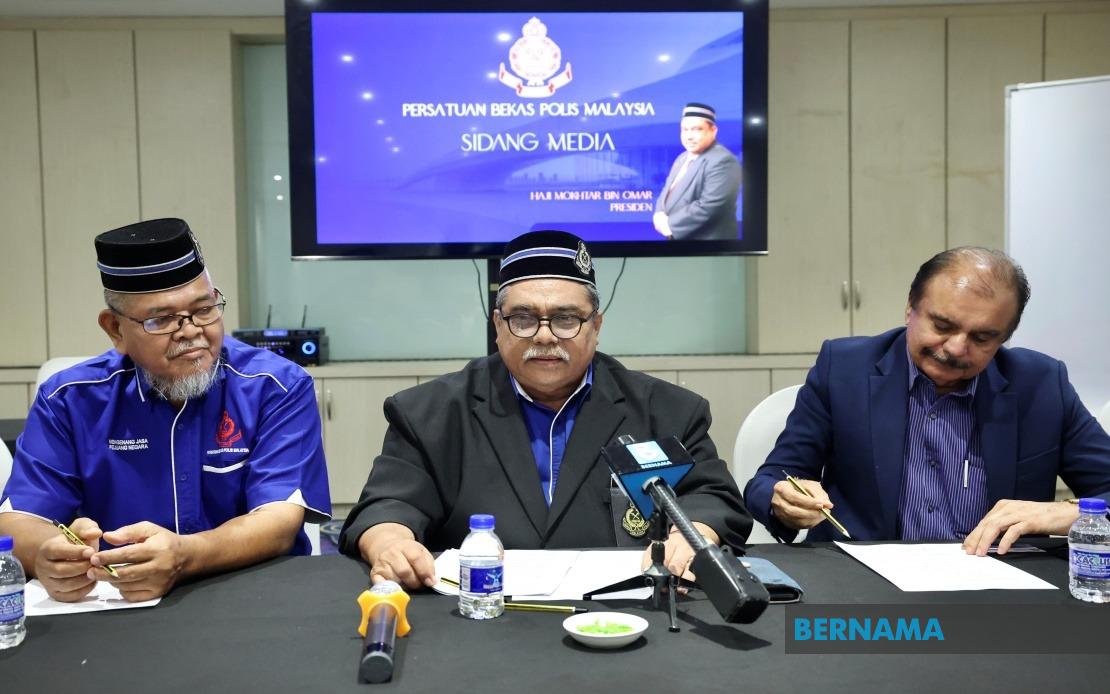
The Malaysian Ex-Police Association (PBPM) has made a formal request to the government to establish a monthly cost-of-living allowance for non-pensionable former police officers, arguing that these individuals merit financial support in recognition of their service protecting the nation. Mokhtar Omar, the association's president, emphasised at a Kuala Lumpur press conference that the government would face manageable fiscal implications by addressing the welfare needs of this vulnerable group, particularly given their dwindling numbers and mounting economic pressures.
According to PBPM records stretching back to 1972, approximately 40,000 of the association's 86,000 registered members fall into the non-pensionable category. This group encompasses former personnel who served in specialised units including the Special Squad and Home Guard, as well as contract inspectors who operated during the Emergency period. The historical distinction between pensionable and non-pensionable officers reflects employment classifications that existed decades ago, yet it continues to create stark disparities in retirement security among former law enforcement personnel.
The appeal comes against a backdrop of considerable financial strain experienced by these retirees. With the cost of living escalating nationwide and household expenses consuming larger portions of limited savings, former officers without pension entitlements have found themselves increasingly vulnerable. Many entered the police force as young men, believing their service would be recognised through standard retirement benefits, only to discover that their employment status rendered them ineligible for the protective mechanisms afforded to pensionable staff. The gap between expectations and reality has widened as inflation has eroded whatever modest reserves they may have accumulated.
Mokhtar contextualised his appeal by highlighting the historical significance of these personnel's contributions. Those who served during the Emergency period, in particular, took on substantial risks during a pivotal moment in Malaysia's nation-building process. The Emergency, spanning from 1948 to 1960, demanded intensive security operations and placed significant pressure on police and military personnel. The association argues that these officers' sacrifices warrant recognition, particularly since the surviving members from that era represent an irreplaceable historical cohort whose numbers diminish annually.
The PBPM has formulated a specific proposal recommending a monthly special allowance of between RM300 and RM500 for eligible recipients. This modest sum reflects both the genuine financial constraints these individuals face and a realistic assessment of what the government might reasonably allocate. The figures are calibrated to provide meaningful support without creating unsustainable long-term fiscal obligations, suggesting the association has approached negotiations with pragmatism.
Beyond the proposed basic allowance, the association has also advocated for a comprehensive review of the Police Heritage Trust Fund (TAWP), the existing mechanism designed to support former law enforcement personnel. The PBPM contends that current assistance rates under this fund are insufficient and its scope too limited. They envision an expanded framework encompassing education support for beneficiaries' dependents, healthcare coverage, and emergency relief during disasters or personal crises. Such comprehensive welfare architecture would address multifaceted vulnerabilities rather than providing only financial stipends.
The government's response to this appeal carries particular significance given Malaysia's broader approach to veteran affairs and public sector retirement. Policymakers face the perennial challenge of balancing obligations to former civil servants with competing fiscal priorities. However, the concentration of need within a defined, ageing cohort makes the case for intervention arguably stronger than similar claims that might affect broader, younger populations. The window for assisting Emergency-era personnel is genuinely time-limited, as mortality claims increasing numbers of eligible beneficiaries annually.
Complementing the governmental appeal, the PBPM has initiated its own fundraising mechanisms to address immediate needs. Datuk Dr Basant Singh Sidhu, the association's Information Chief, announced plans for an October fundraising dinner designed to mobilise RM1 million from corporate sponsors, multinational enterprises, and philanthropically-minded individuals. This two-pronged strategy—simultaneous appeals to government and civil society—reflects recognition that state resources alone may prove insufficient and that complementary private sector engagement can meaningfully supplement official assistance.
The targeted procurement of donations reflects careful prioritisation of non-pensionable members' most acute needs. Proceeds will support acquisition of medical equipment, mobility aids such as wheelchairs, nutritional supplements including milk products, hearing aids, and other essential items addressing health vulnerabilities typical of elderly populations. This focus on functional support addresses practical barriers these individuals face in maintaining independence and dignity, beyond merely supplementing income.
The demographics underlying this campaign underscore its ethical weight. An association representing 86,000 former officers grapples with a situation affecting nearly half its membership, representing a systemic equity problem. That these individuals served during Malaysia's formative security challenges yet remain excluded from pension systems applicable to contemporaries in comparable roles suggests historical administrative anomalies rather than deliberate policy choices. Addressing this injustice would align government practice with contemporary standards for veteran welfare.
The PBPM's campaign also carries implicit messaging about employment security and government obligations that resonates beyond the specific constituency of former police officers. As Malaysia navigates transitions in labour market arrangements and the expansion of contract-based employment across sectors, the plight of non-pensionable former personnel illustrates potential consequences of employment casualisation. Policymakers confronting these broader trends might view a precedent of government support for non-pensionable former civil servants as either progressive or cautionary, depending on their fiscal philosophy.
The association's efforts highlight enduring tensions within Malaysia's welfare framework. While statutory pensioners enjoy clearly defined entitlements, non-pensionable personnel occupy an ambiguous category—neither fully integrated into safety net systems nor entirely abandoned. Resolving this ambiguity through targeted legislation establishing a defined allowance would represent administrative clarification that simplifies future implementation while providing certainty to beneficiaries. The current ad hoc approach to supporting this group through discretionary trust fund distributions and charitable appeals lacks systematisation.
Ultimately, the PBPM's campaign reflects legitimate advocacy on behalf of a constituency whose circumstances warrant sympathetic consideration. Whether through government allocation, private fundraising, or hybrid mechanisms, addressing the financial security of non-pensionable former police personnel represents an opportunity to acknowledge historical service while alleviating contemporary hardship within an increasingly limited timeframe.

