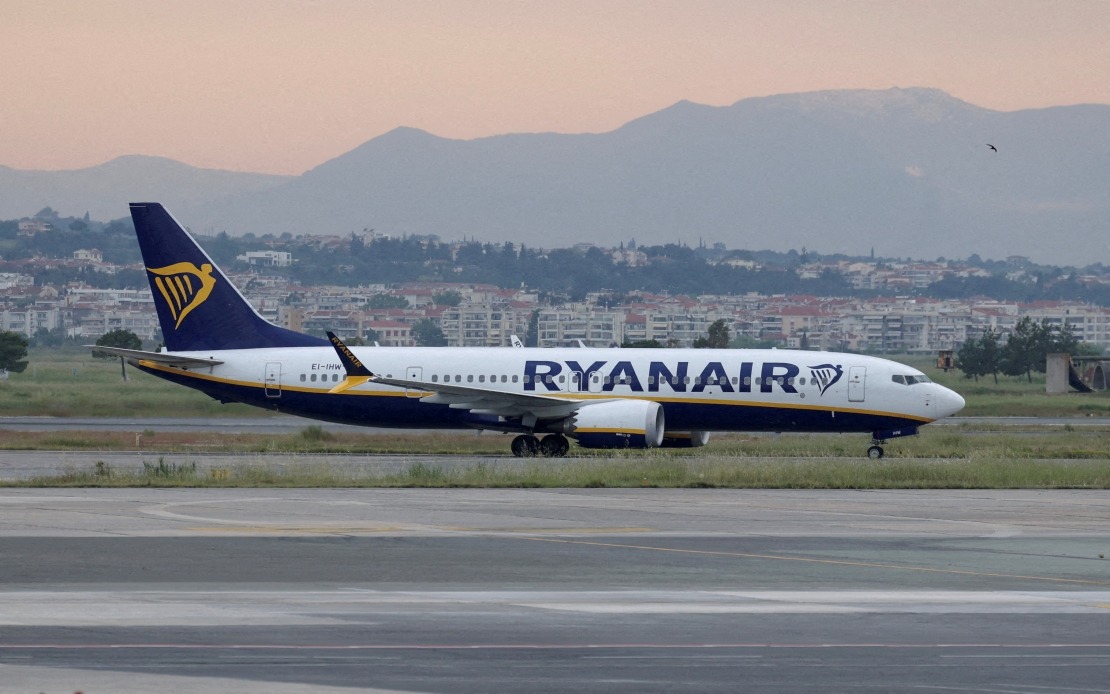
A routine flight from Thessaloniki to the German city of Memmingen descended into chaos on Friday when a cabin window suddenly fractured, forcing the Ryanair aircraft to abandon its journey and divert immediately back to its origin airport. The incident left passengers in panic, with oxygen masks deploying automatically as the aircraft underwent an emergency descent and return flight lasting approximately 20 minutes.
According to eyewitness accounts relayed to German news agency dpa, a loud bang echoed through the cabin moments before the window pane gave way. The passenger seated nearest to the damaged window bore the brunt of the incident, suffering injuries in the immediate aftermath of the rupture. What transformed the situation from concerning to genuinely life-threatening was the rapid depressurisation and wind force that followed, with one witness telling Greek state broadcaster ERT that the injured man's "head and shoulders were sticking out of the broken window." The dangerous positioning left the passenger in immediate peril as the aircraft maintained its cruising altitude.
The rapid response of nearby passengers prevented what could have been a catastrophic outcome. Fellow travellers managed to physically pull the man back into the cabin, effectively saving his life during those critical moments. Simultaneously, the aircraft's safety systems activated, with oxygen masks descending throughout the cabin as the aircraft initiated emergency procedures. Videos recorded by passengers and subsequently shared on social media depicted the chaos unfolding inside the fuselage, with audio capturing the screams and distressed reactions of those aboard.
The flight crew's immediate decision-making proved crucial to passenger safety. Upon recognising the severity of the structural failure and the threat posed to aircraft integrity at altitude, the pilot initiated an abort procedure and charted a direct course back to Thessaloniki Airport. The return journey consumed roughly twenty minutes, during which the aircraft remained under careful monitoring to ensure the compromised fuselage could maintain sufficient pressurisation and structural integrity for a safe landing.
Emergency services personnel were pre-positioned at Thessaloniki Airport to receive the aircraft upon its arrival. The injured Serbian passenger was promptly transferred to a medical facility in Thessaloniki for evaluation and treatment of his injuries. Medical teams assessed the severity of his trauma, though the extent of his injuries was not immediately disclosed in early reports. The quick extraction from the aircraft and immediate medical attention likely contributed to preventing more severe outcomes.
As of the incident's immediate aftermath, neither Ryanair nor Greece's aviation authorities had released formal statements regarding the occurrence. However, Greek broadcaster ERT confirmed that an investigation into the window failure had been formally initiated. Such inquiries typically examine manufacturing defects, installation procedures, maintenance records, and any pre-existing structural weaknesses that may have contributed to the sudden rupture. The investigation will likely involve aircraft engineers, safety inspectors, and potentially representatives from the window manufacturer.
The incident underscores the critical importance of aircraft cabin pressure systems and structural integrity during flight operations. Commercial aircraft operate at altitudes where cabin pressure is maintained at approximately 8,000 feet equivalent, substantially lower than the actual flying altitude. A breach in the fuselage—such as a shattered window—creates a dangerous differential in air pressure that can rapidly escalate crew workload and compromise passenger safety. The automatic deployment of oxygen masks represents a fundamental safety feature designed to provide passengers with breathable air during cabin depressurisation events.
For Malaysian aviation observers, the incident highlights the rigorous safety protocols embedded within European commercial aviation operations and the swift emergency response capabilities of Greek authorities. The Ryanair incident also reminds passengers and operators alike of the importance of aircraft maintenance standards and the need for regular structural inspections, particularly for components like cabin windows that directly impact fuselage integrity. Although accidents of this severity remain statistically rare, such events prompt comprehensive reviews across the aviation industry to identify systemic vulnerabilities.
The emergency unfolded without loss of life, attributable in large measure to the structural design of modern aircraft, the training and decision-making of the flight crew, and the timely intervention of fellow passengers. The incident will likely trigger heightened scrutiny of window specification and installation procedures at Ryanair and across the broader European aviation sector, potentially leading to enhanced maintenance protocols or design modifications to prevent similar occurrences in future operations.

