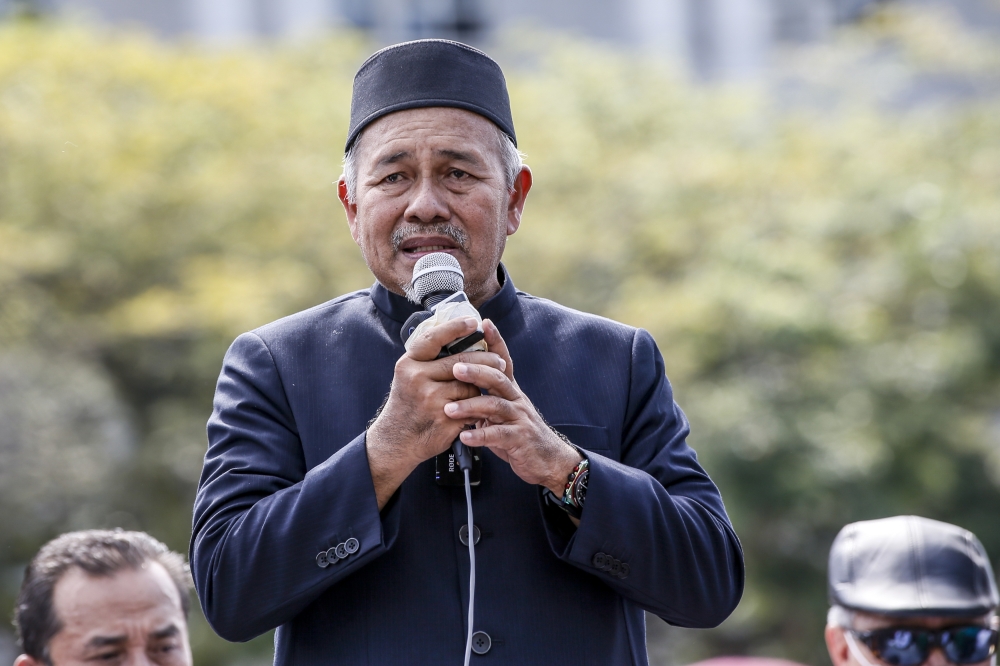
PAS has indicated its willingness to engage in talks regarding an expanded political partnership between Barisan Nasional and Perikatan Nasional, with conversations potentially extending to state-level arrangements in Melaka and coordination at the national government level. The statement from the party leadership reflects the ongoing fluidity in Malaysian coalition politics as various groupings explore opportunities for deeper alignment and cooperation.
The Islamic party's openness to further discussions comes amid a broader reconfiguration of political forces within the country. Rather than remaining confined to existing power-sharing arrangements, PAS appears intent on testing whether wider partnerships might yield greater influence and resources for the party. This positioning underscores the negotiating leverage that religious-based and ethnically-conscious parties have accumulated in recent years, particularly following the fragmentation that occurred after 2018.
Melaka represents a testing ground for such expanded cooperation. The state has witnessed multiple political transitions and coalition shifts, making it a relevant case study for how BN and PN might coordinate at the state level before any broader national arrangement. Should talks prove productive in Melaka, this could serve as a foundation for more ambitious federal-level discussions, though considerable complexities would need navigating.
The significance of this development extends beyond mere coalition arithmetic. It reflects how Malaysia's political landscape has evolved toward greater flexibility and less rigid party loyalties compared to the decades when BN maintained relatively stable dominance. The emergence of PN as a credible political force alongside BN has created space for new configurations, where previously secondary players can leverage competition between larger blocs to secure advantageous terms.
For PAS specifically, expanded cooperation offers tangible benefits. The party has strengthened its parliamentary presence in recent elections and holds considerable sway in several states. By positioning itself as a bridge between major coalitions or as an essential component of any viable national government, PAS can extract concessions regarding ministerial portfolios, policy influence, and resource allocation to its constituencies. This negotiating strategy has become increasingly sophisticated.
The BN perspective on such expansion deserves examination as well. The coalition has sought to rebuild legitimacy and electoral strength following the 2018 setback and the political instability that followed. Incorporating PAS more formally into BN structures or into coordinated national governance arrangements could strengthen BN's claim to represent Malay-Muslim interests comprehensively. However, this must be balanced against potential tensions within BN itself, where component parties might view PAS integration as threatening their own positions.
Perikatan Nasional's interests equally warrant consideration. Having started as a primarily Malay-Muslim coalition centred on Muhyiddin Yassin's vision, PN has faced questions about its long-term viability and ideological coherence. Deeper cooperation with BN, mediated through PAS involvement, could stabilize PN's role in Malaysia's political system rather than leaving it vulnerable to further fragmentation or absorption into other coalitions.
The practical implications of expanded BN-PN cooperation merit scrutiny from an ordinary voter's perspective. Such arrangements typically focus on power-sharing and resource distribution rather than programmatic differences on policy substance. Malaysian citizens in Melaka and nationwide would be entitled to ask what tangible benefits such political realignments deliver for their communities, local economies, and service delivery. Coalition stability has value, yet political changes pursued primarily for elite advantage without clear public benefit tend to generate cynicism.
Regional dimensions also matter for Malaysia's Southeast Asian standing. Domestic political realignments that shift Malay-Muslim representation and religious party influence can subtly reshape Malaysia's foreign policy posture, regional relationships, and domestic religious affairs management. Neighbouring countries monitor Malaysian coalition changes carefully, particularly when they involve religious-oriented parties gaining larger roles in federal governance.
The timing of PAS's signal warrants attention as well. It arrives during a period when both BN and PN have reason to explore enhanced coordination. The next general election remains within contemplation, and political actors are evaluating various alliance configurations and their viability. PAS's readiness to engage positions the party advantageously in these pre-election calculations, allowing the party to claim openness to cooperation while extracting maximum terms.
Looking ahead, several questions remain unresolved. Whether substantive talks materialize and what specific arrangements they might produce depends on complex negotiations among multiple parties with competing interests. The Melaka dimension provides a contained arena where such cooperation could be tested before national-level commitment, reducing risks for larger parties testing compatibility.
Ultimately, PAS's statement represents a negotiating position rather than a completed arrangement. The party signals availability for discussions while maintaining flexibility about what terms it might ultimately accept. In Malaysian coalition politics, such careful positioning—neither closing doors nor committing prematurely—reflects sophisticated political management in an increasingly uncertain and competitive landscape.

