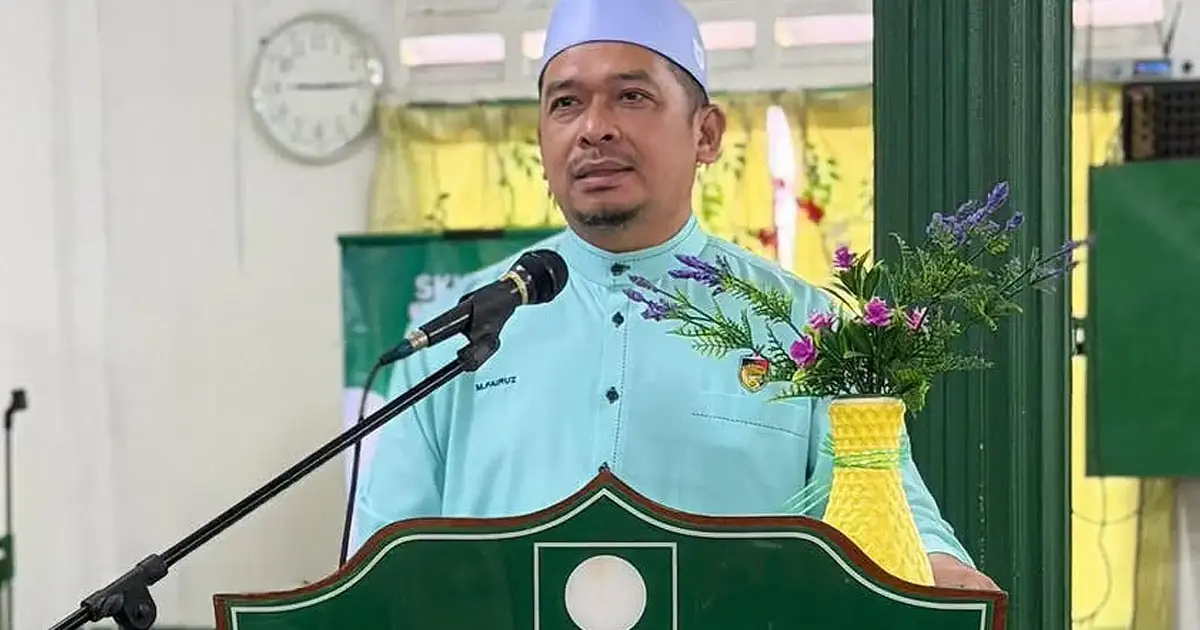
The political landscape in Negeri Sembilan faces potential upheaval as PAS strategically identifies DAP-controlled constituencies for competitive challenge in the coming state elections. State PAS chief Fairuz Isa has articulated his party's intention to contest seats where the demographic composition includes at least 40% Malay voters, a threshold the party believes creates favourable conditions for electoral success.
This calculated targeting represents a significant departure from traditional patterns of party competition in the state. Negeri Sembilan has historically witnessed straightforward contests between Barisan Nasional and opposition blocs, with DAP maintaining considerable representation in urban and semi-urban districts. The emergence of PAS as an active contender in these constituencies signals the fragmentation of Malaysia's political coalitions and the weakening of bloc discipline that characterised the post-2008 period.
The strategic rationale underlying PAS's approach merits careful examination. By concentrating resources on constituencies containing substantial Malay majorities within DAP-held seats, the Islamic party evidently believes it can capitalise on communal voting patterns and undermine DAP's multi-ethnic support base. This approach resonates with broader PAS positioning since its strengthened role within Perikatan Nasional, which has emboldened the party to pursue aggressive expansion beyond its traditional heartlands in Kelantan and Terengganu.
For Negeri Sembilan specifically, such competition introduces complexity into state-level coalition mathematics. The state has been governed by Pakatan Harapan since 2018, though internal tensions between coalition partners have periodically surfaced. DAP's presence provides crucial representation for non-Malay constituencies and urban centres, whilst PAS's entry into multiple contests could fracture opposition strength by dividing the anti-establishment vote in specific constituencies.
The demographic angle PAS emphasises—40% Malay electorate—warrants contextual understanding. Negeri Sembilan possesses considerable ethnic diversity, particularly in its urban centres and along major transport corridors. Constituencies meeting PAS's criteria likely represent transitional electoral zones where communal and class considerations intersect. These areas often decide election outcomes, making them genuinely competitive terrain rather than guaranteed opposition or government strongholds.
From a broader Southeast Asian perspective, Negeri Sembilan's political trajectory offers insights into how religious parties navigate coalition politics in plural democracies. Unlike Kelantan and Terengganu, where PAS dominates state governance, the party's approach in Negeri Sembilan requires negotiation and competition within multi-party environments. This distinguishes Malaysian Islamic party politics from single-party dominant systems in neighbouring regions.
For Malaysian voters, particularly those in Negeri Sembilan, this development carries practical implications. Greater party competition ostensibly offers expanded choice and clearer ideological differentiation. However, the risk exists that fragmented opposition candidacy benefits the incumbent government by concentrating opposition support across multiple candidates. Electoral analysts will scrutinise whether PAS's expanded contestation strengthens or weakens overall opposition performance in the state.
The timing of PAS's strategic pivot matters significantly. Political activity preceding state elections typically intensifies as polling approaches, though formal nomination periods remain subject to regulatory processes. Fairuz Isa's public articulation of these targeting parameters simultaneously serves to energise party faithful and signal to potential communal constituencies that PAS offers a distinct alternative to established opposition parties.
DAP's institutional response to this challenge will shape upcoming electoral dynamics. The party has successfully defended diverse constituencies in various states by emphasising local development, service delivery, and inclusive governance narratives. Whether similar arguments prove sufficient against PAS's communal messaging in constituencies with elevated Malay populations remains uncertain, particularly if PAS succeeds in positioning itself as authentic representative of Malay-Muslim interests in opposition politics.
The coalition implications extend beyond Negeri Sembilan's borders. Perikatan Nasional's continued expansion and assertiveness across multiple state contests signal potential recalibration of Malaysian federal politics. Should PAS demonstrate electoral success in Negeri Sembilan and other traditionally non-Perikatan states, the federation's political centre of gravity may continue shifting rightward, with consequences for education policy, religious governance, and minority representation.
Regional observers noting Malaysian political developments should recognise Negeri Sembilan's significance as a testing ground for emerging party strategies. The state's relative moderation and ethnic plurality render it markedly different from PAS strongholds in the northeast, yet its urbanised constituencies differ equally from rural heartlands. Electoral outcomes there reveal whether identity-based appeals and coalition repositioning resonate across transitional constituencies or represent limited-applicability strategies.
Ultimately, PAS's deliberate focus on DAP-held seats containing 40% Malay populations embodies contemporary Malaysian politics' defining tension: whether parties compete primarily through community-centric messaging or through cross-communal coalition-building. The coming Negeri Sembilan elections will provide crucial evidence regarding which approach dominates Malaysian voters' decision-making processes and how state-level politics contributes to or diverges from national political trends.