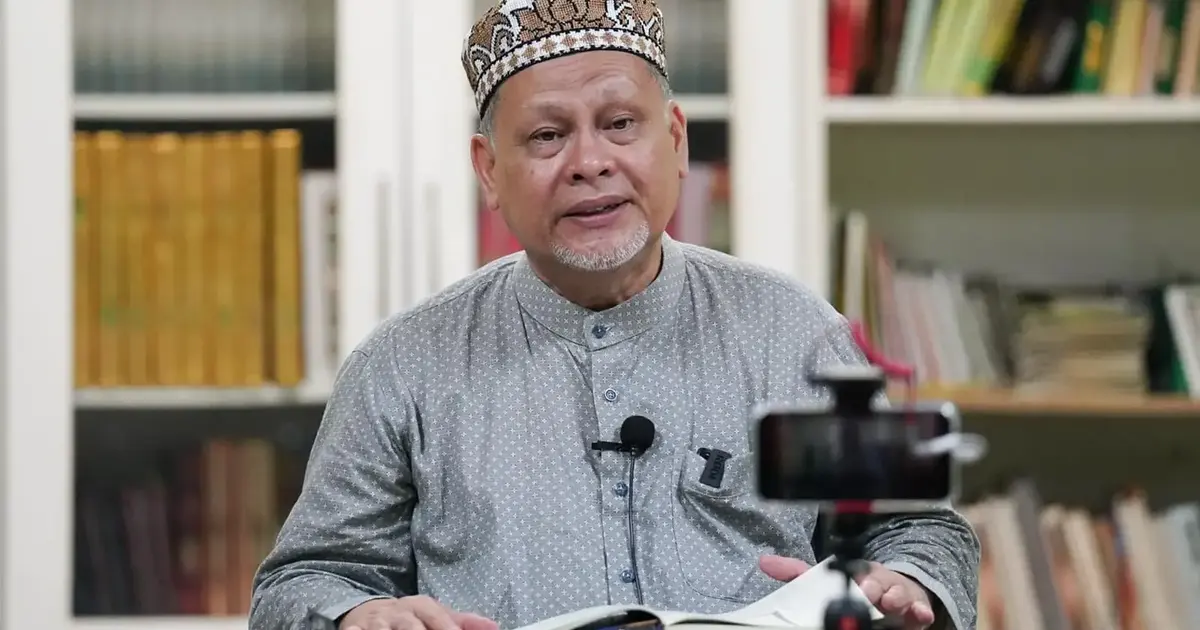
PAS is prepared to square off against its Perikatan Nasional coalition partner Bersatu in the Negeri Sembilan state election if the two parties find themselves vying for the same seats, according to party deputy president Amar Abdullah. The statement underscores underlying tensions within the coalition ahead of the electoral contest, revealing fault lines that may threaten the unity of the PN bloc at the state level.
The readiness to contest against Bersatu marks a significant development in the dynamics of Malaysian coalition politics, where formal alliances often mask competing ambitions and territorial interests. Amar Abdullah's remarks suggest that PAS, despite its commitment to the broader PN framework, will not subordinate its electoral ambitions to accommodate its coalition partner. This stance reflects the practical realities facing opposition-aligned coalitions, where the allocation of contested seats frequently becomes a source of friction between component parties.
Negeri Sembilan has emerged as a potential flashpoint for intra-coalition competition, with both PAS and Bersatu nursing expectations of expanded representation in the state legislature. The prospective clash between the two parties highlights how coalition agreements at the national level do not automatically resolve disputes over local electoral strategy. State-level politics often operate according to different calculus than federal arrangements, driven by regional power bases, traditional support zones, and the ambitions of local party leaders.
PAS has historically demonstrated electoral strength in certain Negeri Sembilan constituencies, particularly in areas with significant Malay-Muslim populations where the Islamic party maintains deep organisational roots. Bersatu, under Muhyiddin Yassin's leadership, has been expanding its footprint across multiple states as part of its strategy to emerge as a significant force in Malaysian politics beyond its initial strongholds. The potential overlap between their respective target constituencies was perhaps inevitable given both parties' strategic interests in the state.
The implications of this rivalry extend beyond simple seat-counting. A direct confrontation between PN component parties in Negeri Sembilan could weaken the coalition's overall performance, particularly if campaign resources become divided and messaging becomes confused. Voters in contested constituencies might find themselves faced with multiple candidates claiming to represent the same coalition, a situation that typically benefits the incumbent ruling party by fragmenting opposition votes.
From a Malaysian political perspective, the PAS statement also signals the limits of coalition discipline within PN. Unlike the Barisan Nasional during its heyday, when internal disputes were typically resolved through centralised decision-making structures, PN operates as a looser confederation where component parties retain considerable autonomy. This structural reality means that formal seat-sharing agreements often prove fragile when tested by local political pressures and ambitious party leaders seeking to maximise their electoral gains.
Amar Abdullah's willingness to engage in direct competition with Bersatu may also reflect PAS's confidence in its organisational capacity and grassroots support in Negeri Sembilan. The party has invested substantially in building its presence across the state, and party leadership may believe it can outperform Bersatu in head-to-head contests. Such confidence, whether justified or not, becomes self-fulfilling when it translates into greater campaign effort and resource allocation to contested seats.
For Southeast Asian observers monitoring Malaysian political developments, the PAS-Bersatu tension illustrates broader challenges facing opposition coalitions across the region. The ability to present a united front while managing internal rivalries requires sophisticated political management. When coalition partners begin signalling readiness to compete directly against each other, it often indicates that high-level negotiations over seat allocation have reached an impasse or that local power bases are asserting themselves against central directives.
The Negeri Sembilan electoral contest will serve as a testing ground for whether PN can resolve its internal differences through negotiation or whether inter-party competition will play out openly. The outcome could establish precedents for how coalition disputes are handled in future state elections, potentially reshaping the balance of power within the opposition coalition. If PAS successfully contests and wins seats against Bersatu candidates, it may embolden other component parties to similarly prioritise their own electoral interests over coalition solidarity.
The broader significance of Amar Abdullah's statement lies in its transparency regarding coalition fractures that observers suspected but which were previously not openly acknowledged by senior party figures. This frankness suggests that PN leadership may have tacitly accepted that seat allocation disputes will be resolved through electoral competition rather than backroom negotiation, a development that reflects the coalition's organisational maturity but also its vulnerability to internal divisions during crucial electoral moments.

