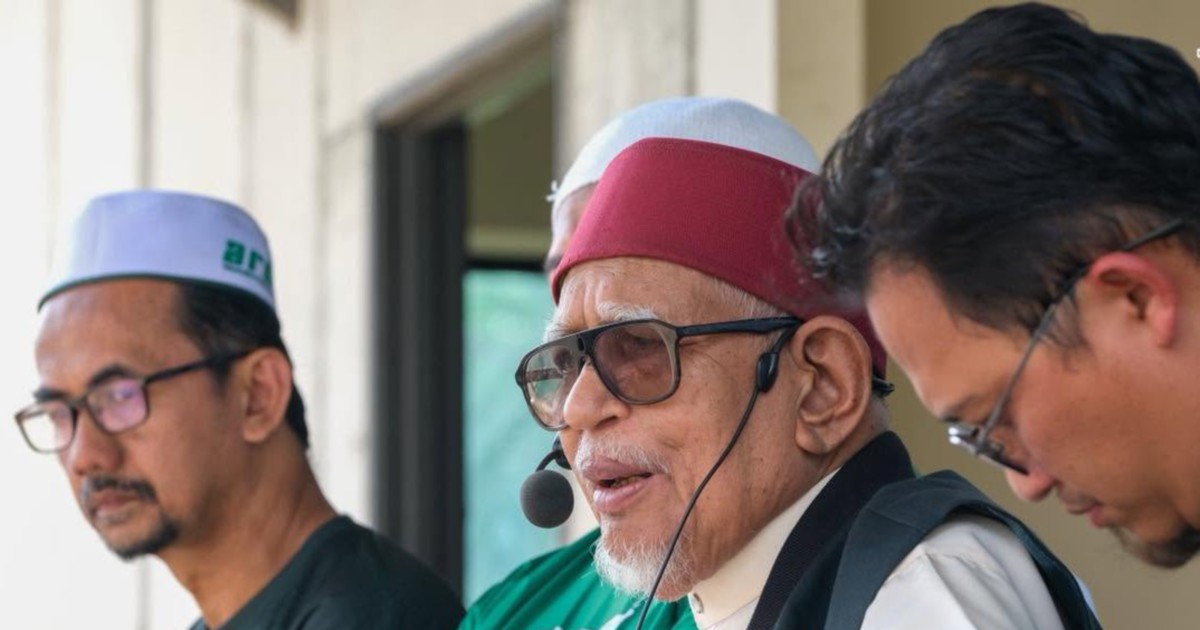
PAS President Tan Sri Abdul Hadi Awang has articulated a vision for restructuring Malaysia's political landscape through an expanded coalition model that extends beyond the traditional Malay-Muslim political axis. Speaking to voters and party members, Hadi presented a framework centred on cooperation between PAS and Umno as core components, but crucially expanded to incorporate moderate non-Muslim political representation. This approach signals a potential recalibration of coalition-building strategies in Malaysia's competitive political environment, moving away from purely ethno-religious alignments toward what Hadi characterises as pragmatic partnerships with ideologically compatible partners.
The inclusion of MCA and MIC within this proposed political formula represents a significant strategic consideration. Both parties have historically represented Chinese and Indian Malaysian interests respectively, positioning themselves within the moderate mainstream rather than the communal extremes that Hadi explicitly seeks to exclude. By specifically identifying these parties as acceptable coalition partners while distancing his vision from what he terms "extreme" elements, Hadi attempts to appeal simultaneously to core PAS constituencies and to urban, moderate voters across Malaysia's ethnic diversity. This dual messaging reflects the electoral mathematics facing PAS as it seeks to consolidate influence within a fragmented political marketplace.
The terminology Hadi employs—invoking the imperative to "save Malaysia"—carries particular weight in contemporary Malaysian discourse. This framing positions the proposed coalition as a necessary corrective to existing governance challenges and social divisions. Whether addressing economic management, religious and racial harmony, or institutional integrity, Hadi implicitly argues that the proposed political formula offers superior solutions compared to alternative arrangements. The rhetoric moves beyond simple partisan competition toward positioning his coalition vision as a matter of national interest and preservation, a common rhetorical strategy when seeking to build cross-cutting political alliances.
For Malaysian politics, this statement reveals ongoing competition and realignment among different political blocs seeking to establish dominant coalitions ahead of future electoral contests. PAS has historically navigated between two distinct strategic paths: deepening its Islamist base while seeking electoral expansion, or pursuing broader multiethnic coalitions to achieve governmental power at national scale. Hadi's recent statements suggest continuing exploration of the latter approach, though with explicit ideological boundaries marking which partners remain acceptable and which fall outside his coalition's parameters.
The reception of these overtures from MCA and MIC—historically components of the Barisan Nasional framework—carries implications for Malaysia's coalition mathematics. Both parties face their own pressures regarding political relevance and represent communities whose electoral support remains significant, particularly in urban constituencies and within the Indian Malaysian minority communities respectively. Whether they view PAS overtures as genuine partnership opportunities or tactical manoeuvres designed to disrupt existing political arrangements will influence how Malaysian politics evolves in coming electoral cycles.
From a Southeast Asian perspective, Malaysia's coalition-building dynamics matter beyond its borders. The region's largest democratic Muslim-majority nation continuing to manage religious, ethnic, and political pluralism through evolving coalition formulas provides lessons—both positive and cautionary—for neighbouring countries navigating similar challenges. How effectively broad coalitions spanning ideological and communal divides can govern remains a central question for Malaysian political stability and regional democratic development.
The emphasis on excluding "extreme" partners while including "non-extreme" ones introduces definitional questions central to Malaysian politics. Hadi's deployment of these terms implicitly criticises certain political actors while positioning his proposed partners as fundamentally moderate and acceptable. This rhetorical strategy allows PAS to pursue broader coalitions while maintaining its ideological distinction from competitors, though the precise boundaries between extreme and non-extreme necessarily remain contested and subject to political interpretation.
For ordinary Malaysian voters and business communities, these coalition-building discussions signal ongoing uncertainty regarding the nation's political direction and governance structure. Business confidence, investment decisions, and community relations can be affected by perceptions of political stability and the composition of governing coalitions. Hadi's push for expanded unity arrangements suggests recognition that sustainable governance requires broader social consensus than narrow partisan majorities provide, though whether such consensus proves achievable through his proposed framework remains uncertain.
The timing and explicit framing of these remarks deserve consideration. By publicly articulating this vision across multiple constituencies, Hadi positions PAS as a coalition-maker rather than a coalition-member, asserting organizational leadership and agenda-setting capacity. This positioning enhances PAS's negotiating leverage with potential partners while allowing the party to maintain its distinct identity and core constituency support. How genuine policy coordination would emerge from such a diverse coalition—encompassing PAS's Islamist orientation, Umno's Malay nationalism, MCA's Chinese communal interests, and MIC's Indian representation—presents substantial practical challenges beyond rhetorical alignment.
Looking forward, Hadi's coalition vision competes with alternative political arrangements currently shaping Malaysian governance. Whether voters ultimately embrace this particular formula, prefer existing arrangements, or favour entirely different configurations will determine Malaysia's political trajectory. The invocation of national salvation and broader unity suggests PAS leadership believes electoral advantage lies in presenting itself as the architect of inclusive governance frameworks rather than as a narrow communal advocate, a strategic calculation that will be tested through Malaysian voters' responses in upcoming political contests.

