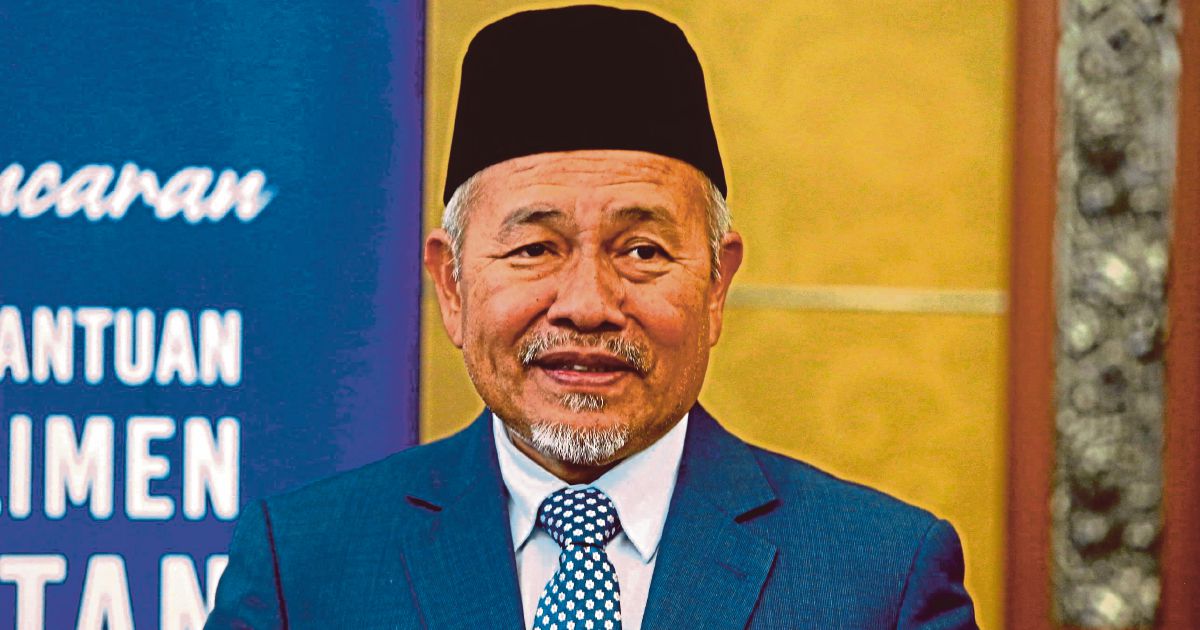
Datuk Seri Tuan Ibrahim Tuan Man, the deputy president of PAS, has publicly lauded Umno's decision to withdraw its backing from the current Negri Sembilan state administration, characterizing the move as an act of political courage that fundamentally reshapes the electoral landscape in the state.
The remarks, made in Seremban, underscore deepening shifts within Malaysia's political coalitions as parties reassess their strategic alliances ahead of state-level contests. Tuan Ibrahim's commendation suggests that PAS views Umno's repositioning as a constructive development rather than a destabilizing force, despite both parties typically competing for similar voter demographics in many constituencies.
Umno's decision to terminate its support for the Negri Sembilan government carries significant implications for the trajectory of state politics. By stepping back from the current ruling arrangement, the party has effectively signaled that existing configurations no longer serve its interests or align with its political direction. This kind of withdrawal, while not unprecedented in Malaysian politics, rarely occurs without considerable internal deliberation within party hierarchies.
Tuan Ibrahim's characterization of the move as "bold" merits examination within the broader context of Malaysian political dynamics. Such terminology typically indicates that the action carries substantial political risk or represents a departure from established patterns. In this instance, it suggests that maintaining the status quo would have been the safer path for Umno, making the decision to withdraw more noteworthy.
The emphasis on opening the floor to voters carries particular significance for electoral democracy in Negri Sembilan. When political parties restructure their coalitions, the resulting uncertainty can create space for voter preference to assert itself more directly. Rather than choosing between predetermined governing arrangements, voters in Negri Sembilan may now have greater latitude to determine which parties and individuals should lead their state.
This development reflects the increasingly fluid nature of coalition politics in Malaysia post-2018. The conventional dominance of long-standing partnerships has eroded considerably, with parties regularly reassessing their positions based on performance metrics, internal politics, and broader strategic calculations. Negri Sembilan appears to be the latest battleground where these reassessments are playing out publicly.
For PAS specifically, backing Umno's withdrawal demonstrates an attempt to position itself as a political force that can speak credibly to major developments in the political landscape. By endorsing the decision rather than criticizing it, PAS avoids appearing defensive or resistant to change while simultaneously maintaining relationships across Malaysia's fractured political spectrum.
The practical consequences for Negri Sembilan's state government remain to be fully determined. Losing Umno's support typically implies that the current administration either loses its parliamentary majority or finds itself operating under altered power dynamics that fundamentally constrain its capacity to govern effectively. This may trigger early elections or force complex negotiations as remaining coalition partners attempt to consolidate their position.
Such transitional periods often prove destabilizing for state-level governance, as policy initiatives may stall and administrative energy becomes consumed by coalition negotiations. Civil servants and state-owned enterprises frequently experience uncertainty about budgetary allocations and strategic direction during such phases. Businesses operating in Negri Sembilan may also recalibrate their engagement with state institutions pending clarity about the new political configuration.
The timing of Umno's move warrants consideration in relation to broader national political calculations. Umno has been consistently repositioning itself within Malaysia's political architecture following its dramatic 2018 electoral defeat and its complex relationship with various coalition partners since. Each state-level decision by the party sends signals to its base, to potential coalition partners, and to voters about its strategic direction.
For Malaysian political observers, this episode illustrates how electoral competition at the state level remains vibrant and unpredictable, defying simple narratives about predetermined outcomes or irreversible coalitions. The fact that a major party like Umno can still make consequential decisions that reshape state-level contests suggests that Malaysian democracy retains genuine competitive elements, despite centripetal pressures toward political consolidation.
The coming months will reveal whether Tuan Ibrahim's optimistic assessment about voters gaining expanded choice translates into genuine electoral dynamism in Negri Sembilan, or whether competing parties simply coalesce around new arrangements that ultimately constrain voter options once again. The state election itself will provide the definitive answer to whether Umno's withdrawal produces the democratic benefits that PAS's deputy president anticipates.

