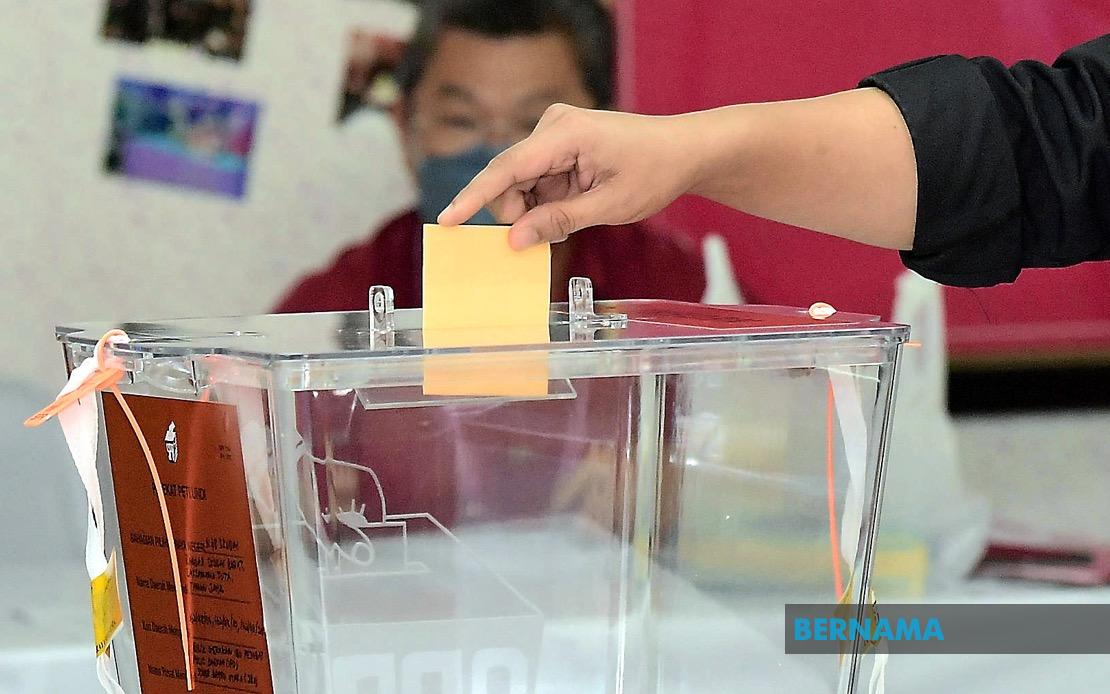
The Johor state election has concluded with a decisive result that has prompted soul-searching among opposition and smaller political movements across the peninsula. Barisan Nasional's commanding performance, winning 29 of the 56 state seats, has been endorsed by partner parties in the broader political coalition, while those on the receiving end of voter rejection have begun the task of understanding their shortcomings and plotting a more effective path forward.
PAS, which contested the election as part of the Perikatan Nasional grouping, has responded to the results with measured acceptance. Johor PAS commissioner Datuk Dr Mahfodz Mohamed stated that the party respects the democratic choice made by voters in determining the state's leadership. He extended congratulations to Barisan Nasional and its leader Menteri Besar Datuk Onn Hafiz Ghazi for achieving the numbers required to form a new state government, marking a straightforward acknowledgment of the electoral arithmetic.
The broader significance of PAS's response lies in its positioning within the larger Perikatan Nasional alliance, which ultimately failed to translate its combined political machinery into meaningful seat gains in Johor. The Islamist party signalled its intention to persist with its coalition partners in the coming period, emphasising its commitment to advancing religious and communal concerns alongside the material welfare of ordinary Malaysians. This forward-looking stance suggests that internal discussions within Perikatan Nasional about the election outcome are likely to focus on tactical adjustments rather than fundamental strategic recalibration.
For Bersatu, the results have triggered a more introspective process. Party secretary-general Datuk Seri Mohamed Azmin Ali announced that the party would conduct a comprehensive analysis of how voters in Johor responded to its candidates and messaging. His commitment to identifying strategic measures reflects the party's recognition that it must refine its approach to remain competitive in future electoral contests. Bersatu's performance in Johor appears to have fallen short of expectations, making this review a necessary step toward regaining political momentum ahead of the crucial 16th General Election.
The most sobering outcome was experienced by Parti Bersama Malaysia, the political vehicle launched by Datuk Seri Rafizi Ramli. The party's decision to contest Johor while still in its infancy proved costly, with all 15 candidates failing to secure even the minimum number of votes required to retain their election deposits. This represents not merely a disappointing result but a significant financial setback for the nascent organisation, which had positioned itself as an alternative offering fresh approaches to governance and political engagement.
Rafizi's public response to the débâcle demonstrated considerable pragmatism and philosophical resilience. Rather than viewing the outcome as a terminal blow to Bersama's prospects, he framed the experience as a valuable learning exercise for a party that was barely two months old at the time of the election. This perspective suggests that the leadership recognises the need for substantial work on party infrastructure, volunteer mobilisation, and voter communication before entering subsequent electoral battles. His emphasis on studying the results thoroughly indicates an intention to conduct rigorous analysis of where messaging failed to resonate and how campaign mechanics must be strengthened.
The contrast between Bersatu and Bersama's approaches to defeat illuminates different stages of political maturity. Bersatu, an established party with existing parliamentary representation and ministerial experience, is treating the Johor result as a tactical adjustment problem requiring strategic refinement. Bersama, conversely, is processing what amounts to a foundational setback, absorbing the lessons necessary to construct a more robust political organisation capable of competing effectively at state level in the future.
What remains striking in all these responses is the absence of recriminations or accusations of unfair electoral processes. None of the parties have questioned the legitimacy of the Johor results or blamed external factors for their performance. This suggests either genuine acceptance of the verdict or at minimum a pragmatic calculation that contesting the outcome would damage political credibility. For Malaysian democracy, such restraint is noteworthy, particularly when contrasted with post-election disputes in other regional democracies.
The Johor election's implications extend well beyond the state level. All parties involved have explicitly referenced the 16th General Election as the arena where they will attempt to rectify their positions. The peninsula-wide contest will occur within a different electoral environment than the state ballot, potentially reshuffling the landscape in ways that favour different combinations of parties and candidates. Perikatan Nasional parties, despite their Johor setback, maintain significant parliamentary representation and will enter that national campaign with considerably more resources and profile than Bersama.
For Malaysian observers, the election demonstrates the continuing volatility of voter preferences at state level. Barisan Nasional's return to dominance in Johor reverses years of opposition control and suggests that the political alignments established during the watershed 2018 general election have not calcified into permanent voter blocs. The capacity of voters to shift allegiances between elections, and the willingness of political parties to absorb defeats and recalibrate, continues to define Malaysian electoral politics as fundamentally competitive and open-ended.

