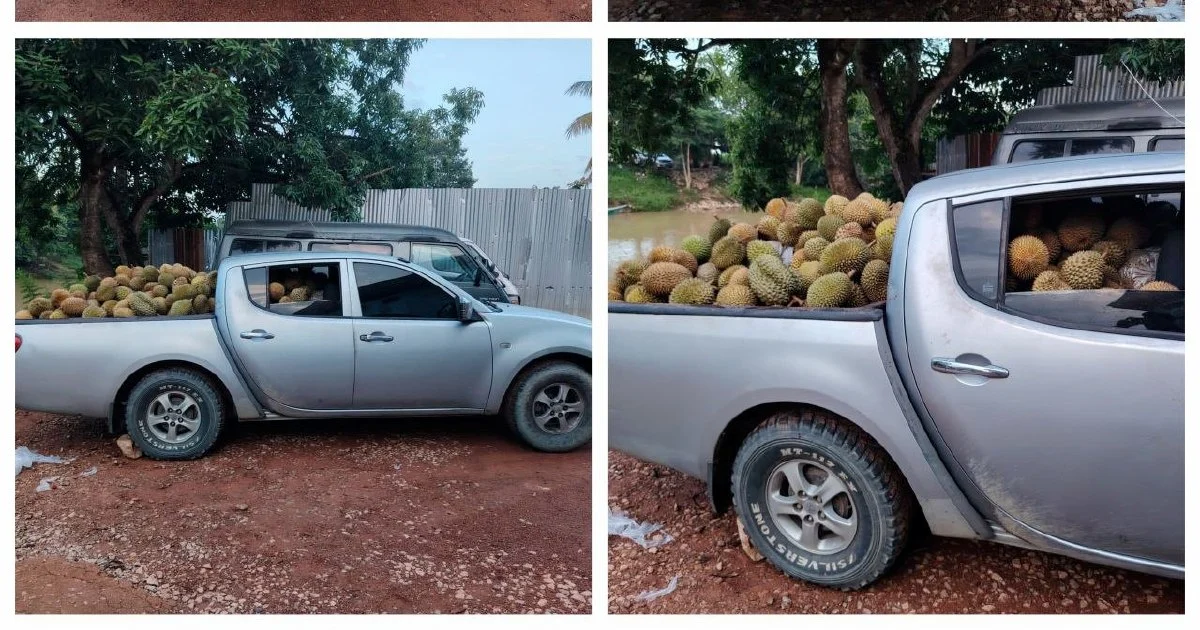
A 22-year-old driver seeking modest supplementary income has become entangled in a significant smuggling operation after authorities caught him transporting 700 kilograms of suspected illicit durians through Rantau Panjang last evening. The young man, reportedly hired for what appeared to be straightforward delivery work offering between RM60 and RM70 daily, now faces serious charges related to the trafficking of protected agricultural products across Malaysia's porous northern border region.
The arrest at Rantau Panjang, a major transit point in Kelantan's border landscape, underscores the persistent challenges Malaysian enforcement agencies encounter when combating organised cross-border commodity smuggling. The checkpoint interception reveals how criminal syndicates continue to exploit geographic vulnerabilities and economic desperation among working-class youth who may not fully appreciate the legal consequences of their employment choices. Such operations typically involve multiple layers of organisation, with drivers occupying the most visible and vulnerable position within these networks.
Durian trafficking from Thailand represents a substantial component of Malaysia's agricultural contraband problem, driven by significant price differentials between markets and inconsistent regulatory enforcement across the region. Thai durians, often cheaper at origin despite quality variations, enter Malaysian markets through both formal and shadowy channels, undercutting domestic producers and destabilising the supply chains that legitimate growers depend upon. The 700-kilogram seizure suggests this operation was not a small-scale, opportunistic venture but rather an organised attempt to move commercially significant quantities through border checkpoints.
The economic model underpinning such smuggling operations typically insulates higher-level operatives from direct contact with law enforcement. By employing low-wage drivers unfamiliar with broader operational details, trafficking networks minimise their own exposure while maximising their ability to replace arrested personnel quickly. The suspect's modest daily compensation—a figure that likely falls below the average wage expectations of many manual labourers—indicates how criminal enterprises exploit economic inequality and employment desperation within disadvantaged communities. Such individuals often bear disproportionate legal responsibility despite minimal profit-taking.
Rantau Panjang's strategic location adjacent to Thailand makes it an inevitable focal point for smuggling activities. The border region experiences constant tension between commercial actors seeking informal cross-border trade opportunities and government agencies charged with enforcing customs regulations and protecting domestic agricultural sectors. Despite repeated enforcement operations and infrastructure investments, the geographical realities of the borderland continue to facilitate contraband movements that official channels struggle to entirely suppress.
The case reflects broader Southeast Asian patterns wherein agricultural smuggling feeds into larger questions about food security, farmer livelihoods, and equitable market access. Malaysian durian producers, particularly smaller-scale growers in Peninsular Malaysia, face direct competition from cheaper imported fruit that circumvents formal import duties and quality inspections. When smuggled Thai durians reach Malaysian markets, they undermine the economic viability of legitimate domestic production and erode consumer trust in supply chain transparency.
Authorities' ability to interdict such operations depends on sustained surveillance, intelligence gathering, and inter-agency coordination—resources that are perpetually strained across Malaysia's extended land and maritime borders. Rantau Panjang has witnessed numerous similar seizures over recent years, yet the persistence of smuggling activities suggests that enforcement alone cannot resolve underlying structural incentives driving the trade. Without parallel efforts addressing root causes—such as price regulations, farmer support mechanisms, or formalised cross-border trade agreements—seizures will likely remain episodic responses rather than systematic solutions.
The arrested driver now faces potential serious charges that could include trafficking in contraband goods, depending on whether authorities establish knowledge or criminal intent. Even if portrayed merely as an unfortunate labourer with limited awareness of the cargo's true nature, the legal system typically holds drivers responsible for transporting prohibited items. This reality creates particular vulnerability for marginalised workers recruited into such operations through informal networks and personal referrals, where explicit warnings about legal exposure may be deliberately omitted by recruiters.
Malaysia's agricultural sector remains sensitive to import-related disruptions, particularly affecting high-value crops like durians that generate significant export revenues and employment across multiple regions. Protecting domestic producers requires not merely border enforcement but also consumer education, supply chain transparency, and market mechanisms that reward legitimate producers. The occasional dramatic seizure—especially one involving substantial quantities—receives media attention but often fails to address systemic vulnerabilities that make durian smuggling persistently profitable.
Investigators will likely probe the operational structure behind this smuggling attempt, potentially uncovering networks spanning multiple Malaysian states and Thai provinces. Such investigations occasionally yield insights into coordination methods, payment mechanisms, and distribution channels that inform future enforcement strategies. However, the immediate human dimension remains the arrested driver's precarious situation: a young man whose employment choice may now result in criminal prosecution, regardless of his minimal role or limited compensation within a much larger illicit enterprise.

