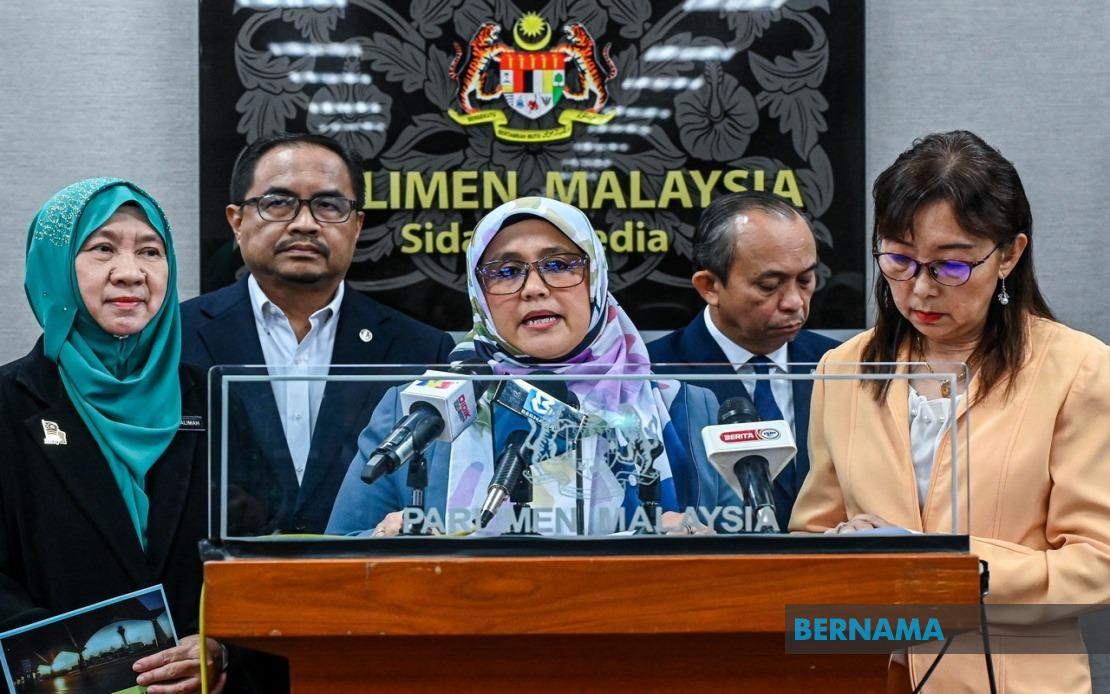
The Public Accounts Committee has drawn a clear line in the sand over Malaysia's airport infrastructure, insisting that domestic entities retain commanding control of Malaysia Airports Holdings Bhd even as the nation explores deeper private investment in its aviation sector. Datuk Mas Ermieyati Samsudin, who chairs the influential parliamentary oversight body, articulated the committee's central concern at a press conference at the Parliament building in Kuala Lumpur: without a floor of 70 per cent combined shareholding between Khazanah Nasional Bhd and the Employees Provident Fund, the nation risks surrendering its grip over a strategically vital asset at a time when aviation infrastructure has become inseparable from broader economic and security interests.
The recommendation emerges against the backdrop of structural changes to MAHB's ownership composition, a process that has evidently prompted the committee to examine how Malaysia can balance the need for capital and operational expertise with the imperative to keep sensitive assets under domestic stewardship. The 70 per cent threshold serves as a mathematical embodiment of this tension: it permits meaningful foreign or private participation while ensuring that public-sector institutions retain decisive voting power. For Malaysian policymakers, this represents a pragmatic middle ground that acknowledges both the limitations of state capacity and the strategic vulnerabilities of surrendering majority control of critical infrastructure.
Beyond the shareholding floor, the PAC has constructed an elaborate governance architecture intended to tighten oversight throughout MAHB's operations. Any future modifications to the company's equity structure or the sale of strategically important assets would require Cabinet approval through a process designed to be transparent and subject to ministerial scrutiny. This requirement signals a hardening of institutional vigilance around airport privatisation, a sector where previous experiences in Malaysia and abroad have demonstrated the pitfalls of inadequate regulatory frameworks and misaligned incentives between private operators and public interest.
The committee has also mandated that MAHB forge integrated strategic collaboration with an extended coalition of government agencies spanning the finance, transport, tourism, investment, national security, and communications portfolios. This multi-ministry coordination framework recognises that airports function not merely as commercial enterprises but as nodes within complex national systems affecting economic competitiveness, cultural exchange, and security. By institutionalising consultation across these domains, the PAC aims to prevent siloed decision-making that might optimise financial returns at the expense of broader developmental or strategic objectives.
A significant thrust of the committee's recommendations focuses on dismantling the asymmetry of information and power between MAHB management and external stakeholders, particularly domestic airlines that depend on the airports for operations. The PAC has urged the establishment of regular consultation mechanisms that would elevate airline participation in infrastructure planning from an afterthought to a foundational principle. This reflects accumulated frustration with infrastructure projects designed without adequate input from users, resulting in facilities misaligned with actual operational requirements and generating costly redundancies or bottlenecks.
Transparency features prominently in the PAC's vision for post-delisting accountability. The committee expects MAHB to continue publishing periodic reports on operational performance and key performance indicators for public access, maintaining a degree of disclosure that typically characterises publicly listed entities. This ongoing transparency requirement creates a hybrid governance model in which a delisted company sustains some of the information-sharing obligations associated with public markets, thereby allowing parliamentarians, industry analysts, and the travelling public to assess whether the airport operator is delivering value.
Regular progress reporting to Parliament on major capital projects constitutes another pillar of the proposed oversight framework. Infrastructure undertakings including the Aerotrain replacement, Baggage Handling System installations, and terminal expansion works represent commitments of considerable public resources and strategic significance. By requiring detailed progress reports on both physical implementation and cash flow to be tabled in the Dewan Rakyat and submitted to the relevant parliamentary committee, the PAC establishes a mechanism for continuous monitoring that extends beyond the financial statements typically reviewed in private board meetings.
Procurement practices have drawn explicit attention from the committee, which has recommended closer coordination with the Malaysian Anti-Corruption Commission and the Malaysia Competition Commission to detect and eliminate cartel behaviour among contractors. The emphasis on procurement integrity reflects broader recognition that infrastructure quality depends not only on technical specifications but also on competitive bidding processes that discourage collusion and reward efficiency. For a nation where infrastructure projects have occasionally become vehicles for patronage or rent-seeking, this tightening of standards represents an important safeguard.
The PAC's comprehensive set of recommendations effectively constructs a multi-layered governance architecture around MAHB, one that acknowledges the practical necessity of private or non-state participation while erecting institutional barriers against the concentration of unaccountable discretionary power. By maintaining a 70 per cent domestic threshold, requiring Cabinet approval for structural changes, mandating cross-ministry coordination, engaging airlines in planning, sustaining public transparency, and strengthening procurement oversight, the committee has sketched a model of infrastructure governance that attempts to reconcile efficiency with accountability and commercial viability with strategic control. For Malaysian readers, the implications extend beyond airport management to fundamental questions about how the nation manages the privatisation of critical assets in an era of intensifying global competition and evolving security challenges.

