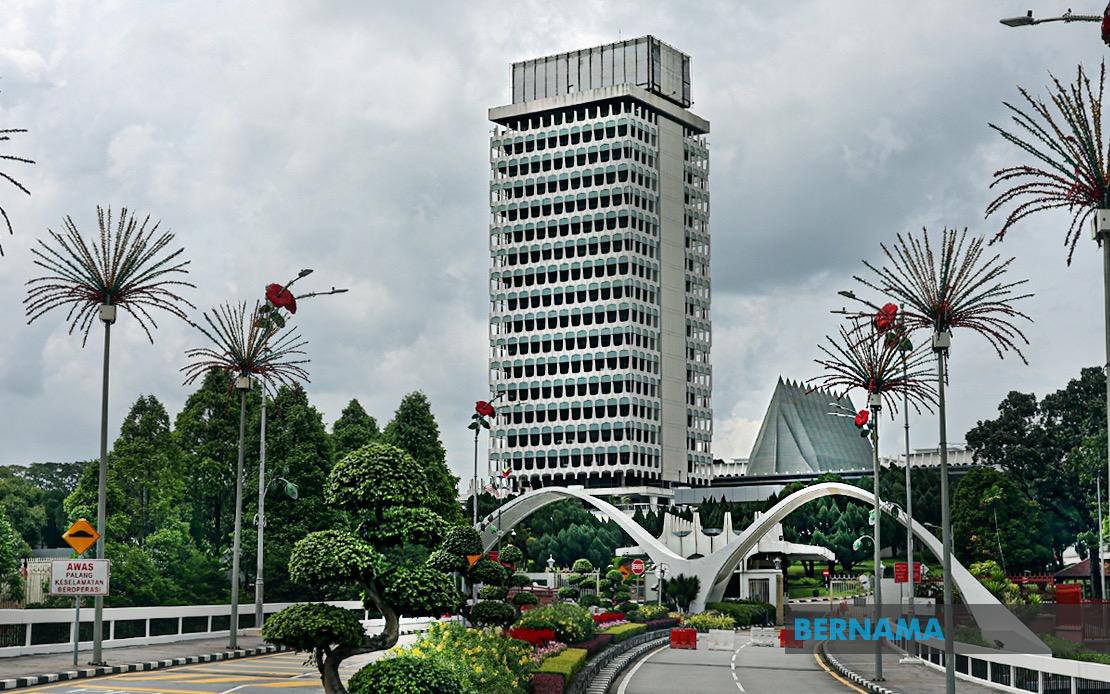
The Dewan Rakyat's third week of sitting has proven substantive and wide-ranging, with lawmakers advancing critical legislation on market competition whilst grappling with complex governance questions spanning media freedoms, food security and defence procurement. Eleven government ministries wound up their parliamentary responses across the period, addressing concerns from members representing constituencies as diverse as urban Selangor and rural Sabah. The sitting, which concludes on July 16, has emerged as a testing ground for the government's legislative agenda and its response to parliamentary scrutiny on issues of national importance.
Two competition-related bills advanced swiftly through the chamber, signalling the government's determination to modernise Malaysia's regulatory framework for a digital-age economy. The Competition (Amendment) Bill 2026 and the Competition Commission (Amendment) Bill 2026 represent a coordinated effort to tighten enforcement mechanisms against practices that distort markets, whether through price-fixing, market allocation, or predatory conduct by dominant firms. These amendments respond to the increasing complexity of competition issues in digital platforms, e-commerce and technology sectors, areas where traditional competition law has often struggled to keep pace with rapid business model innovation. For Malaysian consumers and small retailers competing against well-capitalised tech giants, the passage of these bills suggests the government recognises that market discipline requires updated tools.
The regulation of Malaysia's rice and padi sector received parallel attention when lawmakers tabled the Control of Padi and Rice (Amendment) Bill 2026 for its initial reading. This legislation marks a significant hardening of enforcement posture, substantially elevating maximum penalties to RM1 million to combat fraud, quality adulteration and unfair trading practices within an industry crucial to domestic food security and rural livelihoods. Rice remains a staple commodity for virtually every Malaysian household, making the integrity of padi milling and distribution networks a matter touching millions directly. By strengthening regulatory teeth through enhanced penalties, the government signals that cartelisation and malpractice in this sector carry serious consequences, a message particularly relevant given global food price volatility and the importance of protecting Malaysia's ability to feed itself.
Prime Minister Datuk Seri Anwar Ibrahim used his ministerial question time slot to elaborate on government support mechanisms for micro, small and medium enterprises, a segment employing millions of Malaysians and forming the backbone of many local communities. He assured parliament that financial institutions would face pressure to process MSME financing applications with greater speed and rigour, removing bottlenecks that have historically constrained small business growth. This emphasis reflects recognition that Malaysia's economic competitiveness depends partly on whether talented entrepreneurs can access capital efficiently. The Prime Minister's commitment suggests administrative reform within banking regulation to reduce approval timelines without compromising prudential standards.
Press freedom emerged as a more contentious issue during the session, with the Prime Minister directly addressing Malaysia's declining ranking in the 2025 World Press Freedom Index. The decline reflects enforcement actions against several media organisations that have drawn international criticism. Anwar explained that such measures target specific categories of content—material touching on religion, race, the royal institution and national security—rather than constituting a blanket suppression of dissent or criticism of government policy. This distinction matters significantly for how Malaysia's democratic institutions are perceived abroad and how international investors and journalists assess the operating environment. For Malaysian news organisations, the clarification provides some guidance on content boundaries, though tensions remain between government security concerns and journalistic independence.
A protective framework for journalists emerged from parliamentary discussion, with the Prime Minister emphasising that complaints against media professionals from recognised news organisations will no longer trigger automatic investigations or enforcement action. Instead, such complaints must first pass through the Malaysian Media Council, creating a buffer institution between government power and journalistic work. This procedural safeguard represents a meaningful constraint on prosecutorial discretion and reflects parliamentary pressure to institutionalise protections for the media ecosystem. The approach acknowledges that press freedom operates best when enforcement decisions involve independent professional bodies rather than purely governmental actors.
Parliament also gave serious attention to the Human Rights Commission of Malaysia's annual report for 2024, debating SUHAKAM's findings and recommendations concerning human rights protection and governance standards. This discussion allowed MPs to raise systemic concerns about institutional practices, enforcement gaps and emerging rights issues requiring policy attention. The commission's annual reporting mechanism creates regular parliamentary accountability moments where human rights questions receive formal legislative consideration, though the actual impact of recommendations depends on executive responsiveness and budgetary allocation.
Two Special Select Committees presented reports addressing organ donation frameworks and the troubling acceleration of abuse and violence cases recorded since 2020. The organ donation inquiry reflects broader healthcare policy discussions about transplantation infrastructure and public participation in donation programmes. The violence report is more sobering, documenting a six-year trend of escalating abuse and violence cases that crosses demographic boundaries. Such findings typically generate calls for enhanced victim support services, perpetrator accountability mechanisms and prevention programmes, though parliamentary recommendations often outpace resource allocation and implementation capacity.
Defence procurement decisions also featured in third-week discussions, with lawmakers examining the selection process for missile systems to equip Malaysia's Littoral Combat Ships, a significant naval modernisation initiative. The debate over the Naval Strike Missile replacement touches on acquisition strategy, budget discipline and capability requirements for maritime security in a region of growing geopolitical competition. Malaysia's relatively constrained defence budget makes such procurement decisions consequential, requiring careful analysis of alternatives and long-term operational demands.
Healthcare system digitalisation emerged as another key theme, with attention focused on accelerating digital transformation at public hospitals and clinics. Malaysia's public health system serves tens of millions of Malaysians, and modernising patient records, appointment systems and diagnostic infrastructure remains a persistent challenge. Parliamentary interest in this agenda suggests recognition that digital efficiency yields better patient outcomes and reduces administrative burden on healthcare workers. The issue resonates across Malaysian society because virtually everyone interacts with public healthcare at some point in their lives.
The 1Malaysia Development Berhad scandal continued casting a shadow over parliamentary proceedings, with Deputy Finance Minister Liew Chin Tong disclosing that government liabilities stemming from 1MDB total RM51.4 billion when combining settled debts and outstanding obligations. This staggering figure underscores the fiscal drag created by the 1MDB episode, constraining the government's capacity to invest in new infrastructure, education and healthcare expansion. For Malaysian taxpayers, the continued burden of managing 1MDB fallout represents a persistent drag on public finances and a reminder of governance failures that require institutional reform to prevent recurrence.
Parliament's Speaker, Tan Sri Dr Johari Abdul, separately reminded members to prioritise regular health screening, prompted by a lawmaker's recent admission to the National Heart Institute. This intervention reflects growing awareness within the legislature that parliamentary duties impose significant stress, with members often working irregular hours and managing constituency demands that can compromise wellness. The Speaker's reminder carries symbolic weight, acknowledging that legislative bodies benefit when members remain physically and mentally healthy.
With one week remaining before the Second Meeting of the Fifth Session concludes on July 16, the Dewan Rakyat still faces outstanding legislative and scrutiny business. The trajectory of this sitting demonstrates that Malaysian parliament remains engaged with substantive policy questions affecting citizens' daily lives, from food security to healthcare delivery to media freedoms, even as government-opposition dynamics continue shaping what gets debated and how thoroughly.

