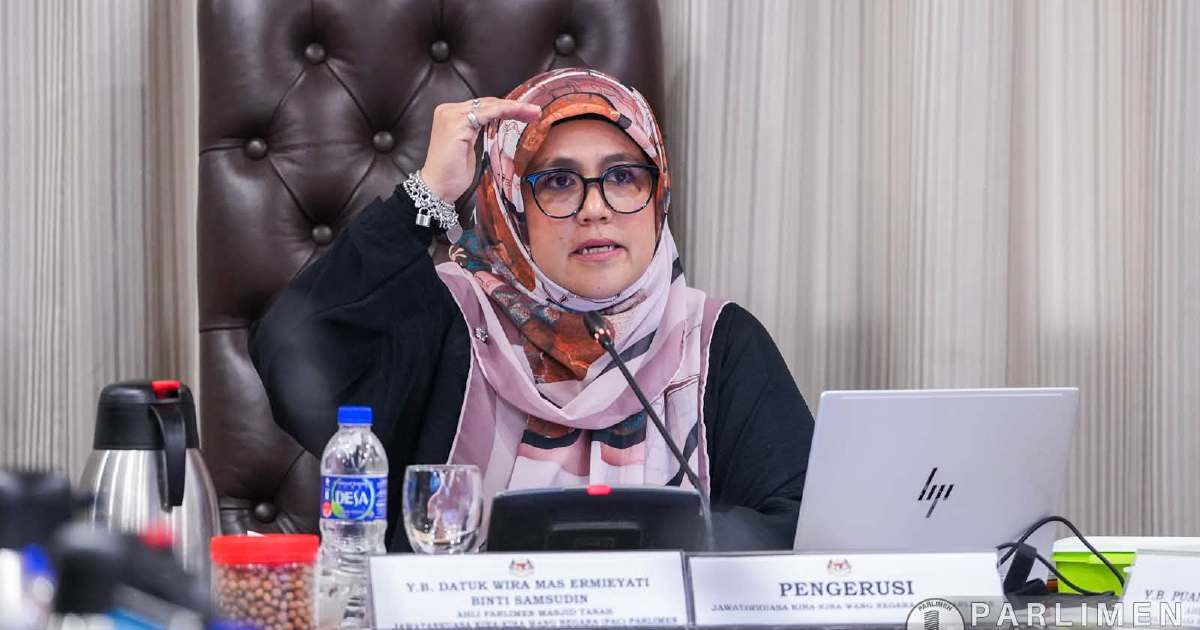
Parliament's Public Accounts Committee has unanimously moved to initiate formal proceedings examining systematic weaknesses in governance structures, financial management protocols, and investment decisions at Lembaga Tabung Haji, the nation's largest Islamic pilgrimage savings institution. The unanimous resolution marks an escalation in legislative scrutiny of the organisation, reflecting growing parliamentary concern over the stewardship of billions of ringgit entrusted to TH by Malaysian Muslims preparing for the Hajj pilgrimage.
The PAC decision represents a significant development in ongoing accountability mechanisms aimed at strengthening oversight of public institutions. As Malaysia's parliamentary watchdog responsible for examining government spending and institutional performance, the committee's investigations carry considerable weight in holding organisations to account for their stewardship of public resources. The committee's initiative signals that legislators from across political divides share concerns regarding TH's operational and financial frameworks.
Tabung Haji's trajectory over recent years has drawn increased public and political scrutiny, particularly regarding its investment portfolio composition and returns compared to inflation and market benchmarks. The institution manages savings from hundreds of thousands of Malaysian Muslims, with accumulated funds representing substantial national wealth. Questions surrounding how these resources have been deployed—and the adequacy of governance frameworks governing such deployment—have become increasingly prominent in public discourse and parliamentary debates.
The financial and investment dimensions of the investigation appear central to the PAC's concern. TH's investment strategy, the performance of its portfolio across various asset classes, and the decision-making processes underlying major capital allocation decisions will likely feature prominently in committee deliberations. The timing of the investigation reflects sustained concerns about whether TH has optimised returns for account holders or whether governance lapses have exposed the institution to unnecessary risks.
Governance structures within TH will form another crucial investigative focus. Questions regarding board composition, committee oversight mechanisms, management accountability frameworks, and the clarity of decision-making authority will likely feature in the PAC's examination. Robust governance architecture is particularly critical for institutions managing accumulated wealth on behalf of millions of beneficiaries, where misalignment between decision-makers' interests and account holders' interests can generate substantial losses.
The unanimous nature of the PAC's resolution underscores the cross-party consensus surrounding the investigation's necessity. Such unanimity is noteworthy given Malaysia's polarised political landscape, suggesting that legislators across the political spectrum recognise legitimate grounds for concern regarding TH's institutional performance. This consensus potentially strengthens the investigation's legitimacy and may facilitate broader institutional reforms should the committee identify systemic deficiencies.
For Malaysian account holders—numbering in the hundreds of thousands—the PAC investigation offers potential pathways toward enhanced institutional accountability. Many contributors to TH have expressed concerns about whether their accumulated savings are achieving competitive returns, particularly as inflation erodes purchasing power and alternative investment vehicles offer varying yields. The investigation may illuminate whether governance deficiencies or suboptimal investment decisions have underperformed account holders' interests.
The investigation also carries implications for broader institutional trust in Malaysia's Islamic finance sector and public institutions generally. TH's prominence as an Islamic financial institution means that its governance standards and investment performance serve as reference points for public confidence in Islamic finance management. Any findings revealing systemic weaknesses could carry reputational consequences extending beyond TH itself, affecting perceptions of how Islamic financial institutions manage collective savings.
Regionally, Malaysia's formal legislative investigation into TH governance practices may establish precedent for scrutinising similar pilgrimage savings institutions across Southeast Asia and beyond. Several Muslim-majority nations operate comparable schemes, and rigorous institutional oversight mechanisms could become increasingly expected as standards of institutional accountability evolve across the Islamic world.
The scope and depth of the PAC investigation remain to be determined as the committee formalises its working procedures and terms of reference. Committee members will likely request access to detailed financial records, investment documentation, board meeting minutes, and management correspondence spanning significant periods. TH officials and management will presumably be called to provide testimony and explanations regarding the institution's strategic decisions and operational frameworks.
The investigation's timeline and preliminary findings will be closely monitored by account holders, civil society observers, and political constituencies with interests in institutional accountability. Should the committee identify material governance deficiencies or investment management failures, its recommendations could prompt substantial institutional reforms, management changes, or policy modifications affecting TH's operational frameworks.
This PAC initiative reflects broader trends toward enhanced parliamentary scrutiny of public institutions in Malaysia. As legislative oversight mechanisms become increasingly proactive in examining institutional performance, organisations managing significant public resources face heightened accountability expectations. For TH specifically, the investigation represents both a testing ground for demonstrating institutional responsiveness to legitimate oversight concerns and a potential catalyst for fundamental improvements in governance architecture and investment governance.

