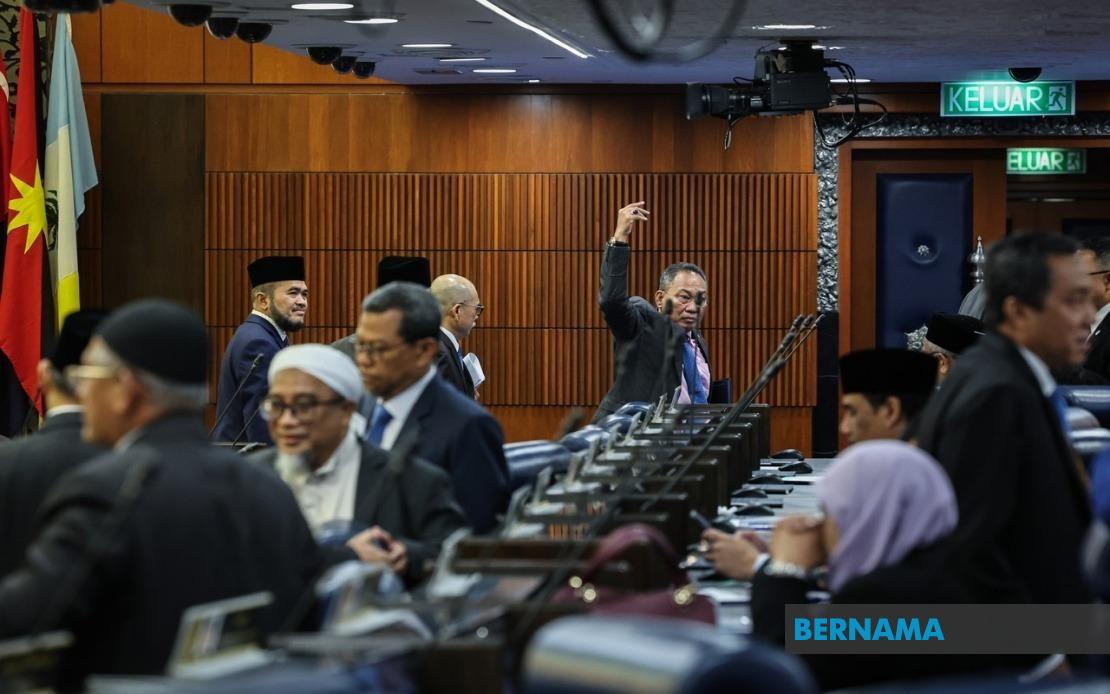
The walkout by Perikatan Nasional MPs from yesterday's Dewan Rakyat sitting has drawn sharp criticism from governance experts, who contend that such parliamentary absences ultimately diminish opposition effectiveness in protecting public interest. Opposition Leader Datuk Seri Hamzah Zainuddin and other senior PN figures, including Chief Whip Datuk Seri Takiyuddin Hassan, left the chamber rather than participate in the government's ministerial briefing on findings from the Royal Commission of Inquiry into Tabung Haji's operations between 2014 and 2020.
The legislators justified their departure by citing the absence of Prime Minister Datuk Seri Anwar Ibrahim and Deputy Prime Minister Datuk Seri Fadillah Yusof, both receiving medical care. However, scholars and political analysts interviewed on the matter argue that this reasoning overlooks a more fundamental principle: Parliament's essential function as a forum for scrutinising government actions and protecting institutional integrity.
Associate Professor Dr Mazlan Ali from Universiti Teknologi Malaysia has questioned whether the opposition's priorities remain aligned with depositor interests. He suggests that opposition lawmakers should have remained in the chamber to receive briefings from the Minister in the Prime Minister's Department (Religious Affairs), Dr Zulkifli Hasan, whose portfolio expertise adequately covers the Tabung Haji matter. The decision to boycott, he argues, sends a troubling signal to the institution's 10 million account holders who depend on elected representatives to demand transparency and accountability through parliamentary debate.
Dr Mazlan's perspective reflects a deeper concern within academic circles about how Malaysia's legislature functions as a check on executive power. Rather than treating a minister's briefing as secondary to the Prime Minister's physical presence, he contends that opposition members should have evaluated the substantive content of the discussion and the adequacy of ministerial responses. Such engagement, he suggests, would have strengthened the parliamentary record with specific questioning and documented critiques of the RCI's findings regarding management and operational weaknesses uncovered during the period under review.
The analyst also acknowledges the Prime Minister's current health situation, noting that voters and fellow parliamentarians alike should respect his need for medical recovery. This acknowledgment underscores an important distinction in parliamentary practice: the institution itself must function continuously, even when particular individuals are temporarily unavailable. Opposition members, from this viewpoint, bear responsibility for maintaining Parliament's effectiveness regardless of specific personnel constraints.
Dr Nazreena Mohammed Yasin, a senior lecturer in the Department of Social Sciences at Universiti Tun Hussein Onn, frames the issue through the lens of institutional accountability. She emphasizes that active parliamentary participation constitutes the most effective mechanism for ensuring that government officials answer for their decisions and policies. When opposition MPs absent themselves from debate, they inadvertently weaken the very institution designed to constrain executive overreach and protect democratic values.
In the specific context of the Tabung Haji inquiry, Dr Nazreena observes that the Dewan Rakyat provides a crucial platform for examining the RCI's conclusions and questioning the adequacy of government responses. Through parliamentary debate, elected representatives can create a formal, publicly accessible record of what the government intends to do regarding governance improvements, financial stabilisation measures, and operational reforms. This transparency mechanism loses its force when legislators choose absence over engagement.
Dr Nazreena further stresses that ministerial accountability does not hinge exclusively on Prime Minister attendance. Any government minister answering questions within their portfolio scope bears equal responsibility to elected representatives and, ultimately, to the public. Her perspective suggests that opposition insistence on the Prime Minister's presence, given his medical circumstances, may represent a tactical preference rather than a legitimate parliamentary requirement. The substantive RCI findings and the government's proposed remedial action plan warrant detailed examination regardless of which cabinet member delivers the briefing.
Both analysts raise an important political concern: the opposition's absence may inadvertently undermine its credibility as a champion of depositor welfare and institutional reform. In subsequent political discourse, the government could argue that opposition members demonstrated insufficient commitment to scrutinising the RCI report's findings or ensuring robust follow-up mechanisms. For an institution serving Malaysia's Muslim community with enormous accumulated deposits, continued parliamentary vigilance remains essential, and depositors would reasonably expect their representatives to maintain this oversight across political divisions.
Dr Nazreena emphasises that parliamentary scrutiny extends beyond initial debate into implementation. MPs must ensure that policies, governance structures, and financial measures announced in response to the RCI report are monitored and evaluated transparently. When opposition members withdraw from these proceedings, they sacrifice opportunities to document government commitments and later hold officials accountable for delivery. This forward-looking accountability function is particularly critical for an institution like Tabung Haji, where remedying systemic weaknesses requires sustained public attention.
The broader implication for Malaysian governance lies in how legislatures balance partisan advantage against institutional integrity. Parliamentary opposition serves democracy most effectively when focused on substantive policy critique rather than tactical manoeuvres around attendance or personalities. The Tabung Haji RCI debate presented opposition lawmakers with an opportunity to demonstrate that their primary commitment was to protecting depositor interests and ensuring transparent government administration, rather than competing for political advantage.
Moving forward, experts suggest that opposition legislators face a choice about how they wish to be perceived: as serious contributors to parliamentary oversight or as partisan actors willing to sacrifice institutional effectiveness for political messaging. Given that the RCI's findings carry direct implications for millions of Malaysians and the broader financial system, the stakes extend well beyond parliamentary theatre into genuine questions about institutional reform and public trust.

