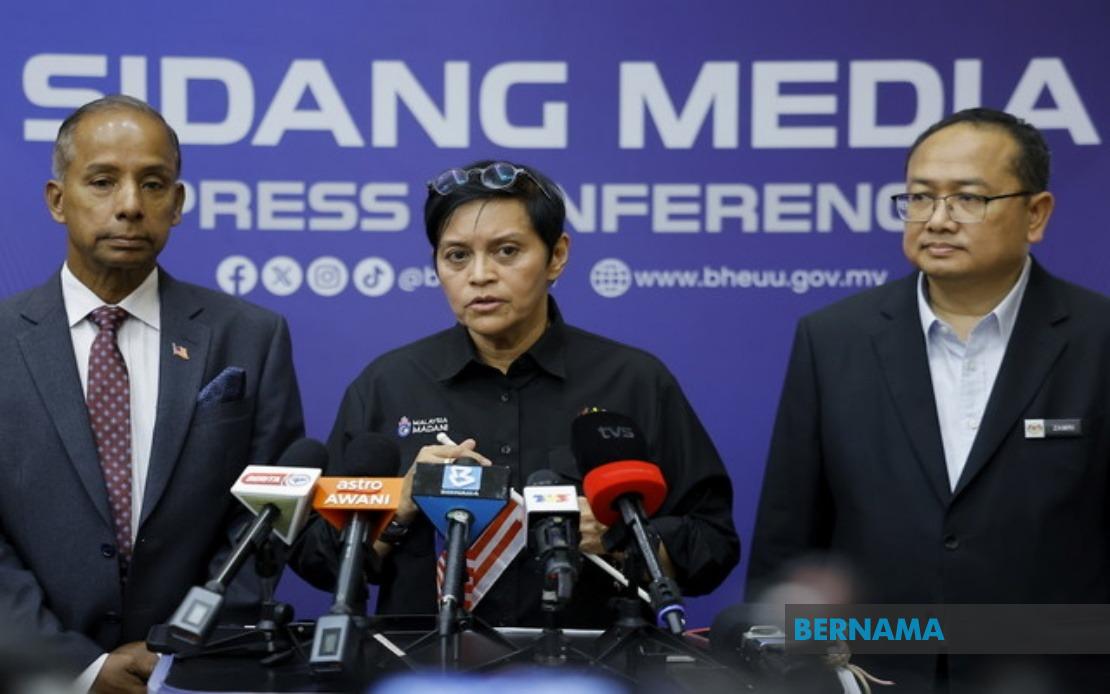
Malaysia's drive toward greater governmental transparency will take a crucial step forward as a Parliamentary Select Committee begins its examination of the Freedom of Information Bill 2026. The first meeting of the panel, chaired by Minister in the Prime Minister's Department (Law and Institutional Reform) Datuk Seri Azalina Othman Said, is scheduled to commence with a focus on establishing the committee's operational framework and investigative parameters. The initiative reflects the government's commitment to subjecting major legislative proposals to rigorous parliamentary scrutiny before formal submission for consideration by the full legislative chamber.
Azalina outlined the committee's composition to reporters following a departmental gathering, emphasising that the body will operate on a cross-party basis, securing representation from multiple political factions within Parliament. This bipartisan approach represents a notable commitment to ensuring that the legislative review process incorporates diverse perspectives and concerns from across the political spectrum. The Select Committee structure itself signals an intention to build broad consensus around transparency measures, acknowledging that access to government information is a matter of public interest that transcends narrow partisan considerations.
The decision to refer the Bill to a Select Committee rather than proceeding directly to parliamentary debate provides an extended period for comprehensive examination. In a development announced on July 13, the government moved to defer initial parliamentary consideration in favour of this more deliberative approach. This timeframe permits the committee to engage meaningfully with Members of Parliament and external stakeholders before formulating recommendations, potentially resulting in a more refined legislative product than might otherwise emerge from the standard parliamentary process. The committee is tasked with completing its review and submitting findings before the next scheduled parliamentary sitting, establishing a concrete deadline for the investigative process.
A central element of the committee's work will involve evaluating submissions from non-governmental organisations, professional associations, and other civil society actors who have expressed concerns regarding the Bill's current formulation. Azalina acknowledged that multiple stakeholders have flagged anxiety about the scope and breadth of the proposed legislation, with some bodies contending that the Bill does not extend far enough in its provisions for information access. These critiques suggest that various segments of Malaysian society view the transparency framework as potentially too restrictive or narrowly constructed, setting the stage for substantive debate about where appropriate boundaries should lie between governmental secrecy and public access.
The Bill itself establishes a procedural framework governing how members of the public may petition for access to information held by Malaysian public authorities. Eligibility is broadly defined, extending to any Malaysian citizen aged eighteen years and above, signalling an inclusive approach to who may exercise information rights. The mechanism envisages written applications as the standard method for making access requests, creating an orderly system for processing such applications rather than ad-hoc or informal arrangements. This procedural clarity is intended to create predictability and consistency in how different government agencies respond to requests for official records and documents.
However, the Bill's current framework preserves the application of existing secrecy legislation, most notably the Official Secrets Act 1972. Information classified under this statute, as well as material whose disclosure is prohibited or restricted under other written law, remains exempt from the freedom of information mechanism. This carve-out represents a fundamental tension within the Bill—the establishment of transparency procedures occurs within the bounds of, rather than in supersession of, Malaysia's existing classification and secrecy regimes. The preservation of these restrictions means that the practical scope of accessible information may remain substantially constrained despite the creation of new access mechanisms.
For Malaysian readers and policymakers, this Bill carries particular significance in an era when citizens increasingly expect governmental openness and accountability. The committee's work will determine whether the legislation proves sufficiently robust to meet contemporary standards for transparency, or whether existing secrecy law protections render it largely symbolic in effect. The outcome will likely influence broader regional discussions about information access, as other Southeast Asian nations contemplate their own approaches to governmental transparency. Malaysia's experience will serve as a case study in how democracies balance legitimate security and privacy interests against public demands for visibility into governmental decision-making.
The stakeholder concerns flagged by Azalina suggest that civil society organisations view the Bill as requiring expansion beyond its current parameters. Many NGOs and professional bodies apparently believe the legislation should encompass broader categories of information and impose fewer restrictions on access rights. This perspective reflects a philosophy that presumes government information should be accessible unless a compelling justification for secrecy exists—inverting the default presumption embedded in Malaysia's current secrecy legislation. The Select Committee's deliberations will essentially wrestle with where Malaysia should position itself along this spectrum.
The committee's upcoming work occurs against a backdrop of global momentum toward freedom of information legislation. Numerous democracies have enacted comprehensive right-to-information statutes, some decades ago, creating an established body of international practice and jurisprudence regarding how such laws function in practice. The Select Committee will benefit from examining international experience and lessons learned, potentially identifying pitfalls to avoid and best practices to adopt. Malaysia's late arrival to comprehensive freedom of information legislation creates an opportunity to learn from other nations' experiences rather than pioneering approaches that might prove inefficient or unworkable.
The timeline established for the committee's work reflects the government's apparent determination to progress the Bill through Parliament in the current session. By requiring the committee to report before the next parliamentary sitting, a compressed but achievable schedule has been set. This urgency suggests that transparency reform figures prominently in the government's legislative agenda, though questions remain about whether the committee's deliberations will result in substantial modifications to the Bill or primarily confirm its existing parameters. The first meeting's focus on terms of reference will indicate how expansively the committee intends to scope its investigative mandate.
As the committee prepares to convene, Malaysian stakeholders—ranging from journalists and civil society activists to business groups and academic institutions—will be watching closely to assess whether the resulting legislation delivers meaningful transparency gains or remains constrained by existing secrecy frameworks. The Select Committee process itself represents an improvement over closed-door legislative drafting, offering opportunities for public input and parliamentary scrutiny that were absent when the Bill was originally formulated. Whether these opportunities translate into substantive legislative improvements will emerge as the committee's work progresses and eventual recommendations take shape.

