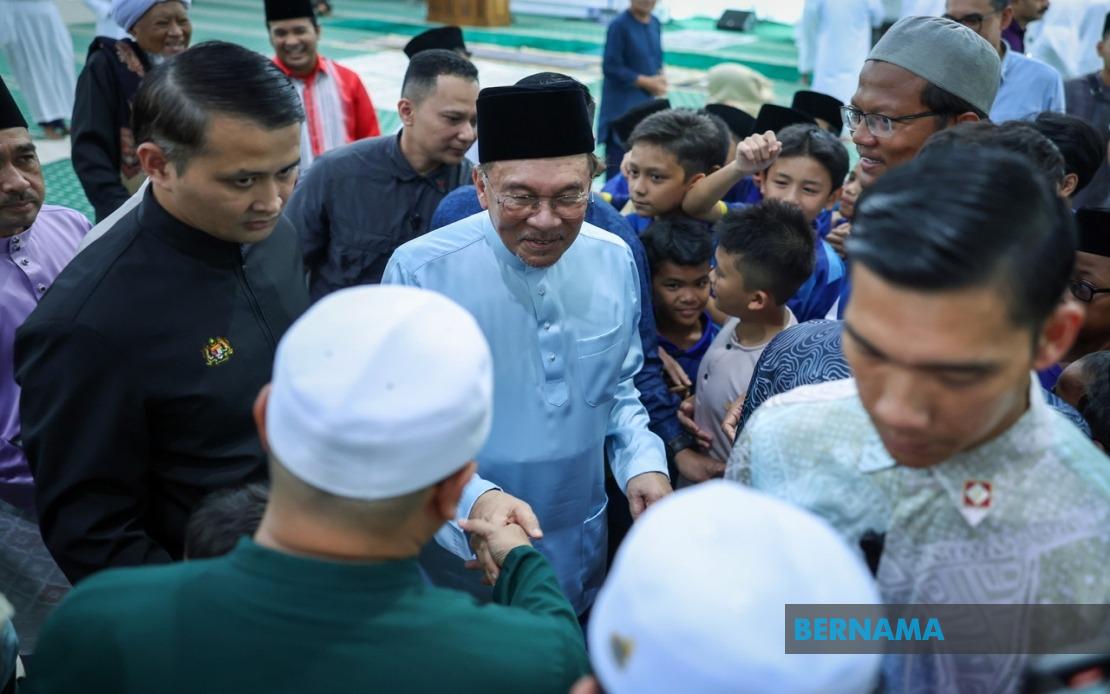
Prime Minister Datuk Seri Anwar Ibrahim has drawn a clear distinction between parliamentary allocations and the entitlements of individual Members of Parliament, emphasizing that such funds are the property of constituents rather than their elected representatives. Speaking to journalists after attending Friday prayers at Masjid Ar-Rasyidin in Alor Gajah, the Prime Minister underscored that constituency allocations serve a specific purpose: improving living standards and financing tangible community infrastructure.
The clarification comes at a time when several opposition MPs have lodged complaints that the government has suspended funding to their constituencies. Anwar's statement suggests a deliberate policy shift aimed at depoliticizing the distribution of development resources, ensuring that public money benefits ordinary residents regardless of whether their MP sits in government or the opposition benches. This approach fundamentally reframes how constituency funds ought to function within Malaysia's political system.
Anwar illustrated the intended use of these allocations through concrete examples. A hypothetical allocation of RM2 million, he explained, should be deployed toward schools, religious educational institutions, mosques, drainage infrastructure repairs, and other essential services identified by communities. By itemizing these categories, the Prime Minister articulated a vision where development budgets directly address grassroots needs rather than flowing through MP-controlled channels. The specificity of his examples suggests that the government intends to implement direct distribution mechanisms and oversight mechanisms to ensure accountability.
The policy framework Anwar described is not new, as he acknowledged during his remarks. Previous governments have operated on similar principles, and the mechanics were understood by MPs who previously held ministerial positions. However, the reiteration of this position carries particular weight given the current political environment, where the government commands a narrow parliamentary majority and faces persistent tension with opposition lawmakers. By restating the foundational principle, Anwar appears to be signaling that the government will not use control over constituency funds as a bargaining chip or punitive measure in routine parliamentary politics.
When pressed about allegations that the government had withheld allocations from opposition constituencies, Anwar responded by articulating a distinction between party politics and governance. According to his position, should an MP find themselves in opposition, the funds designated for their constituency will be redirected toward constituents through alternative channels that bypass the MP's administrative control. This approach presents a practical solution to a recurring tension: how governments balance the principle of universal access to development resources with the reality of parliamentary opposition.
The Malaysian context makes this issue particularly significant. Historically, parliamentary allocations have sometimes been distributed through MP offices, creating implicit dependencies and linkages between electoral support and resource access. By asserting that funds belong to people rather than politicians, Anwar is attempting to depoliticize development infrastructure and insulate it from the vicissitudes of parliamentary arithmetic. For Southeast Asian observers, this represents an interesting experiment in separating legislative representation from bureaucratic resource distribution.
The presence of Minister in the Prime Minister's Department (Religious Affairs) Senator Dr Zulkifli Hasan alongside Anwar during these remarks suggests that the government recognizes the broader implications of clarifying allocation procedures. Religious affairs fall within constituencies' development priorities, and ensuring that funding reaches mosques and religious institutions regardless of MP affiliation touches on questions of community trust and inclusive governance. Similarly, Melaka Police chief Datuk Dzulkhairi Mukhtar's attendance hints at security or administrative coordination dimensions underlying the resource distribution framework.
For Malaysian constituencies, particularly those represented by opposition lawmakers, Anwar's declaration potentially offers reassurance that development will not be weaponized politically. Schools will continue receiving allocations for facilities improvement, drainage problems will be addressed, and religious institutions will be maintained using taxpayer funds, irrespective of parliamentary seating arrangements. This principle, if consistently applied, could strengthen public confidence in the impartiality of government service delivery.
In a separate development, Anwar addressed questions regarding his daughter, PKR deputy president Nurul Izzah, who had recently requested to step down from her position. According to Anwar, Nurul Izzah is temporarily pursuing special commitments elsewhere, and he has consented to her request. He emphasized that despite her formal step-down, she remains engaged in party activities, suggesting her absence is temporary rather than indicative of broader political shifts within the PKR leadership structure. Her continued involvement, even from a reduced profile, demonstrates flexibility within party hierarchies regarding balancing personal circumstances with political responsibilities.
The allocation principle articulated by Anwar reflects broader questions about governance equity and institutional integrity in Malaysia. As constituencies experience varying levels of development readiness and infrastructure needs, the government's challenge lies in ensuring that resource distribution responds to genuine community requirements rather than political calculations. The mechanism by which the government will verify that allocations truly benefit residents and the oversight structures that will prevent misappropriation or inefficiency remain questions requiring administrative clarity.
Moving forward, this policy clarification will likely influence how the government handles funding disputes and how opposition constituencies seek development resources. The framework Anwar outlined suggests that residents in opposition-held constituencies need not feel abandoned by the federal government, provided they can articulate legitimate development needs and navigate alternative distribution channels. For Malaysia's ongoing democratic evolution, how effectively these principles are implemented will signal whether resource allocation can transcend partisan boundaries.

