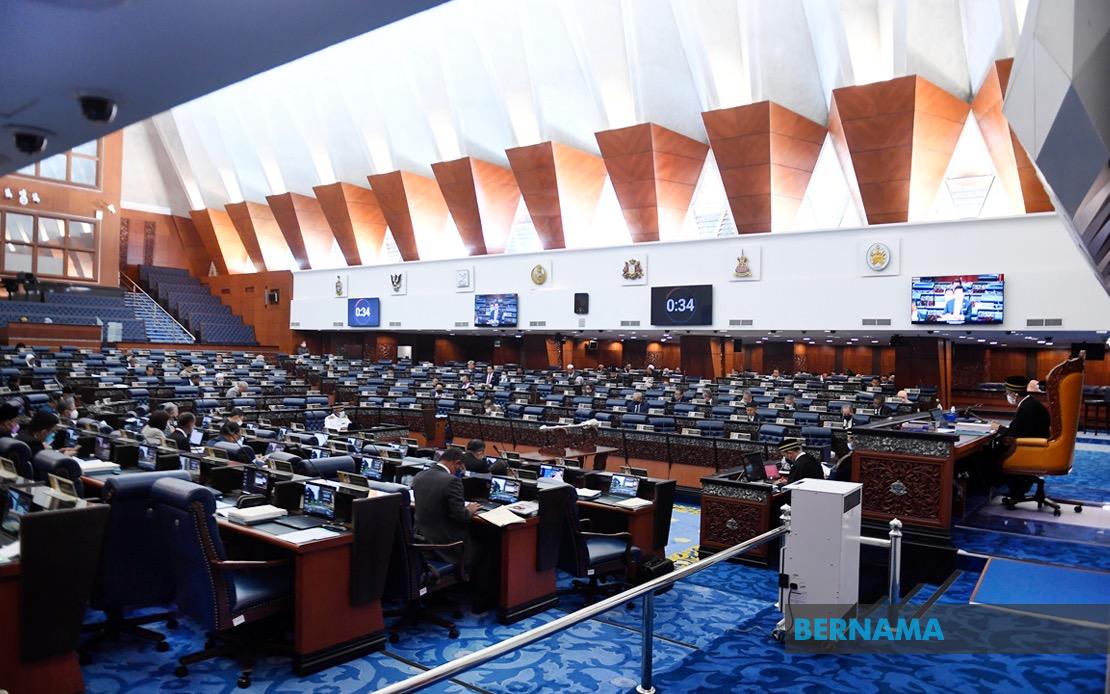
Parliament's lower house convened on June 30 to address longstanding concerns about how federal resources are distributed among Malaysia's state governments and the mechanics of campaign finance rules during election periods. The sitting highlighted growing tension between state administrations and the federal government over funding equity, a persistent grievance that cuts across political divides and directly affects service delivery capabilities at the sub-national level.
Doris Sophia Brodi, the GPS lawmaker from Sri Aman, raised fundamental questions about whether state governments receive adequate federal allocations relative to the revenue their constituents generate. Her parliamentary query pushed the Prime Minister to justify the existing allocation mechanism and detail what reforms the MADANI Government intends to implement. This issue resonates particularly in states that feel economically sidelined or undercompensated for their fiscal contributions to federal coffers. The debate reflects deeper concerns about whether Malaysia's fiscal federalism adequately balances the centre's retention of taxing power with proportionate resource transfers to enable states to fulfil essential functions in health, education, and infrastructure.
Parallel to the funding discussion, lawmakers scrutinised the enforcement of regulations prohibiting government project announcements after election nomination periods close. Shahidan Kassim from Perikatan Nasional pressed the Prime Minister on whether this restriction remains binding and what penalties await officials who breach it. With Johor, Melaka, and Negeri Sembilan state elections on the horizon, clarity on enforcement mechanisms becomes critical for maintaining electoral integrity. The rule itself aims to prevent ruling administrations from leveraging state resources and announcements as campaign tools, yet questions persist about whether the prohibition is consistently applied across different political contexts and whether punitive measures deter violations.
Beyond these core governance issues, Parliament also tackled the challenge of artificial intelligence and digital misinformation. Ismail Sabri Yaakob sought government strategies for enhancing media literacy in an era when AI-generated deepfakes and manipulated content proliferate across social platforms. This concern reflects a regional vulnerability, as Southeast Asian societies grapple with synthetic media's potential to undermine public discourse and democratic processes. The government's response will signal whether Malaysia intends to adopt proactive certification systems for authentic content or instead rely primarily on public education to build citizen resilience against manipulation.
The energy sector drew parliamentary attention as well, with Chong Zhemin questioning whether Malaysia's electricity infrastructure can sustain surging demand from data centres and artificial intelligence operations. This question connects economic ambition to infrastructure reality, as the nation seeks to position itself as a regional technology hub. Meeting this demand requires substantial investment in generation capacity and grid modernisation, challenges that intersect with Malaysia's energy transition commitments and the sector's complexity in balancing fossil fuels, renewables, and emerging technologies.
Social safety nets featured prominently in the questioning agenda. Awang Hashim enquired about the effectiveness of the mySalam scheme in protecting the lowest-income bracket, the B40 group. This probe into scheme performance underscores Parliament's role in monitoring whether social protection mechanisms genuinely reach vulnerable populations or suffer from implementation shortcomings. Similarly, Syahredzan Johan investigated redemption rates for the MADANI Book Vouchers, seeking evidence about whether the literacy support initiative translates into actual book purchases or encounters barriers that prevent uptake among intended beneficiaries.
Employment and workforce dynamics also surfaced in parliamentary questioning. Mumtaz Md Nawi examined whether TalentCorp's initiatives, particularly the Career Comeback Programme supporting women's workforce re-entry, achieve meaningful outcomes. This line of inquiry reflects awareness that Malaysia's labour participation among women remains below potential and that facilitating career returns after family absences remains essential for both economic productivity and gender equity objectives.
The cost-of-living assistance programme drew scrutiny through Iskandar Dzulkarnain's questions about the Program Jualan Rahmah MADANI's nationwide rollout and expansion prospects. By examining the programme's penetration across state constituencies and its capacity for increased frequency, Parliament sought evidence about whether this targeted subsidy mechanism meaningfully alleviates financial pressure on middle and lower-income households or requires scaling to meet demand.
Beyond immediate question time exchanges, the parliamentary schedule included substantive legislative work. The Dewan Rakyat resumed debate on the Sexual Offences Against Children (Amendment) Bill 2026, signalling continued parliamentary attention to child protection frameworks. The chamber also moved toward finalising amendments to employment insurance legislation and advancing cyber crime provisions. These three items collectively address safeguarding vulnerable populations, workers' financial protection, and the digital security environment—issues that resonate across Malaysian society regardless of political affiliation.
The breadth of topics examined during this sitting illustrates Parliament's multifaceted oversight role. From macro-level concerns about federal-state resource distribution to granular questions about specific programme effectiveness, lawmakers functioned as constituencies' representatives while monitoring government performance across diverse policy domains. The simultaneous treatment of fiscal equity, electoral conduct, AI governance, infrastructure readiness, social protection, employment support, and consumer assistance reveals an institution grappling with contemporary Malaysia's interconnected challenges. Each question carried implications for ordinary Malaysians navigating economic pressures, digital risks, employment transitions, and access to essential services.

