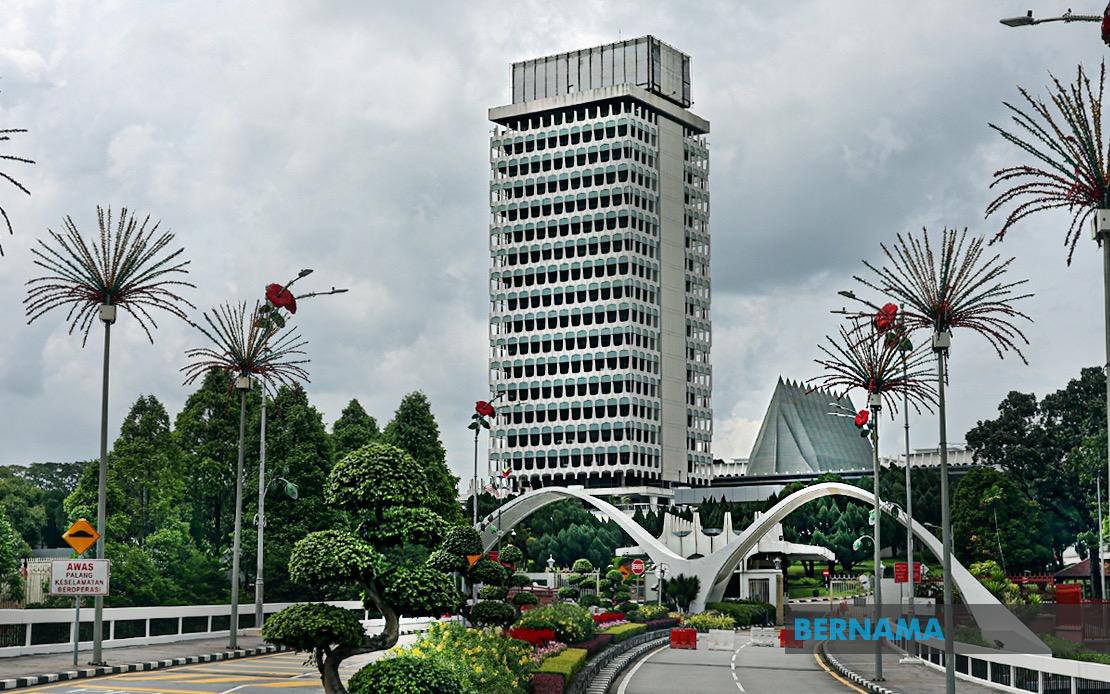
Parliament convenes today for a session extending through July 16, with legislators prepared to scrutinise three significant policy areas reflecting Malaysia's infrastructure, consumer protection, and digital governance priorities. The 16-day sitting places water security, regulatory enforcement, and technology regulation at the forefront of national discourse, signalling government attention to challenges affecting millions of Malaysians across different sectors.
Water sustainability in Johor will dominate early discussion, with Suhaizan Kaiat from Pulai bringing government strategy under examination during Question Time. The inquiry targets comprehensive details on how authorities plan to expand the state's water-holding capacity over coming years, moving beyond reactive management toward proactive infrastructure development. This reflects growing concern about Johor's vulnerability to drought conditions and seasonal supply fluctuations that have periodically disrupted service to residents and manufacturers throughout the southern region.
Government responses are expected to address three complementary pathways for capacity enhancement: construction of new reservoir facilities, expansion and modernisation of water treatment infrastructure, and integration of recycled water systems into the supply chain. Each component carries distinct implications for Johor's development trajectory. New dam construction raises questions about environmental assessment, land acquisition, and timeline feasibility. Treatment plant upgrades promise efficiency gains but require substantial capital investment. Recycled water deployment represents innovative thinking yet demands public education to overcome perception barriers regarding non-potable applications in industrial and municipal contexts.
The housing sector faces parliamentary scrutiny over competition enforcement mechanisms, with Datuk Seri Ismail Abd. Muttalib questioning whether the Malaysia Competition Commission possesses adequate resources and authority to combat anti-competitive conduct in property markets. Across Malaysia, property buyers have expressed frustration over opaque pricing structures and market dynamics that appear disconnected from fundamental supply-demand fundamentals. The question probes whether MyCC can effectively investigate alleged price coordination, bundling practices, and selective distribution that may inflate costs for residential units.
This line of inquiry reflects broader anxieties about housing affordability across the region. Young families and first-time purchasers encounter asking prices increasingly divorced from household income growth, particularly in urban centres. When market conditions suggest coordinated behaviour rather than organic price discovery, competition authorities face pressure to intervene decisively. MyCC's capacity to investigate sophisticated anti-competitive arrangements—ranging from explicit cartels to tacit coordination—will determine whether enforcement actions materialise or remain theoretical.
Digital governance enters parliamentary focus through Syahredzan Johan's questioning of age verification mechanisms for social media platforms. The Communications Ministry must explain both the policy rationale and implementation safeguards surrounding age-gating systems that increasingly mediate young people's access to digital spaces. This reflects global trends toward protecting minors from content exposure and algorithmic harms, yet raises tensions between child safety and privacy preservation.
Age verification systems necessarily collect personal data, creating new surveillance surfaces that require rigorous governance frameworks. The inquiry specifically demands clarity on what data licensed service providers can access, how extensive their permissions are, and what deletion requirements apply once verification purposes conclude. These technical details carry profound implications for privacy culture in Malaysia. If verification systems operate without proportionality constraints, they risk becoming permanent tracking infrastructure disguised as protective measures. Conversely, robust deletion protocols and limited data access preserve privacy while maintaining safety objectives.
The ministry must articulate how it balances multiple policy objectives: protecting minors from harmful content exposure, preserving parental oversight capacity, enabling legitimate platform operations, and preventing data exploitation by commercial entities or state actors. These tensions cannot be resolved through regulation alone; they require transparent public dialogue about acceptable tradeoffs between safety and privacy, between collective protection and individual autonomy.
These three parliamentary inquiries collectively reveal an administration grappling with modernisation challenges spanning physical infrastructure, market dynamics, and digital governance. Water security connects to climate adaptation and industrial competitiveness in an era of increasing scarcity. Housing competition connects to social stability and generational equity as affordability crises generate political pressure. Social media regulation connects to child welfare and data rights in an increasingly digital society.
Malaysia's standing as a Southeast Asian policy leader partly depends on addressing these interconnected challenges coherently. Neighbouring countries monitor Malaysian approaches to water management, competition enforcement, and digital regulation, potentially adopting successful models or learning from implementation shortcomings. The parliamentary session's quality of debate and government responses will signal whether Malaysia's institutions possess analytical depth and political will to navigate these complex terrain effectively.