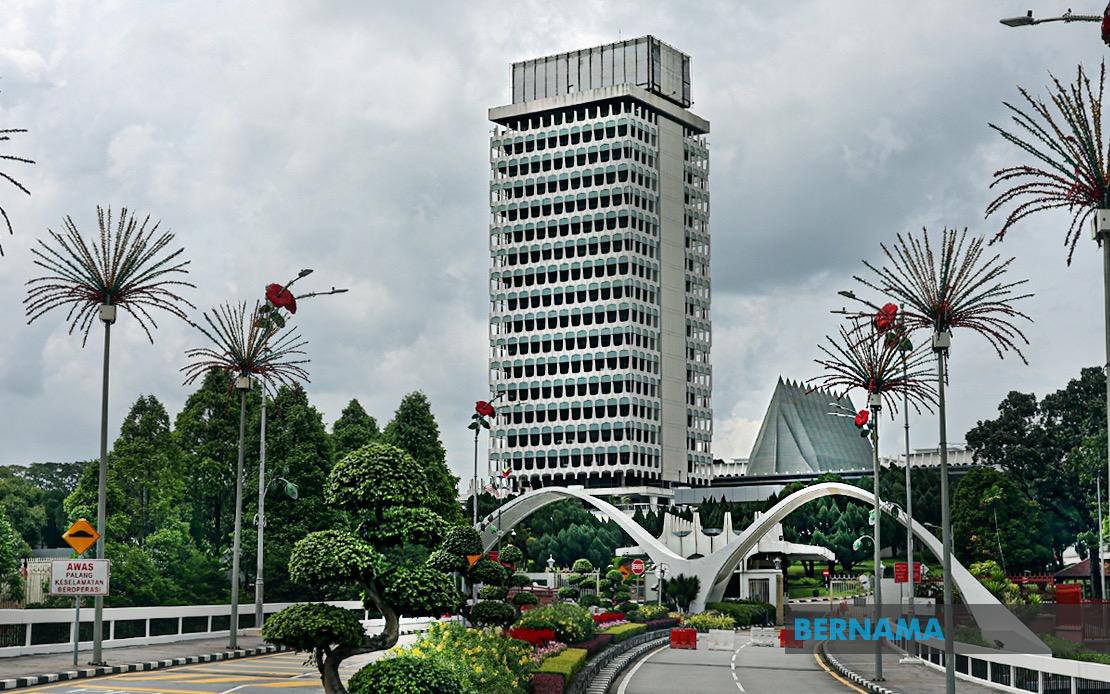
Malaysia's response to the proposed military de-escalation agreement between the United States and Iran will come under parliamentary scrutiny when the Dewan Rakyat reconvenes today, with lawmakers seeking clarity on the government's diplomatic strategy in an increasingly volatile West Asian region. The session, which begins at 10 am, will feature a series of targeted questions to the Foreign Minister regarding how the country intends to leverage its position to promote sustainable peace and stability across the conflict zones that have destabilised global energy markets and threatened maritime security in the Indian Ocean.
Datuk Mohd Isam Mohd Isa, the Barisan Nasional representative for Tampin, will lead questioning on the matter during the customary Minister's Question Time. His inquiry will probe not only Malaysia's official stance on the announced Memorandum of Understanding but also the concrete diplomatic measures the government plans to pursue to cement a lasting settlement in the region. This line of questioning reflects growing concern among Malaysian parliamentarians about the nation's preparedness to engage constructively in regional peace efforts, particularly given Southeast Asia's economic vulnerability to supply chain disruptions triggered by Middle Eastern instability.
Parallel to the geopolitical discussion, legislators will examine the performance of the MADANI Mart initiative, a flagship government programme designed to provide affordable essential goods to Malaysian households facing cost-of-living pressures. Datuk Rosol Wahid from Perikatan Nasional's Hulu Terengganu division will interrogate the Minister of Domestic Trade and Cost of Living on the scheme's operational metrics, requesting a comprehensive breakdown of the number of outlets currently functioning nationwide, the volume of franchise applications processed to date, and the demographic profile of entrepreneurs selected to manage these premises. The initiative has been positioned as a critical intervention to cushion lower-income families against inflation, making its implementation pace a barometer of government commitment to economic relief.
The drug epidemic gripping Malaysian society will also dominate parliamentary discourse, with Khoo Poay Tiong of the Pakatan Harapan-held Kota Melaka seat pressing the Home Minister for updated statistics on synthetic drug addiction cases documented since 2023. His question specifically targets the emerging threat posed by fentanyl, a synthetic opioid that has sparked public health emergencies across Asia and North America, and he will demand articulation of the government's comprehensive response strategy. The emphasis on synthetic drugs reflects a marked shift in Malaysia's narcotics challenge, moving beyond traditional substances toward far more potent and cheaper alternatives that exploit vulnerable populations and strain enforcement resources.
Trade relations between Malaysia and the United States will also feature prominently when Datuk Seri Hamzah Zainudin of Perikatan Nasional's Larut constituency questions the Minister of Investment, Trade and Industry regarding implementation progress on the Agreement on Reciprocal Trade between the two nations. This trade accord carries significant implications for Malaysian exporters and manufacturers seeking preferential market access in the United States, particularly in sectors including semiconductors, palm oil products, and electrical equipment that form the backbone of Malaysia's external trade revenue.
Beyond the question-and-answer session, the Dewan Rakyat will advance three legislative measures through their initial reading phase today. The Prisons (Amendment) Bill 2026 will introduce revisions to Malaysia's correctional system framework, while the Competition (Amendment) Bill 2026 and the parallel Competition Commission (Amendment) Bill 2026 will refine the regulatory landscape governing commercial practices and competition enforcement. The paired competition bills suggest the government is addressing perceived gaps in the current competition regime, possibly in response to concerns about market concentration in key sectors or enforcement agency capability.
The convergence of these parliamentary matters on a single sitting day underscores the breadth of pressing national concerns currently demanding legislative and ministerial attention. The simultaneous examination of foreign policy, consumer protection, public health, international commerce, and institutional reform reflects the complex interlocking challenges confronting Malaysia's policymakers. Each question threads through broader narratives about Malaysia's regional role, its social safety net, citizen wellbeing, and economic competitiveness in an unstable global environment.
For Malaysian stakeholders invested in these policy domains, today's parliamentary session will provide valuable signalling about government priorities and the candour with which ministers engage critical issues. The responses from Foreign, Trade, Home, and Domestic Trade ministers will offer insights into implementation timelines, resource allocation, and the administration's appetite for reform. Parliamentary oversight through these targeted questions remains a fundamental mechanism through which citizen concerns are elevated to the highest echelons of government accountability, particularly when questions originate from both government and opposition benches, as today's agenda reflects.