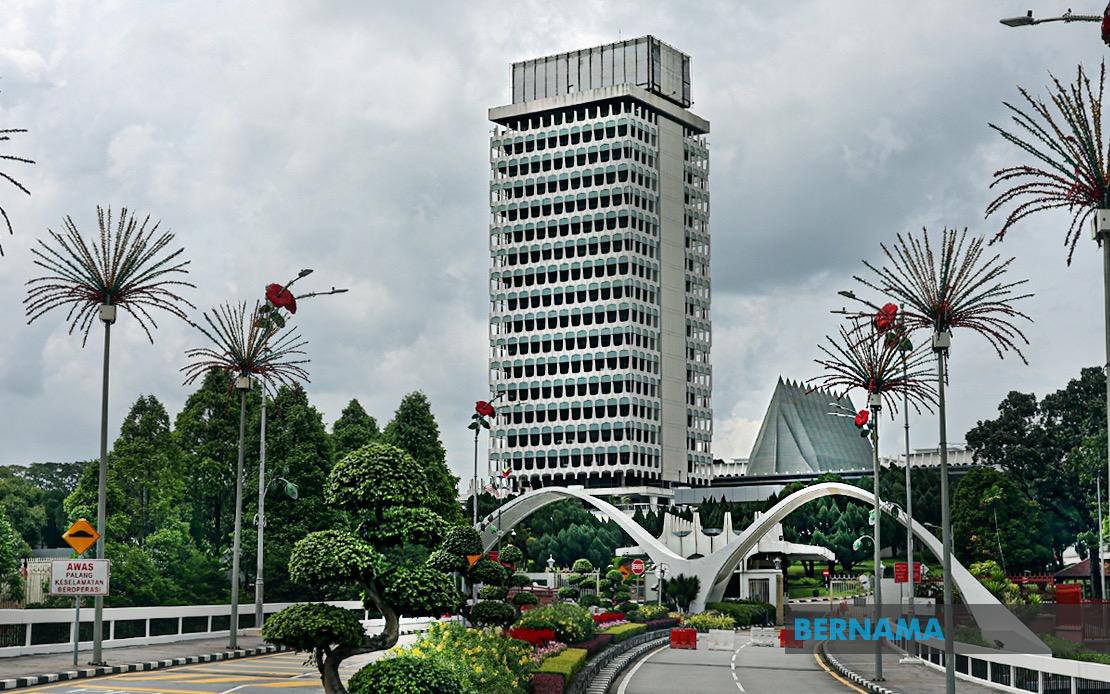
Parliament convenes today to tackle a broad spectrum of pressing governance issues, from industrial energy transition initiatives to delicate regional diplomacy and domestic economic resilience. The proceedings will showcase how Malaysia's legislature engages with transformative policies that affect everything from corporate energy consumption to regional standing, reflecting the multifaceted challenges confronting the government on both domestic and international fronts.
The Corporate Renewable Energy Supply Scheme represents a cornerstone of Malaysia's energy transition strategy, designed to enable industrial players to procure renewable power directly while supporting the nation's decarbonisation ambitions. Rodziah Ismail, the Ampang MP, will press the Minister of Energy Transition and Water Transformation for concrete data on how many companies have enrolled and at what pace adoption is occurring. Her inquiry extends deeper into the mechanics of energy policy, specifically targeting the System Access Charge rate review—a technical but crucial mechanism that determines how much businesses pay to access the grid. This question carries particular weight given Malaysia's aspirations to establish itself as a regional data centre hub, an endeavour where electricity costs form a substantial operational burden. Data centres are notoriously energy-intensive, and even marginal improvements in tariff structures or storage solutions through Battery Energy Storage Systems can meaningfully affect competitiveness against rival hubs in Singapore and beyond.
The global energy crisis has reverberated throughout Southeast Asia, destabilising business confidence and employment levels. Bachok MP Mohd Syahir Che Sulaiman will demand specifics from the Economy Ministry regarding mitigation measures deployed by the National Economic Action Council to cushion job losses and corporate contraction. This line of questioning underscores growing parliamentary concern about whether policy responses are proportionate to deteriorating labour market conditions. The inquiry seeks not mere assurances but measurable outcomes—what has actually been accomplished thus far to stabilise the economy amid simultaneous pressures from elevated energy costs and worldwide economic uncertainty.
Fuel subsidy reform continues to provoke legislative debate, particularly regarding fairness and adequacy. Simpang Renggam MP Datuk Seri Hasni Mohammad will interrogate the Finance Minister on the rationale for standardising subsidy targeting mechanisms, notably the MyKad-linked diesel entitlement system. The fundamental question revolves around whether a 200-litre allocation satisfies typical consumer needs across Malaysia's diverse geography and economic circumstances. Urban workers and rural populations face dramatically different transportation patterns and costs, making uniform thresholds potentially inequitable or insufficient depending on individual circumstances.
Malaysia's diplomatic posture toward Myanmar occupies an increasingly sensitive position within ASEAN and the broader region. Selayang MP William Leong Jee Keen will seek clarity from the Foreign Minister on how the Five-Point Consensus—the regional framework attempting to manage Myanmar's political crisis—translates into actual Malaysian foreign policy positions and decision-making. This question reflects persistent frustration among some parliamentarians that rhetorical commitments to regional consensus may not always align with substantive policy implementation. The depth of engagement and specific mechanisms for applying the consensus remain opaque to many observers, raising questions about Malaysia's leverage and strategic interests in an increasingly fractious regional landscape.
Data sovereignty has emerged as a defining concern for nations seeking technological independence and security. Gombak MP Datuk Seri Amirudin Shari will challenge the Digital Minister to articulate how disparate state-level digital initiatives—specifically Selangor's Dark Fiber Network—integrate with national data protection frameworks. The question extends into Malaysia's declared ambition to become AI-ready by 2030, probing whether technology development simultaneously safeguards Malaysian data from foreign access or control. This reflects genuine anxiety that rapid digitalisation, while economically necessary, could inadvertently compromise sensitive information or create dependencies on external platforms.
Islamic Education standards and coordination mechanisms between federal and state authorities represent another parliamentary focus. Bagan Serai MP Datuk Idris Ahmad will question the Prime Minister on curriculum effectiveness and whether institutional arrangements between Putrajaya and state Islamic Religious Councils sufficiently ensure pedagogical consistency nationwide. Educational quality, particularly in religious instruction, carries profound implications for Malaysia's social cohesion and the formation of citizens' values during formative years. Coordination failures between governmental tiers can result in disparate standards that disadvantage students in less-resourced states.
Sabah and Sarawak representation in Parliament remains contentious, anchored in the Malaysia Agreement 1963. Kota Belud MP Isnaraissah Munirah Majilis will press the Prime Minister for updated progress on MA63 implementation and, critically, the timeline for expanding parliamentary seats in these states to 35 per cent of total nationwide representation. This issue touches upon federalism, equity between East and West Malaysia, and demographic shifts. Stalled implementation generates frustration among East Malaysian constituencies who regard adequate representation as fundamental to the original constitutional bargain.
The Public Accounts Committee will subsequently brief Parliament on healthcare financing challenges, specifically the escalating costs of health insurance premiums and private hospital charges. This report, spanning the Finance Ministry, Health Ministry, and Bank Negara Malaysia's purview, addresses affordability crises that disproportionately affect middle and lower-income households. Rising healthcare costs squeeze household budgets and can deter preventive care-seeking, ultimately imposing greater burdens on public health systems through delayed diagnoses and emergency interventions.
Following these deliberations, Parliament will continue debating the Prisons Amendment Bill 2026, legislating reforms to correctional institutions and detention practices. This legislative engagement reflects evolving thinking about custodial treatment, rehabilitation approaches, and prisoners' rights within Malaysia's justice framework. The second session of the 15th Parliament extends through 16 sitting days until mid-July, allowing sufficient time for comprehensive examination of these interconnected policy domains that collectively define governmental priorities and performance.

