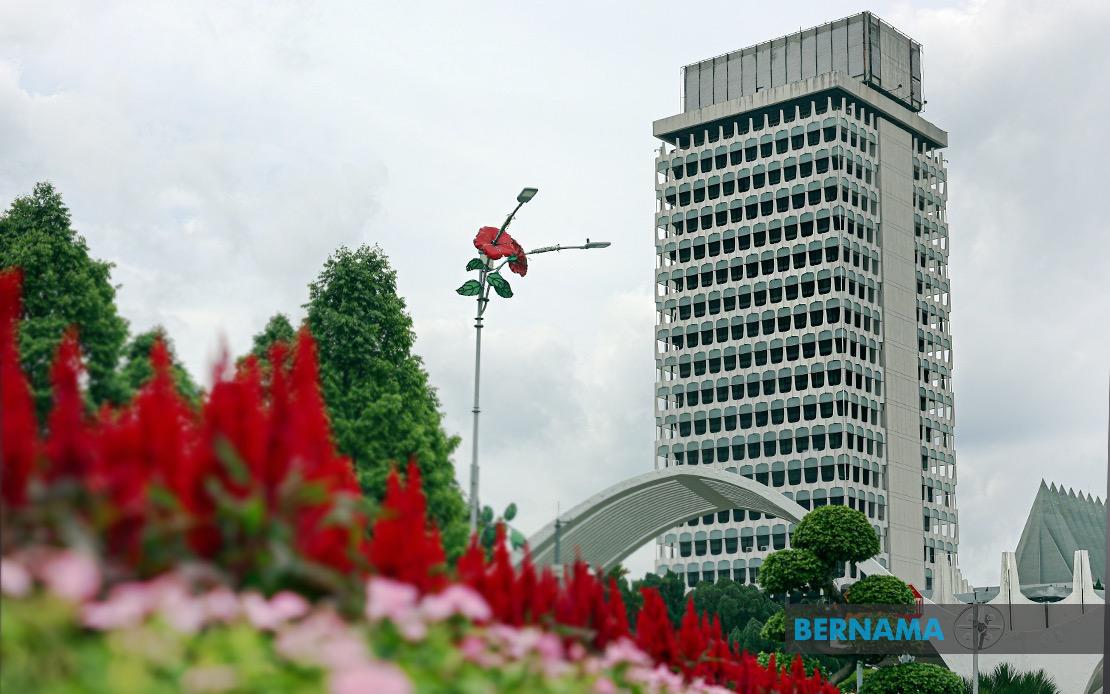
Parliament's lower house is set to scrutinise the government's preparedness for the approaching El Niño phenomenon today, as legislators raise concerns about potential disruptions to the country's agricultural output and broader food security. The parliamentary sitting, which concludes a 16-day session of the 15th Parliament's Fifth Session, places considerable emphasis on how policymakers plan to shield Malaysia's farming communities and food systems from the predicted climatic event, a matter of particular urgency given the nation's reliance on stable agricultural production and international commodity markets.
Bakti Jamaluddin from Tangga Batu will direct questions to the Agriculture and Food Security Minister regarding the administration's strategic preparations against El Niño's expected effects. The inquiry extends beyond general climate adaptation to encompass specific operational concerns including the adequacy of irrigation water distribution networks, the anticipated impact on rice and food crop yields, and the capacity of the livestock sector to maintain productivity during drier conditions. The parliamentarian has also signalled interest in verifying that the government possesses concrete plans to maintain national food reserves at levels sufficient to insulate consumers from supply shocks, a particularly sensitive issue in a nation where food price stability carries significant political weight.
An urgent matter commanding parliamentary attention relates to a hand grenade explosion that occurred during Malaysian Armed Forces training operations. Datuk Mohd Isam Mohd Isa from Tampin will question Defence Minister regarding the incident's underlying causes and the immediate corrective actions implemented to prevent recurrence. His inquiry specifically targets the military's standard operating procedures for training exercises, suggesting that gaps in safety protocols may have contributed to the accident. The Defence Ministry's response will likely address whether existing SOPs require strengthening, whether training supervision requires enhancement, and what institutional measures have been adopted to restore confidence in the safety of military exercises—matters of consequence not only for active servicemembers but also for public perception of military competence and institutional rigour.
The parliamentary agenda reflects mounting parliamentary concern regarding divergent Islamic teachings within Malaysia's Muslim-majority population. Sabri Aziz from Jerai will press the government on strategies to counter the propagation of heterodox religious interpretations and the mechanisms through which authorities intervene to restore doctrinal orthodoxy among individuals who have adopted such teachings. This line of questioning underscores the government's continuing role in managing religious affairs and maintaining communal harmony by addressing the appeal of alternative theological frameworks, a responsibility that intersects with questions of individual liberty, state authority, and social cohesion.
Kuala Lumpur's municipal administration will come under parliamentary review when Tan Kok Wai from Cheras directs questions toward the Prime Minister regarding governance and administrative reforms planned for City Hall following completion of the Feasibility Study under the Federal Capital Act 1960. The inquiry encompasses proposed reforms spanning administrative structures, governance frameworks, integrity mechanisms, and service delivery standards, suggesting that the study has identified deficiencies or opportunities requiring systematic institutional overhaul. Such reforms carry implications for the capital city's operational efficiency, transparency, and capacity to serve residents effectively.
Public health trends will occupy parliamentary focus when Datuk Dr Richard Rapu from Betong seeks updated statistics from the Health Minister on non-communicable disease prevalence during 2024-2026, with particular emphasis on the alarming rise in diabetes and hypertension diagnoses among individuals under age 30. This demographic shift toward earlier-onset chronic disease in younger populations signals a fundamental challenge to national health systems and work productivity. The Health Minister will face questions regarding the efficacy of the government's War on Sugar campaign and the enforcement effectiveness of sugar taxation policies in reducing national obesity rates, metrics that will reveal whether existing interventions are achieving measurable public health outcomes or whether more aggressive policy instruments require deployment.
The parliamentary sitting also provides occasion for legislative action beyond questioning, as the Finance Minister is scheduled to table the National Trust Fund Bill 2026 for second reading. This legislative vehicle will advance through parliament's deliberative processes, affording legislators opportunity to shape its provisions before passage. The bill's purpose and scope remain matters requiring parliamentary examination and potential amendment as the legislative process unfolds.
The convergence of these parliamentary matters reflects the complexity of contemporary governance challenges confronting Malaysia. El Niño preparedness intersects with food security and agricultural sustainability; military training safety touches upon institutional competence and public confidence; municipal administration affects service delivery for millions of urban residents; religious instruction involves questions of social cohesion; and non-communicable disease trajectories carry implications for healthcare expenditure, workforce capacity, and individual quality of life. The breadth of these concerns demonstrates that successful governance requires coordinated policy responses spanning multiple governmental domains and institutional capabilities.
For regional observers, Malaysia's parliamentary engagement with El Niño preparedness carries broader significance, as Southeast Asian nations collectively face intensifying climate variability that threatens agricultural zones spanning multiple countries. Malaysia's approach to adaptation and institutional preparation may establish precedents or lessons applicable across the region, particularly regarding irrigation management, food reserves strategy, and coordination between agricultural and meteorological authorities. The intensity of parliamentary scrutiny suggests that policymakers recognise climate adaptation as a central governance challenge rather than a peripheral environmental concern, a recognition that may strengthen institutional responses and cross-border cooperation.

