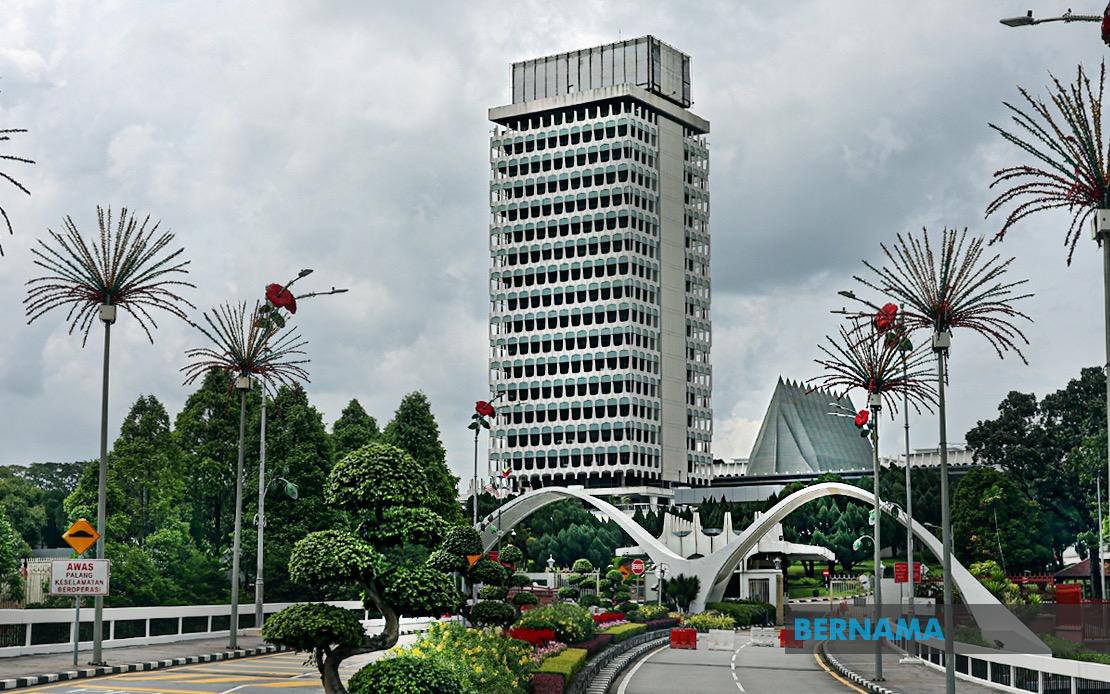
Parliament's current session is zeroing in on two issues that cut to the heart of Malaysian governance and economic management: whether the Human Rights Commission of Malaysia should diversify its revenue streams, and why households across the nation are feeling increasingly squeezed despite moderate official inflation readings. These concerns, raised during question-and-answer proceedings in the Dewan Rakyat, signal growing parliamentary and public frustration with how traditional measures may be masking the true financial pressures facing ordinary Malaysians.
The first substantive issue centres on institutional reform at SUHAKAM. Teresa Kok Suh Sim, the Member of Parliament for Seputeh representing Pakatan Harapan, is asking the Prime Minister whether the government intends to amend the SUHAKAM Act 1999 to permit the commission to establish its own revenue sources through training programmes, workshops, and educational courses. The current model leaves SUHAKAM entirely reliant on annual government budget allocations—a dependency that critics argue constrains the body's operational autonomy and responsiveness. By generating supplementary income, the logic goes, SUHAKAM could expand its capacity to investigate complaints and strengthen Malaysia's human rights architecture without perpetually competing for government funds.
This question reflects a broader regional conversation about institutional independence. Across Southeast Asia, human rights bodies have experimented with diverse funding mechanisms to escape budgetary constraints that powerful governments can exploit. Income from professional training, educational licensing, or consultancy services could theoretically insulate SUHAKAM from political pressure while enabling it to hire specialist staff and invest in investigative tools. For Malaysian readers, the outcome of this debate will signal whether Parliament views human rights oversight as a peripheral function to be funded minimally, or as a core institutional counterweight worthy of sustainable resourcing.
The second flash point—the inflation-versus-lived-experience gap—may prove more consequential for household finances. Mohd Syahir Che Sulaiman, a Member from Bachok under Perikatan Nasional, is interrogating the Economy Minister on a mismatch many Malaysians feel acutely: why do official inflation statistics sit at moderate levels when grocery bills, petrol, electricity, and rental costs seem to climb relentlessly? This disconnect is neither unique to Malaysia nor new, but it has become politically toxic. The question specifically asks how the government calculates the divergence and what indicators it monitors to ensure that economic growth genuinely translates into improved purchasing power for households rather than enriching investors and exporters alone.
The political salience of this question cannot be overstated. Official Consumer Price Index figures, typically measured against a basket of goods weighted several years in the past, may not capture the inflation ordinary households experience. A retiree spending most of their income on food, fuel, and utilities faces different price pressures than a young professional with savings. Similarly, regional and income-group variations can be substantial. The government's failure to articulate a convincing answer risks deepening public scepticism of economic data and eroding confidence in policymakers' grasp of real conditions. For Malaysian voters, this Parliamentary question represents an attempt to force accountability on an issue that directly affects their wellbeing.
A third line of inquiry from V. Ganabatirau, representing Klang under Pakatan Harapan, addresses environmental governance and urban resilience. The Member is asking about the status of a review into land transfers and use-changes affecting flood retention ponds, particularly in Kuala Lumpur and surrounding areas. This touches on a perennial challenge in rapidly developing urban Malaysia: the tension between property development and flood mitigation infrastructure. Encroachment on retention ponds—whether through legal approval or administrative oversight—has worsened flash flooding in the Klang Valley and other conurbations. The Parliamentary question suggests an intent to scrutinise whether safeguards exist and whether the review is actually constraining development in the interest of public safety.
Meanwhile, Datuk Dr Ku Abd Rahman Ku Ismail of Kubang Pasu, representing Perikatan Nasional, is examining the country's educational pipeline in science and technology fields. He wants the Higher Education Minister to disclose the current ratio of STEM to non-STEM enrolment in tertiary institutions, as well as target figures for engineer production across disciplines. This reflects concern—shared by policymakers, industry bodies, and educators—that Malaysia is not producing enough skilled graduates in high-value technical fields to sustain competitiveness in a technology-driven global economy. The discrepancy between enrolment ratios and actual labour-market demand can signal either oversupply in some disciplines and shortfalls in others, or a mismatch between what universities teach and what employers need.
For Southeast Asian economies competing for semiconductor manufacturing, advanced manufacturing, and digital services investment, the availability of domestic STEM talent is a strategic asset. Malaysia's position in these sectors—from semiconductor assembly to renewable energy components—depends on a steady supply of engineers and technicians. The Parliamentary question implies that current data transparency on these ratios may be inadequate, hampering strategic workforce planning. Education policymakers will need to demonstrate that they are tracking labour-market trends and adjusting university offerings accordingly.
Running parallel to these substantive Parliamentary questions is the scheduled tabling of the Cybercrime Bill 2026 for its second reading. While no specific details have emerged about amendments or new provisions, cybercrime legislation carries significance for businesses, civil society, and ordinary internet users. In a region where digital commerce, online banking, and cloud services are expanding rapidly, the legal framework governing computer crime, data breaches, and online harassment shapes both security and liberty. The Bill's passage through Parliament will warrant close monitoring for provisions that could inadvertently suppress legitimate speech or create chilling effects on digital innovation.
The broader context is that this session of the Dewan Rakyat—the Second Meeting of the Fifth Session of the 15th Parliament—runs for 16 days through July 16, providing MPs with a window to raise pressing constituency issues and hold ministers to account. Parliamentary sessions are formal arenas where backbenchers can air grievances and force executives to go on record with answers. While not every question yields transformative policy change, the cumulative effect of sustained Parliamentary scrutiny—particularly on issues like institutional independence for SUHAKAM, inflation measurement credibility, flood infrastructure protection, and STEM education capacity—shapes the trajectory of Malaysian governance.
These four key areas collectively suggest that Parliament is engaging with real structural challenges: how to make government institutions robust enough to function without constant political interference, how to align official economic metrics with household experience, how to balance development with environmental resilience, and how to equip citizens for the economy's technical demands. For Malaysian readers and businesses, the responses ministers offer—and the supplementary questions that follow—will reveal how seriously the current government takes institutional reform, economic transparency, public safety, and human capital investment.

