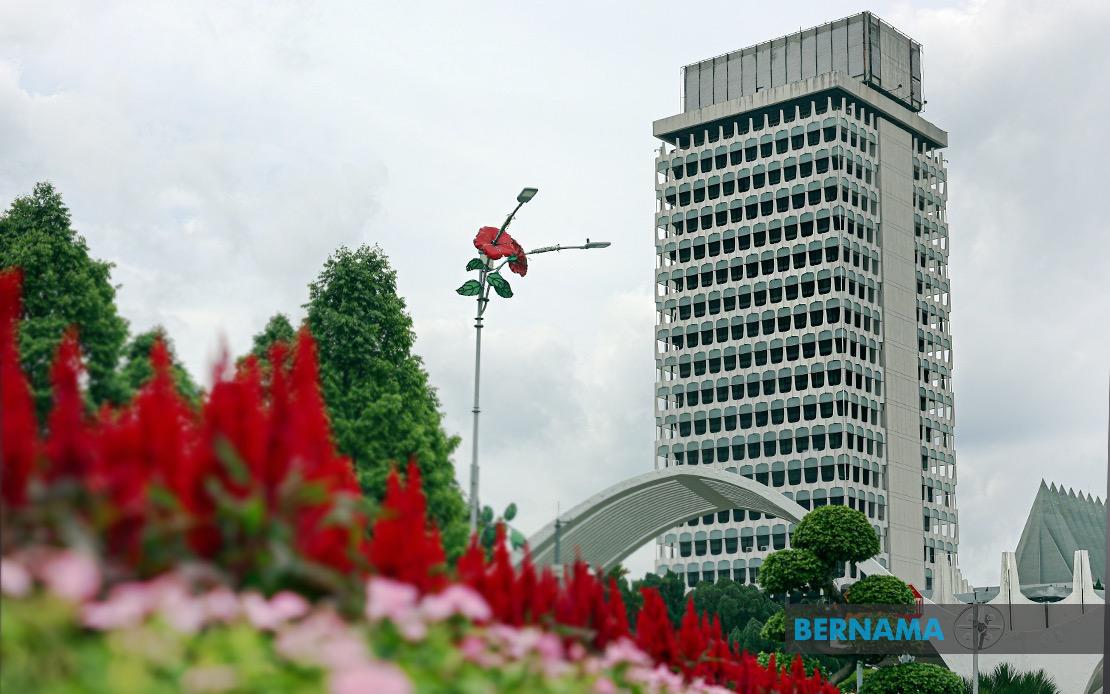
Lawmakers gathered in Parliament on July 15 are grappling with two interconnected challenges affecting ordinary Malaysians: the persistent problem of internet connectivity failures and the mounting fiscal burden created by regional geopolitical tensions. The session brings into sharp focus the infrastructure vulnerabilities undermining Malaysia's digital economy and the real budgetary constraints facing the government as global energy markets remain volatile.
Among the parliamentary questions scheduled for the sitting, Datuk Anyi Ngau of GPS-Baram has flagged a frustration experienced by increasing numbers of mobile users: devices displaying full signal bars yet unable to access internet services. The question directed at the Communications Minister seeks details of the Malaysian Communications and Multimedia Commission's (MCMC) strategic response to what appears to be a widespread technical problem. This issue extends beyond mere inconvenience; unreliable connectivity in pockets of strong signal strength suggests underlying network infrastructure problems that could deter investment and hamper Malaysia's competitiveness in regional digital markets.
The MCMC's approach to resolving such anomalies will be closely watched by businesses and consumers alike. The commission faces pressure to articulate a coherent remediation strategy rather than treating symptoms in isolation. For Malaysian telecommunications operators, the session represents an opportunity to demonstrate proactive management of their infrastructure, particularly as the government continues investing in 5G rollout and broadband expansion across rural areas.
Paralleling these infrastructure concerns, the Parliament sitting addresses a more immediate fiscal headache. Mohd Syahir Che Sulaiman of PN-Bachok has submitted a question to the Finance Minister seeking an updated assessment of how the conflict in West Asia is amplifying Malaysia's fuel subsidy commitments. The connection between regional instability and domestic subsidy burdens illustrates how external shocks cascade through government budgets, constraining resources available for other priorities including education, healthcare, and infrastructure development.
The fuel subsidy dilemma represents a classic policy bind. While protecting consumers from international oil price spikes, generous subsidies encourage consumption and drain the treasury. The West Asia tensions have injected additional unpredictability into already volatile global energy markets, making subsidy cost projections increasingly difficult. Mohd Syahir's question specifically probes whether ballooning subsidy expenditure threatens the government's fiscal deficit target for the year—a critical metric watched by international credit rating agencies and investors evaluating Malaysia's economic stability.
Government economists face the uncomfortable prospect of either permitting fuel prices to rise substantially, risking public discontent, or accepting a larger deficit, which constrains borrowing capacity and future spending flexibility. The dilemma extends beyond Malaysia; across Southeast Asia, governments are reassessing subsidy sustainability as regional energy security concerns mount. For Malaysian policymakers, the question underscores the need for longer-term structural solutions rather than perpetual reliance on administrative price controls.
A third parliamentary question reflects concerns about equitable access to financing in Malaysia's burgeoning informal economy. Jamaludin Yahya of PN-Pasir Salak is asking the Finance Minister about pathways enabling self-employed workers, small traders, hawkers, and gig economy participants to secure home mortgages without conventional salary documentation. This addresses a genuine market failure: millions of Malaysians generating substantial, stable income yet unable to satisfy rigid lending criteria designed for salaried employees. The question suggests Parliament is recognizing that financial inclusion mechanisms must adapt to changing employment patterns.
Meanwhile, Yeo Bee Yin of PH-Puchong is seeking assurances from the Women, Family and Community Development Minister regarding regulatory frameworks for confinement centres. These establishments provide postnatal care according to traditional practices, yet operate in a regulatory grey zone. The question signals Parliament's intent to establish formal standards protecting maternal health and safety while respecting cultural practices, reflecting Malaysia's broader movement toward evidence-based regulation of healthcare services outside formal medical channels.
The parliamentary sitting will subsequently advance two telecommunications bills through their second reading: the Communications and Multimedia (Amendment) Bill 2026 and the Malaysian Communications and Multimedia Commission (Amendment) Bill 2026. Both bills underwent first reading on July 13 and now face substantive debate. These amendments likely address technical and regulatory refinements in Malaysia's telecommunications governance, though their specific provisions remain to be detailed during parliamentary consideration. The timing suggests the government views legislative modernization of the telecommunications sector as a priority, potentially enabling more agile regulatory responses to emerging technologies and market challenges.
The concurrent focus on internet infrastructure problems and telecommunications legislation suggests Parliament recognizes that Malaysia's digital future depends on both regulatory modernization and investment in reliable physical networks. The session, running through July 16, will test whether legislators can forge consensus around solutions that balance consumer protection, operator investment incentives, and fiscal sustainability.
Collectively, these parliamentary questions and legislative items reveal an administration navigating multiple, overlapping pressures: global economic volatility affecting fuel costs, technological challenges undermining digital infrastructure, gaps in financial inclusion affecting informal workers, and the need for responsive regulation in traditionally opaque service sectors. How effectively Parliament addresses these interconnected issues will influence Malaysia's economic resilience and social stability in an increasingly uncertain regional environment.

