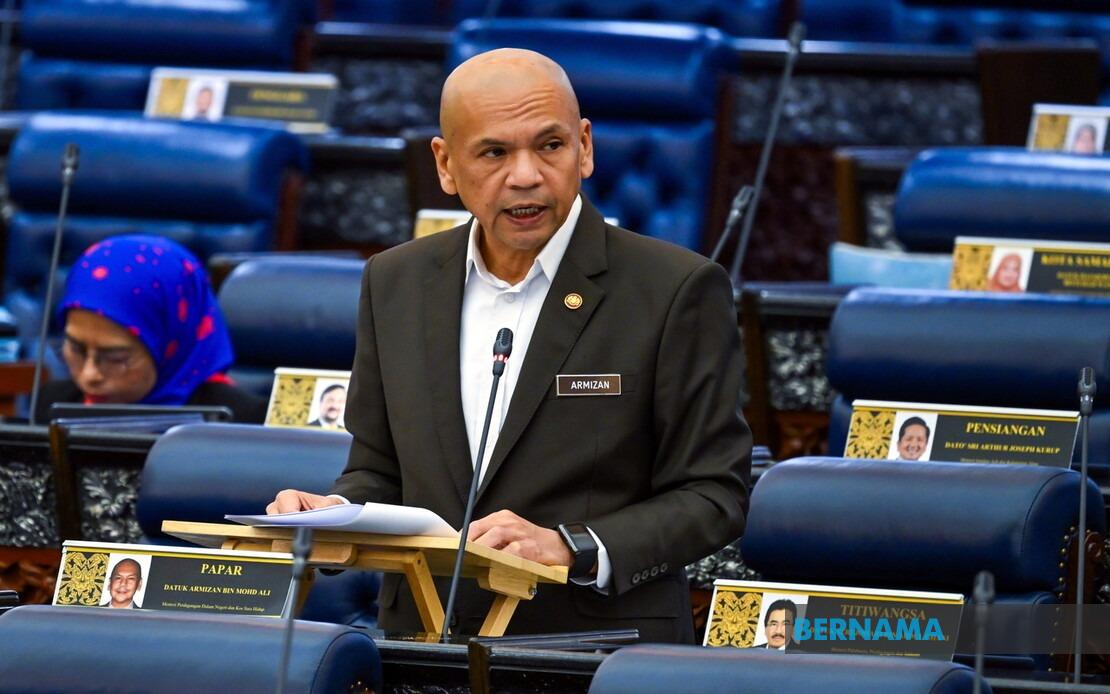
Lawmakers in the Dewan Rakyat have endorsed the Competition Commission (Amendment) Bill 2026, a comprehensive legislative overhaul designed to equip the Malaysia Competition Commission with stronger enforcement tools and clarified authority to combat anticompetitive behaviour in the nation's markets. The chamber voted overwhelmingly in favour of the measure following contributions from 12 parliamentarians representing both government and opposition benches, signalling broad cross-party consensus on the need for stricter competition oversight.
Containing 34 distinct amendments, the bill represents the most significant modernisation of Malaysia's competition framework in recent years, addressing enforcement gaps that have become increasingly apparent as businesses employ more complex strategies to manipulate pricing, partition markets, and abuse market dominance. Domestic Trade and Cost of Living Minister Datuk Armizan Mohd Ali emphasised that the revisions were essential to maintain fair and transparent market conditions, particularly given the evolving sophistication of cartel operations that now extend far beyond traditional price-fixing arrangements into coordinated strategies involving production quotas, bid manipulation, and leveraging monopolistic positions.
A central element of the reformed framework lies in significantly expanded information-gathering capabilities for the MyCC. Previously constrained by limited authority to demand data from market participants and government bodies, the commission will now possess clearer legal grounds to require the provision of information specifically to facilitate comprehensive market reviews. This distinction carries practical importance: by conducting wider-ranging and more thorough investigations of entire sectors rather than responding only to specific complaints, the MyCC can identify systematic problems affecting competition before they cause substantial economic harm to consumers and legitimate businesses alike.
The amendments also establish new formal provisions under Section 17A enabling the MyCC to delegate its powers and functions across the organisation in a structured manner. While seemingly bureaucratic, this structural reform addresses a genuine operational constraint: as the watchdog's mandate expands and market complexity increases, clear delegation frameworks become essential to ensuring efficient decision-making and preventing bottlenecks at senior levels. Without such provisions, the commission risks becoming overwhelmed, with investigations stalling and enforcement actions delayed—outcomes that inadvertently benefit those willing to flout competition rules.
Parliamentarians who participated in the debate raised substantive concerns about the proposed extension allowing MyCC officers to directly impose financial penalties, reflecting legitimate anxieties about regulatory overreach. Chong Zhemin, a Pakatan Harapan member representing Kampar, endorsed the penalty authority but insisted it must operate under rigorous, publicly disclosed guidelines to prevent disproportionate consequences for micro and small enterprises lacking sophisticated compliance departments. His intervention highlighted a persistent challenge in competition enforcement: calibrating penalties that genuinely deter large, profitable violators while avoiding crushing smaller firms that may breach rules through ignorance rather than malice.
The efficacy question Chong raised cuts to the heart of effective deterrence. When penalties amount to a minor cost relative to profits earned through anticompetitive conduct, rational actors view violations as acceptable business expenses. Conversely, if penalties are calibrated identically regardless of firm size or intent, small traders operating in uncertain regulatory territory face existential risks that large corporations can absorb. The reformed framework must navigate between these extremes, distinguishing between deliberate, sophisticated cartels that systematically distort markets and smaller businesses inadvertently committing technical violations due to limited understanding of competition principles.
Regional representatives raised a parallel but distinct concern: the concentration of MyCC enforcement capacity in Peninsular Malaysia limits the commission's effectiveness in Sabah and Sarawak, where distance and distinct market structures complicate oversight. Isnaraissah Munirah Majilis @ Fakharudy from Warisan, representing Kota Belud, advocated establishing a dedicated MyCC branch in Sabah to accelerate investigation and resolution of competition complaints affecting the Borneo region. The suggestion found support from other Borneo-based lawmakers, including Datuk Abdul Khalib Abdullah and Datuk Andi Muhammad Suryady Bandy, reflecting genuine frustration with response times for cartel complaints originating from East Malaysia.
This regional dimension merits particular attention for Malaysian policymakers and businesses. Sabah and Sarawak, with their distinct geographic, demographic, and economic characteristics, often experience competition problems—from fuel pricing coordination to construction material cartels—that require rapid local intervention. Without adequate enforcement presence, these markets remain attractive venues for anticompetitive conduct, and consumers face systematically higher prices than their Peninsular counterparts. Addressing this infrastructure gap represents an immediate operational priority for the MyCC following the bill's passage.
The amendments to Sections 4 and 10 of the existing Competition Act maintain the legal framework's focus on core anticompetitive practices: price fixing, market sharing, production manipulation, and bid rigging, alongside abuse of dominant positions. These provisions, long part of Malaysian law, remain central to competition enforcement but have often proven difficult to prosecute without adequate investigative authority. The expanded information-gathering powers now granted should substantially improve the MyCC's capacity to construct evidence of coordinated conduct, which typically leaves minimal documentary traces compared to overt agreements.
International experience demonstrates that enhanced investigative authority, combined with credible penalty powers, significantly improves competition enforcement outcomes. Agencies in developed economies that possess both tools have achieved substantially higher cartel conviction rates and deterred formation of new anticompetitive arrangements. For Malaysia, where cartel activity remains widespread across sectors from fuel distribution to cement manufacturing, the bill's passage removes a critical constraint on enforcement.
The legislative consensus reflected in the voice vote suggests sustained political commitment to competition enforcement, an encouraging signal for businesses and consumers alike. However, the amendments' success ultimately depends on MyCC's execution: whether investigation standards remain rigorous, whether penalties reflect genuine deterrence, and whether enforcement reaches beyond Peninsular Malaysia to serve all Malaysian markets equitably. The coming months will reveal whether the expanded legal framework translates into meaningfully improved competition conditions across the economy.

