Dewan Rakyat Speaker Tan Sri Dr Johari Abdul has formally confirmed receipt of official notification regarding Larut MP Datuk Seri Hamzah Zainudin's appointment as opposition leader, marking a significant procedural development in Malaysia's parliamentary landscape. The confirmation came as Parliament prepares for its upcoming sitting, which will introduce a restructured seating arrangement affecting multiple members across both government and opposition benches.
The confirmation of Hamzah's status carries institutional weight, as it represents formal parliamentary recognition of the opposition coalition's leadership structure. This development follows earlier public statements from PAS president Tan Sri Abdul Hadi Awang during the Reset Malaysia Convention, where he announced that Hamzah had resumed his duties in this capacity. The Speaker's formal acknowledgment transforms what had been a political announcement into an official parliamentary record, cementing Hamzah's position within the institution's formal protocols and procedures.
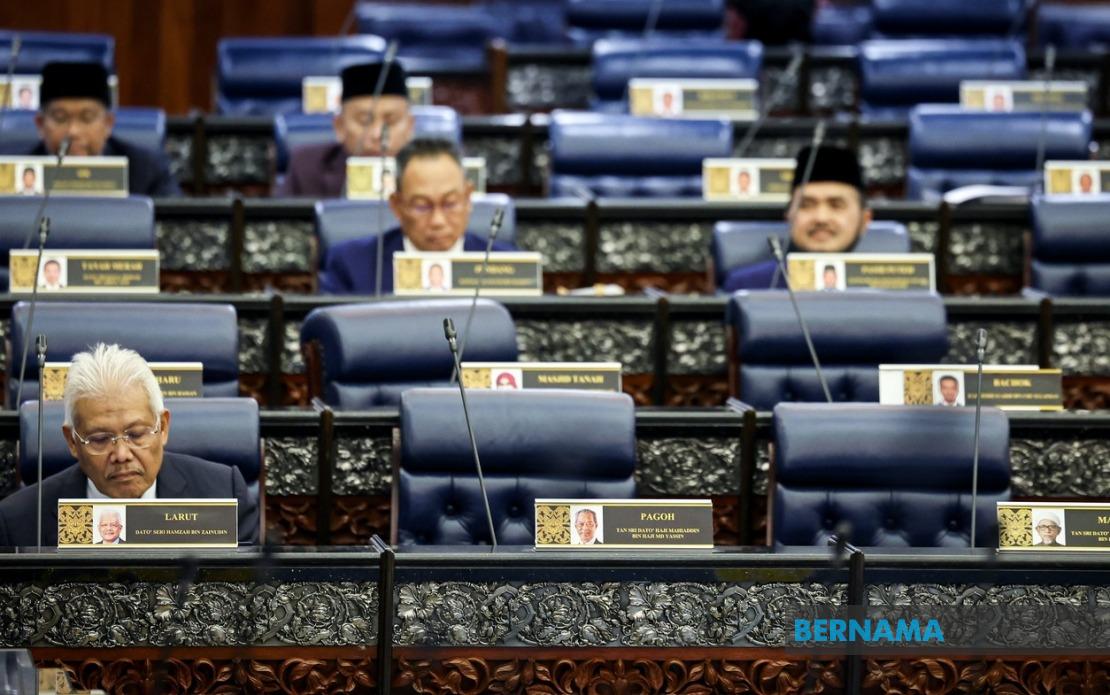
Among the most notable changes to the chamber's physical arrangement is the relocation of Pagoh MP and Bersatu president Tan Sri Muhyiddin Yassin. According to the Dewan Rakyat's updated seating plan released on June 19, Muhyiddin has been assigned a seat in Block E, a significant shift from his previous position. The Speaker indicated that this particular change was made at Muhyiddin's own request, suggesting the former Prime Minister sought a different vantage point within the chamber for the upcoming parliamentary session.
The repositioning of Muhyiddin takes on added significance given Bersatu's complex political positioning in recent years. The party has navigated multiple government and opposition alignments, and physical seating arrangements in Parliament often reflect—and sometimes signal—shifts in political dynamics and coalitional structures. Muhyiddin's move to Block E may be interpreted by observers as either a practical adjustment or a more subtle indicator of the party's evolving stance within the current parliamentary configuration.
In contrast to the adjustments affecting other members, the opposition leader's seating arrangement has remained stable. Hamzah continues to occupy his position on the opposition front bench, maintaining his visible and prominent placement within the chamber. He shares this front bench location with Kemaman MP and Perikatan Nasional chairman Datuk Seri Dr Ahmad Samsuri Mokhtar, creating a coordinated opposition leadership presence at the chamber's centre stage.
The significance of front bench seating in Parliament extends beyond mere symbolism. The position allows the opposition leader direct sight lines with government ministers, facilitates immediate parliamentary interventions, and establishes a physical manifestation of institutional authority. Hamzah's retention of this prime location reinforces the legitimacy of his role and provides the opposition coalition with an established platform for questioning government policy and conduct during parliamentary debates.
These adjustments arrive ahead of the Second Meeting of the Fifth Session of the 15th Parliament, which will commence on June 22 and continue through July 16. The extended sitting period suggests substantial legislative business requiring attention, potentially including government bills, budgetary matters, and policy debates. The restructured seating arrangement will thus provide the backdrop for what promises to be an active parliamentary term.
For Malaysian stakeholders observing parliamentary dynamics, these administrative changes merit careful attention. While seating arrangements might appear purely procedural, they frequently carry political undertones and reflect the nuances of coalition positioning. The fact that multiple MPs are relocating, coupled with the formal confirmation of opposition leadership, suggests potential realignments or clarifications within Malaysia's coalition structures as the nation enters this new parliamentary session.
The broader context surrounding these developments includes ongoing discussions about Malaysia's political architecture and the durability of the current government coalition. The Perikatan Nasional's positioning—with its chairman sitting alongside the opposition leader—illustrates the complexity of Malaysian coalition politics, where parties and individual MPs frequently occupy ambiguous spaces between government and opposition alignments. Understanding these parliamentary seating decisions requires recognition of such subtleties.
For constituents and political observers across Southeast Asia, Malaysia's parliamentary procedures offer insights into how established democracies manage political transitions and formalise leadership changes. The Speaker's confirmation process demonstrates institutional mechanisms for acknowledging political developments, while the subsequent seating adjustments show how physical parliamentary spaces are reconfigured to reflect political realities.
The June 22 sitting will mark the first test of these new arrangements, providing an opportunity to observe how the restructured opposition leadership functions within its confirmed institutional role. Parliamentary observers will be watching for any shifts in questioning patterns, debate dynamics, or collaborative positioning that the new seating configuration might facilitate or hinder among opposition coalition partners.