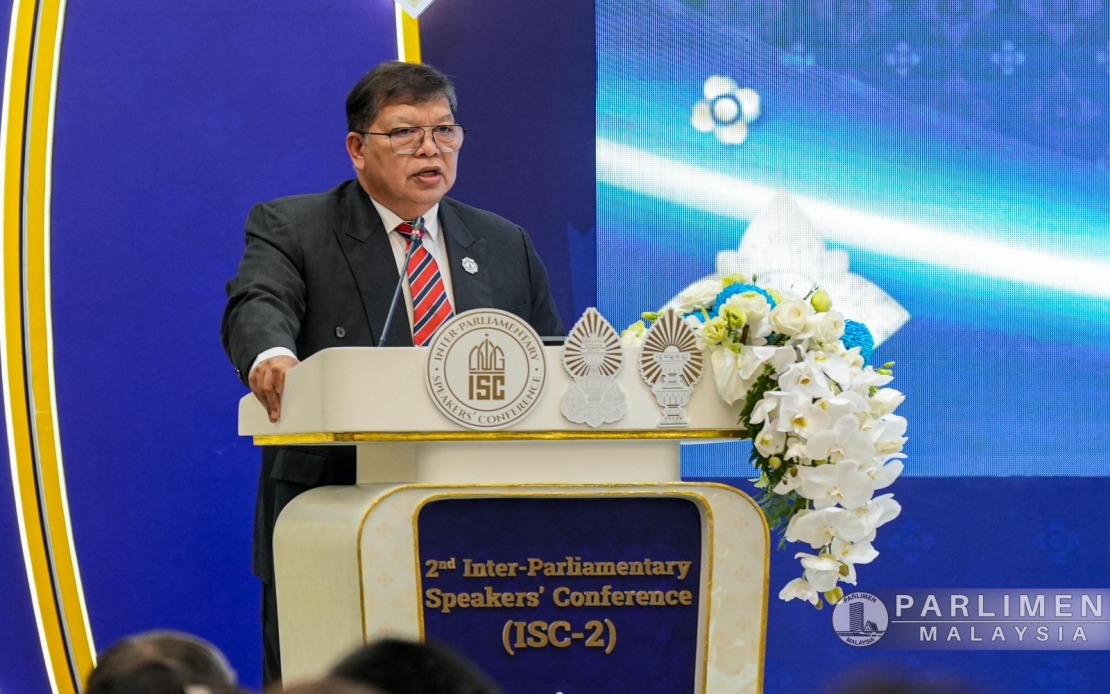
Dewan Rakyat Speaker Tan Sri Dr Johari Abdul has raised an urgent alarm about humanity's inadequate response to the climate crisis, speaking at an inter-parliamentary conference in Cambodia this week. The speaker stressed that the issue has transcended environmental concerns to become a multifaceted threat to economic stability, public health, and the security of food and energy supplies across the region.
Johari's comments came during the Second Inter-Parliamentary Speakers' Conference in Phnom Penh, a gathering of legislative leaders held between August 26 and 28. He expressed frustration that policymakers and elected representatives have largely failed to prioritise climate action despite mounting evidence of its widespread impacts. The speaker questioned fundamental policy choices, asking why governments continue to permit deforestation and rely on coal-fired power generation when renewable alternatives such as solar, wind, and tidal energy remain underutilised.
The parliament speaker identified education and research as critical frontiers in combating climate change. He emphasised that climate science must become a core curriculum subject in schools, while governments need to substantially increase funding for research and development programmes focused on green technologies. Without this educational foundation and technological innovation pipeline, Johari argued, policymakers would lack both the knowledge and the tools to make informed decisions about energy transition and environmental protection.
Johari's warnings carry particular resonance given recent catastrophes across South and Southeast Asia. Nepal experienced devastating floods triggered by a glacial collapse in the Himalayan mountains, which swelled river systems along the Nepal-China border with catastrophic consequences. As of Friday, preliminary reports confirmed 469 deaths, with 2,381 people missing, including 644 foreign nationals. Several Malaysian citizens remain among the missing. The disaster exemplifies the vulnerability of communities throughout the region to increasingly severe weather phenomena.
The geographic scope of climate vulnerability across Asia demands immediate attention. From mountainous terrain in Nepal to the landlocked regions of Laos, communities face persistent threats from flash flooding, landslides, tropical typhoons, and severe storms that destroy agricultural lands and critical infrastructure. The Philippines confronts approximately 20 typhoons annually, making it one of the world's most disaster-prone nations. These recurring events disproportionately affect rural populations with limited resources for adaptation and recovery, deepening inequality across the region.
Johari emphasised that climate change represents a global challenge requiring unified international action and genuine political commitment. He acknowledged that while discussion of climate issues has become commonplace in policy circles, translating that rhetoric into substantive action remains elusive. A critical barrier, he suggested, is the growing disparity between wealthy nations with resources to invest in climate solutions and developing countries that bear disproportionate climate risks despite contributing minimally to greenhouse gas emissions.
The speaker highlighted China's systematic approach to environmental protection as a model worthy of consideration, noting the country's long-term strategy to promote green technology, develop electric vehicle infrastructure, and expand forest and green spaces. Such coordinated, state-level commitment to sustainability demonstrates how technological innovation and environmental stewardship can advance together, providing a blueprint for other nations seeking to balance development with ecological responsibility.
Cambodia itself faces mounting climate pressures that directly threaten its food security and economic stability. Just days before the inter-parliamentary conference, Cambodian Prime Minister Hun Manet warned of rising water levels in the Mekong River and cautioned riverside communities to remain vigilant. While Hun Manet acknowledged that governments cannot fully prevent natural disasters, he stressed the importance of building resilience through effective early warning systems and disaster response mechanisms. This acknowledgment reflects the reality that Southeast Asian nations are already adapting to climate impacts rather than preventing them entirely.
The scientific consensus continues to reinforce Johari's concerns, with researchers documenting accelerating climate change manifesting as rising temperatures, elevated sea levels, and altered precipitation patterns. These transformations threaten both human communities and natural ecosystems across the region. For Malaysia specifically, increased flooding, water scarcity in certain areas, and threats to agricultural productivity present immediate policy challenges that demand climate-literate leadership.
Johari's call for parliamentary focus on climate education and technology investment addresses a structural gap in current policy frameworks. Many legislative bodies in Southeast Asia lack dedicated committees or expertise in climate science, leaving them poorly equipped to evaluate complex climate mitigation and adaptation proposals. By integrating climate literacy into education systems and expanding research capacity, governments can build the institutional knowledge necessary to respond effectively to future crises.
The interconnectedness of climate change with economic inequality adds urgency to Johari's message. Vulnerable populations in rural areas and developing nations experience the harshest impacts of climate disasters while possessing the fewest resources for recovery and adaptation. This disparity threatens regional stability and creates humanitarian crises that cross borders, as demonstrated by the Nepal floods affecting Malaysian nationals thousands of kilometres from home.
Moving forward, Johari's remarks suggest that parliamentary cooperation at the regional level could amplify climate action. By sharing best practices, coordinating research efforts, and presenting unified demands to national governments, legislative bodies across Southeast Asia might overcome individual nations' limitations in addressing this transnational threat. The inter-parliamentary conference format itself offers a platform for building the political consensus necessary to justify difficult climate-related policy shifts.
For Malaysian policymakers, Johari's intervention reinforces that climate action cannot remain peripheral to national development strategies. Integrating renewable energy deployment, climate education, and disaster resilience into core economic and social planning will require sustained political will and substantial resource allocation. The speaker's frustration with inaction reflects a growing realisation across the region that incremental responses are inadequate to the scale and urgency of the climate crisis confronting Asia.

