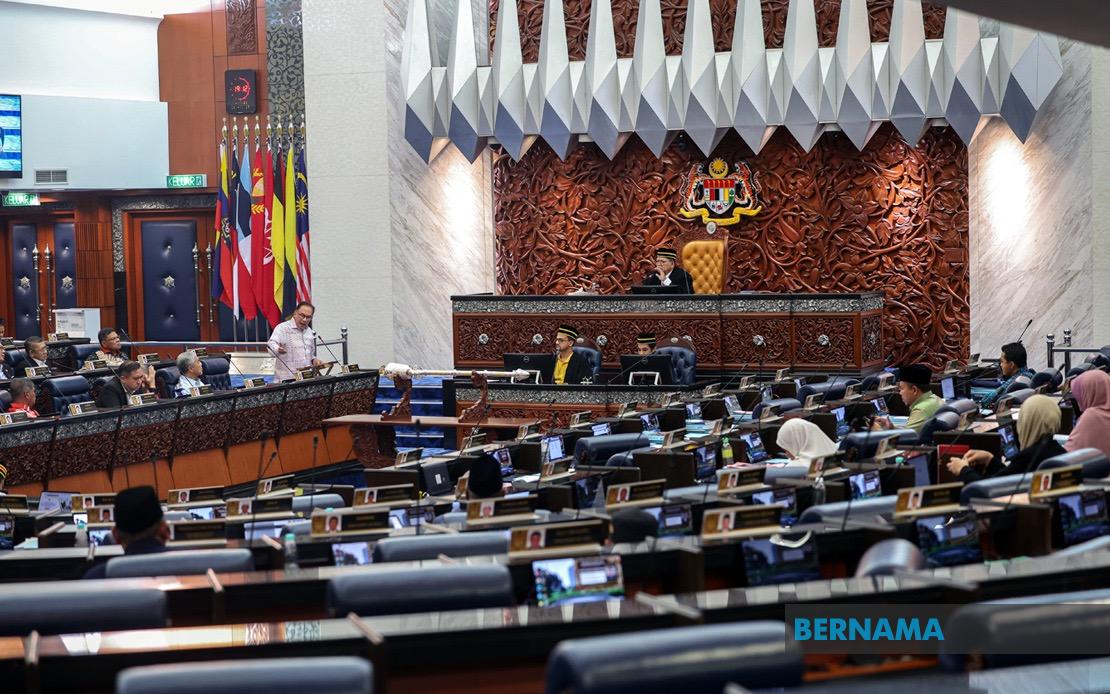
Parliament has signalled its determination to close legal vulnerabilities in Malaysia's defences against child sexual predators, with Members of Parliament from both government and opposition benches backing sweeping amendments to strengthen enforcement and victim protection during a debate on the Sexual Offences Against Children (Amendment) Bill 2026. The discourse revealed deep concern that current legislation may inadvertently create safe havens for offenders operating across borders, and highlighted the need for a coordinated, multi-agency response to tackle what remains one of the most heinous crimes affecting vulnerable populations.
Abd Ghani Ahmad of PN-Jerlun pressed for Malaysia to leverage its international legal mechanisms more aggressively, specifically invoking the Mutual Legal Assistance framework and extradition protocols to pursue predators who conduct their crimes from foreign jurisdictions. His intervention underscored a critical gap: sophisticated offenders can exploit territorial limitations by committing offences remotely while remaining beyond Malaysian prosecution. He advocated for systematic collaboration between the Royal Malaysia Police, the Immigration Department, the Attorney-General's Chambers, the Department of Social Welfare, hospitals, and schools to harmonise investigative procedures, safeguard digital evidence, and accelerate prosecutions—a call that reflected frustration with fragmented agency responses that have historically delayed justice and allowed evidence to deteriorate.
Datuk Seri Doris Sophia Brodi of GPS-Sri Aman built upon this foundation by proposing the creation of a dedicated task force exclusively focused on digital sexual crimes involving children, bringing together representatives from various government bodies to expedite investigations and manage cross-border cases with urgency and sophistication. Her contribution highlighted the reality that most modern child exploitation now occurs online, where perpetrators operate from multiple jurisdictions simultaneously and leave trails across multiple platforms and countries. Beyond enforcement, Brodi advocated for preventative education, urging schools to embed digital safety curricula and parents to recognise grooming behaviours and early warning signs of online exploitation. Her emphasis on victim recovery was equally significant: she insisted that apprehension and conviction alone cannot constitute successful policy, arguing instead that survivors require sustained psychological counselling, financial assistance, identity protection, and long-term reintegration support.
Datuk Mas Ermieyati Samsudin of PN-Masjid Tanah translated these concerns into concrete institutional proposals, recommending the establishment of a dedicated prosecution unit specialising in child sexual crimes, a substantial increase in child psychology professionals deployed across public facilities, and the creation of a dedicated fund to absorb the substantial costs of psychological treatment, legal representation, and rehabilitation for survivors. Her intervention reflected awareness that many victims come from economically disadvantaged backgrounds and cannot afford private mental health support, meaning the state must bear this burden to prevent lifelong psychological damage from compounding their trauma. She also articulated a deterrent argument: weak Malaysian enforcement creates the impression that predators can relocate to countries with lax oversight, making legal reform essential to eliminating this calculated calculus among would-be offenders.
RSN Rayer of PH-Jelutong complemented these structural proposals by advocating for expanded legal jurisdiction that enables Malaysian courts to prosecute offences committed abroad, while simultaneously demanding that domestic investigative capacity be enlarged to handle the caseload that such expanded jurisdiction would create. Without sufficient police personnel, prosecutors, and judges specialising in these sensitive cases, legal changes alone would prove meaningless. Young Syefura Othman of PH-Bentong introduced a proposal for a child sexual offender registry modelled on successful international examples, designed to prevent convicted offenders from securing employment or volunteer positions in child-adjacent environments including schools, daycare centres, nurseries, tahfiz centres, religious institutions, and sports clubs. She made the case that background screening for sexual convictions should become mandatory across all organisations with child access, recognising that many offences occur within institutional settings where trust and proximity create opportunity.
The underlying legislative reform aims to eliminate jurisdictional constraints that currently prevent Malaysia from prosecuting perpetrators whose crimes occur outside national territory, a gap that has allowed some offenders to operate with impunity by targeting Malaysian children remotely or committing offences while temporarily abroad. The twenty-six MPs who participated in today's debate span the political spectrum, indicating that child protection transcends partisan divisions in Malaysian politics—a consensus rarely seen on contentious issues. The debate will resume tomorrow, suggesting that parliament intends to thoroughly examine each proposal rather than rushing through amendments without scrutiny.
For Southeast Asian readers, Malaysia's legislative moment carries regional significance. Child sexual exploitation has become increasingly transnational, with predators from developed nations targeting children in lower-income countries where enforcement capacity remains limited and corruption creates additional vulnerability. Malaysia's experience—and the solutions being debated—may establish templates that other ASEAN nations could adapt, particularly regarding digital crime investigation, international cooperation, and survivor support systems. The debate also reflects broader development challenges: investments in psychology professionals, forensic digital capabilities, and victim support infrastructure require sustained funding that strains government budgets in the region, yet constitute non-negotiable safeguards.
The concentration of debate on digital crimes reflects a fundamental shift in how child exploitation manifests in contemporary Malaysia. Online grooming, sextortion, and child sexual abuse material increasingly dominate case statistics, yet many frontline agencies lack personnel trained in digital forensics, online investigation, and the psychological vulnerabilities that predators exploit through social media and encrypted platforms. Several MPs implicitly acknowledged that traditional law enforcement training—focused on street-level crime—inadequately prepares officers for cases involving cryptocurrency payments, darknet marketplaces, and sophisticated evidence preservation across multiple jurisdictions. The proposed task force model attempts to address this skills gap by concentrating expertise rather than dispersing it across dozens of police stations.
Victim-centred proposals emerged as a distinct theme, with multiple speakers recognising that Malaysia's criminal justice system has historically prioritised prosecution over survivor recovery. Psychological trauma from child sexual abuse compounds across decades; survivors frequently experience difficulty forming relationships, maintaining employment, and managing anxiety and depression. The proposed rehabilitation fund and enhanced mental health resources implicitly acknowledge that government has a remedial obligation extending beyond the courtroom. Malaysia's welfare system currently provides limited specialised support for survivors, forcing many families to navigate trauma privately or seek assistance from under-resourced NGOs. Institutionalising recovery support would represent a policy shift toward recognising survivors as stakeholders requiring sustained investment rather than peripheral figures in prosecution narratives.
The amendments also signal recognition of Malaysia's vulnerabilities within global networks of child exploitation. When Malaysia is perceived as a jurisdiction with weak prosecution, porous digital borders, and limited investigation capacity, it becomes a destination for predators and a haven for hosting illegal content. Conversely, decisive legal reform and visible enforcement create reputational costs for offenders, deterring some while signalling to international partners that Malaysia takes the issue seriously and warrants cooperation. Several MPs framed legal amendments not merely as protective measures but as statements of national commitment to international child protection standards and cooperation frameworks.
The road ahead involves translating parliamentary consensus into budgetary allocation and institutional capacity. Task forces require full-time staff, training programmes demand ongoing investment, and victim support systems cannot operate episodically. Whether the government commits resources proportionate to the scope of proposals will determine whether today's debate produces transformative change or remains symbolic. Implementation challenges will inevitably emerge: inter-agency coordination remains notoriously difficult in Malaysian bureaucracy, specialist recruitment takes time, and training personnel in digital forensics requires engaging international expertise and bearing associated costs. Nonetheless, the legislative foundation being constructed reflects genuine parliamentary recognition that protecting children from sexual exploitation demands comprehensive, resourced, and sustained commitment rather than ad-hoc responses to individual cases.

