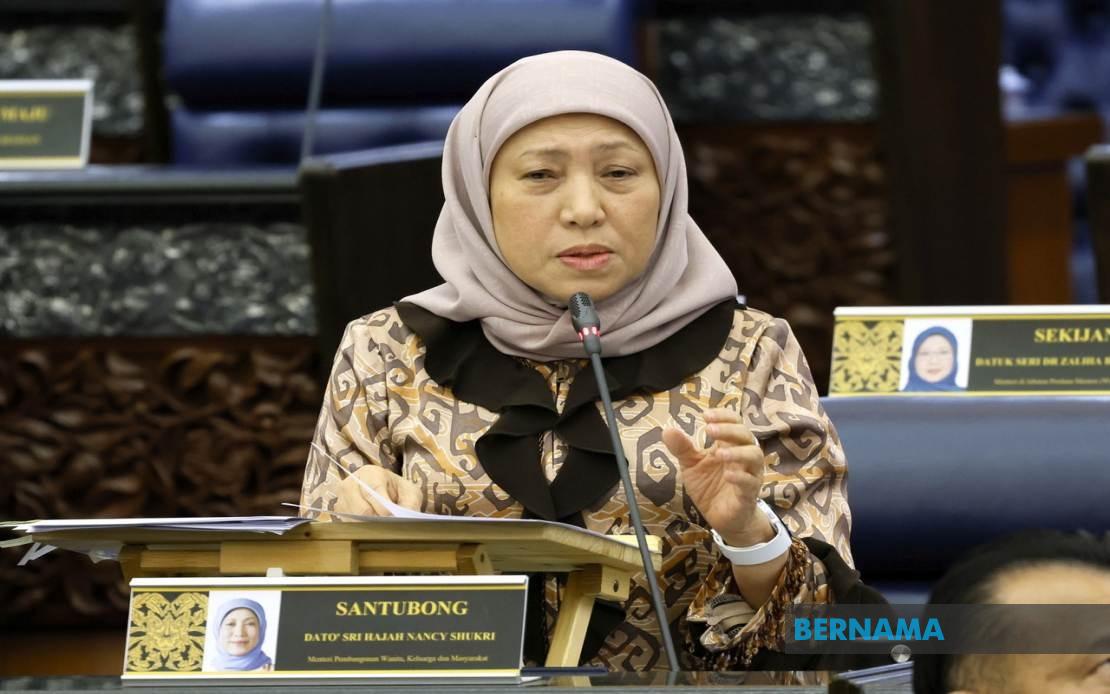
Parliament has taken a significant step forward in professionalising Malaysia's social work sector by passing the Social Work Profession Bill 2026 on July 14. The legislation introduces a formal regulatory mechanism through the establishment of the Malaysian Social Work Profession Council, marking the culmination of efforts spanning more than a decade to gain statutory recognition for practitioners in this vital field. The Bill secured approval through a majority vote following contributions from 23 Members of Parliament representing both government and opposition benches, demonstrating cross-party recognition of the need to elevate professional standards across the sector.
Minister Nancy Shukri of the Ministry of Women, Family and Community Development outlined a phased approach to implementation that prioritises establishing the Council's foundational infrastructure before extending its regulatory reach more broadly. This cautious rollout reflects acknowledgement of the complexities inherent in standardising practices across Malaysia's diverse social work landscape. The initial phase will mandate registration for all private sector practitioners, encompassing those employed by non-governmental organisations, community-based groups, corporate entities, and those operating independently. This targeted approach allows the new regulatory body to consolidate its operations and develop robust frameworks before potentially expanding jurisdiction to the public sector.
The treatment of public sector social workers under the new legislation differs substantially from private practitioners, a distinction that generated considerable parliamentary discussion. Government employees who engage in social work as part of their formal duties remain exempt from the Bill's registration requirements, provided they operate within their official capacity. This exemption recognises that civil servants already function under existing ministry supervision systems, established standard operating procedures, and professional ethics codes. However, should public officers choose to practice social work independently outside their government roles, they too must comply with the new registration mandates, creating a practical boundary between official duties and private professional practice.
The rationale for this differentiated approach stems from the complex institutional landscape of Malaysian social services delivery. Public sector social workers operate within established frameworks featuring inter-agency coordination mechanisms, existing training protocols, and embedded supervisory structures across multiple government departments and ministries. Implementing uniform registration requirements for these practitioners would necessitate comprehensive coordination procedures that Minister Shukri acknowledged remain operationally intricate. Nevertheless, the government has committed to a long-term vision encompassing comprehensive regulation of all social workers regardless of employment sector, though this ambition requires careful preparation and development of appropriate legal mechanisms.
The new Council will assume substantial responsibilities in standardising professional conduct and capability across the sector. Beyond overseeing registration, the body will develop regulations, guidelines, and competency frameworks establishing the qualifications required for practice. The Council will establish a formal complaints mechanism enabling the public to report alleged misconduct or breaches of professional standards. Additionally, it will produce guidance documents addressing occupational safety and welfare considerations for practitioners themselves, recognising that social work often involves engagement with vulnerable populations in challenging circumstances. The Council's mandate also extends to developing proposals for reciprocity arrangements enabling social workers to practice across state boundaries under uniform standards.
Parliamentarian Howard Lee raised an important point regarding consistency of professional standards across service delivery settings. He questioned the exemption granted to public sector practitioners under Clause 19, noting that government social workers handle equally high-risk cases involving child protection, persons with disabilities, elderly care, and family services. Lee argued that citizens receiving assistance deserve identical professional standards irrespective of whether their service provider operates within government structures or the private sector. This concern highlights inherent tensions in the legislative framework between acknowledging different institutional contexts and maintaining universal service quality expectations across the social work profession.
Dr. Halimah Ali advocated for targeted financial mechanisms to facilitate effective implementation across Malaysia's diverse geography. She proposed that the government establish special grant programmes for non-governmental organisations, develop scholarship schemes for aspiring practitioners, and create placement incentives targeting underserved rural areas. These measures acknowledge that professional recognition and regulatory frameworks alone cannot address substantive service gaps, particularly in Malaysia's less densely populated regions where social workers remain scarce and remuneration less competitive than urban positions. Such incentives would help ensure that professionalisation translates into improved service accessibility nationwide rather than reinforcing existing urban-rural disparities.
Lim Lip Eng endorsed the elevation of social work as a recognised profession but emphasised that regulatory authority must operate with genuine independence and transparency. He stressed that effective enforcement mechanisms require balanced, fair application of disciplinary measures ensuring proportionate consequences for misconduct. This perspective reflects broader concerns about regulatory capture and inconsistent enforcement that characterise discussions of professional regulation across Malaysia's public and private sectors. The Council's credibility depends substantially on demonstrating that practitioners and the public alike perceive its governance as impartial and its decision-making processes as free from political or commercial influence.
Datuk Siti Aminah Aching highlighted regional dimensions of professionalisation, emphasising that improved career structures and competitive salary schemes must extend throughout Malaysia, including the East Malaysian states of Sabah and Sarawak. This concern reflects longstanding challenges in attracting and retaining qualified professionals in these states, where service delivery challenges often exceed those encountered in peninsular Malaysia. The professionalisation framework must actively facilitate the development of sustainable career pathways across all regions rather than inadvertently concentrating professional opportunities in major urban centres. Success in establishing competitive career schemes nationally will significantly influence whether the legislation achieves its stated objective of developing enhanced human capital within the social work profession.
The legislation explicitly excludes volunteers and informal caregivers from regulatory scope, focusing instead on practitioners providing social work services on a professional basis. This distinction maintains important space for community-based volunteerism while establishing standards for compensated professional practice. Questions regarding minimum wage protections remain subject to existing labour legislation rather than falling within the Council's purview, preventing the new regulatory body from inadvertently creating labour disputes or employment complications. Operational funding for the Council will derive from government annual allocations, ensuring that regulatory capacity does not depend on fees that might create barriers to practitioner registration or create perverse incentives within the Council's governance structure.
The Bill's passage represents recognition that social work requires formalised professional regulation comparable to established disciplines including psychology, counselling, and nursing. The decade-spanning journey to achieve legislative recognition underscores the profession's long struggle for statutory acknowledgement and formal standing within Malaysia's regulated professions framework. Implementation through staged introduction of registration requirements, combined with the Council's progressive development of competency standards and conduct guidelines, should allow the framework to mature without creating unsustainable compliance burdens during the transition period. The legislation's success ultimately depends on whether the Council evolves into an institution commanding respect from practitioners and generating meaningful improvements in service quality and professional accountability across Malaysia's diverse social work landscape.

