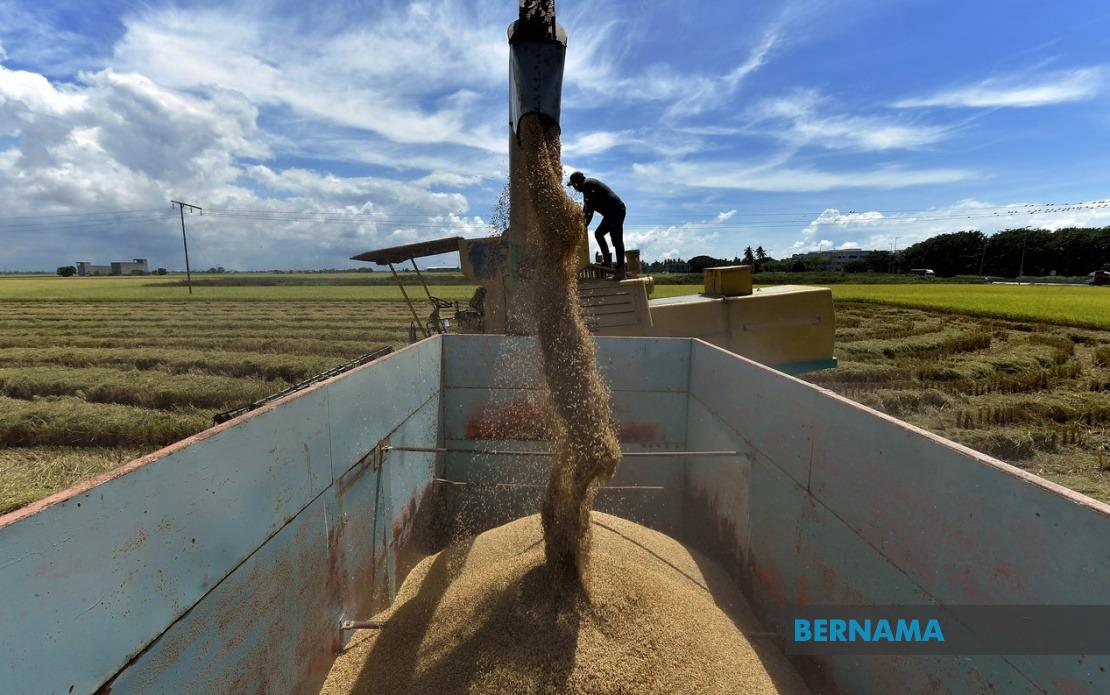
Parliament gave its seal of approval to the Control of Padi and Rice (Amendment) Bill 2026 on July 13, marking a significant step in the government's push to fortify Malaysia's rice sector against smuggling, market manipulation, and supply chain leakage. The legislation sailed through the Dewan Rakyat with backing from lawmakers across government and opposition benches, reflecting broad parliamentary consensus on the need for stricter industry regulation in a market worth billions annually.
At the heart of the reform lies a substantial recalibration of enforcement tools. The amendments to Section 22 of the principal Act (Act 522) establish penalty ceilings of up to RM250,000 for individuals found guilty of breaches, while corporations face maximum fines reaching RM1 million. These figures represent a dramatic escalation from the existing framework, which has remained virtually unchanged since the legislation's inception in 1994. Deputy Minister of Agriculture and Food Security Datuk Chan Foong Hin framed the revision as long overdue, noting that enforcement agencies have compiled substantial evidence of illicit activity that warrants proportionate deterrence.
The inadequacy of current penalties formed a critical thread throughout parliamentary deliberations. According to enforcement data presented during the debate, seizures linked to rice smuggling and unauthorised distribution of domestically produced white rice underscore a persistent problem that the existing penalty structure has failed to adequately address. Officials argued that the absence of meaningful financial consequences has allowed unscrupulous operators to calculate offences as a manageable cost of doing business, particularly given the extraordinary profit margins available in Malaysia's multi-billion-ringgit rice trade. The legislative response directly targets this calculus, aiming to make violations genuinely costly and therefore genuinely risky.
Datuk Chan articulated a secondary rationale centred on farmer protection. As padi cultivation remains fundamental to rural livelihoods across much of the country, manipulation of rice markets—whether through smuggling, stockpiling, or cartel activity—directly undermines the economic security of agricultural communities dependent on fair pricing and reliable market access. Stronger penalties are positioned as a safeguard for these vulnerable populations, disrupting the economics of misconduct that harms farmers while enriching traffickers and speculators.
During the parliamentary exchange, opposition and government legislators alike raised complementary concerns reflecting the multifaceted nature of industry governance. Datuk Idris Ahmad from Bagan Serai (PN) advocated for prosecution guidelines to be developed in tandem with penalty increases, emphasising that financial sanctions alone prove insufficient without corresponding enhancements to the legal infrastructure supporting enforcement. He further recommended specialised prosecutorial training to ensure that sentencing requests filed with courts appropriately reflect the seriousness of rice industry crimes and the public interest in maintaining supply chain integrity.
Tan Hong Pin representing Bakri (PH) approached the matter from an institutional perspective, urging the ministry to revisit penalty thresholds and proposing the creation of an independent oversight committee tasked with regularly evaluating Padiberas Nasional Berhad (BERNAS) performance in combating cartel conduct. This suggestion points to underlying concerns about the effectiveness of existing monitoring mechanisms and the possibility that structural weaknesses in industry governance may require systemic remedies beyond penalty amplification alone.
Digital innovation emerged as a thematic priority across multiple parliamentary contributions. Azli Yusof from Shah Alam (PH) championed the implementation of comprehensive digital traceability architecture spanning the entire padi and rice supply chain, arguing that real-time visibility of product movement would both deter leakage and enable rapid identification of disruptions or irregularities. His intervention reflects growing recognition that modern enforcement increasingly depends on technological infrastructure that creates continuous accountability rather than episodic enforcement operations.
Manndzri Nasib from Tenggara (BN) advanced a parallel proposal centred on product-level identification. Under his suggestion, each rice bag would carry an embedded QR code enabling both consumers and regulatory authorities to monitor stock circulation in real time. Such a system would facilitate rapid detection of mislabelling practices and hoarding behaviour whilst providing consumers with confidence regarding product provenance and authenticity. The proposal exemplifies how legislative frameworks can catalyse the adoption of supply chain technologies that serve multiple stakeholders simultaneously.
The convergence of these various legislative perspectives reveals an emerging consensus that Malaysia's rice governance requires evolution across multiple dimensions. Stronger penalties address the deterrent function, but they operate alongside institutional reforms, technological deployment, and enhanced prosecutorial capacity. The passage of the amended legislation represents an inflection point, signalling parliamentary determination to reverse decades of regulatory drift and reassert state authority over an industry that touches food security fundamentals.
For Malaysian consumers, the amendments carry implications extending beyond parliamentary proceedings into daily purchasing decisions. Enhanced oversight should theoretically translate into greater confidence in rice supply chain integrity, reduced instances of product adulteration or misrepresentation, and more stable pricing reflecting genuine supply conditions rather than illicit manipulation. For padi farmers, particularly smallholders who constitute the majority of production, stronger industry governance offers prospect of improved market stability and reduced vulnerability to exploitation by larger commercial operators.
Regionally, Malaysia's approach to rice sector regulation may signal emerging standards for Southeast Asian agricultural governance. As regional economies increasingly confront food security challenges and cross-border trade complications, policy frameworks combining enforcement vigour with technological innovation and institutional accountability could establish models that neighbouring countries consider adopting or adapting. The legislation thus operates simultaneously at domestic and regional registers, addressing immediate Malaysian concerns whilst potentially influencing broader patterns in how Southeast Asian nations approach agricultural sector governance.

