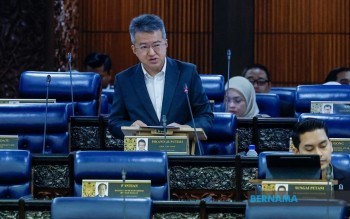
Parliament has endorsed legislation to overhaul Malaysia's National Trust Fund (KWAN), a pivotal step towards securing long-term fiscal sustainability through mandatory contributions and disciplined fund management. The Dewan Rakyat passed the National Trust Fund Bill 2026 on July 16 after extensive deliberation, with Deputy Finance Minister Liew Chin Tong steering the measure through legislative debate. The vote reflected broad support among lawmakers, culminating a process that saw 15 Members of Parliament contribute to discussions on the bill's implications for the nation's financial future.
The legislative overhaul addresses structural vulnerabilities that have plagued the fund since its inception nearly four decades ago. KWAN was established in 1988 as a mechanism for preserving wealth across generations, yet remained hamstrung by discretionary contribution arrangements and ill-defined disbursement protocols. The fund's asset base had grown to RM22.43 billion by the end of 2024, a figure substantially attributable to Petronas, which contributed RM13.5 billion as the sole consistent donor over the fund's 36-year history. This heavy reliance on a single entity underscored the weakness of an entirely voluntary framework and the absence of institutional discipline governing withdrawals.
The controversial RM5 billion withdrawal in 2021 crystallised public concern about the fund's vulnerability to ad hoc drawdowns with minimal parliamentary or institutional oversight. That episode exposed a critical governance gap: the existing structure permitted unrestricted access to capital without statutory limits or transparent accountability mechanisms. The incident galvanised policymakers to fundamentally reimagine KWAN's architecture, transforming it from a discretionary savings repository into a constitutionally anchored intergenerational asset protected by legislative scaffolding.
Central to the reformed framework is the establishment of a statutory contribution rate fixed at 0.1 percent, a figure Liew emphasised as a floor rather than a ceiling. This change represents a significant departure from voluntarism, replacing discretionary flows with mandatory allocations that persist regardless of political cycles or fiscal pressures. By embedding the contribution obligation in statute, the legislation ensures that successive governments cannot simply abandon the savings discipline through executive fiat or budgetary convenience. The rate's classification as a minimum underscores the legislative intent: to institutionalise intergenerational savings as a permanent feature of Malaysia's fiscal architecture rather than a temporary policy preference.
Another pillar of the restructured KWAN involves withdrawal constraints absent from the original framework. The bill introduces disciplined disbursement protocols designed to prevent arbitrary access to accumulated assets. These guardrails establish withdrawal limits tied to specific criteria and purposes, fundamentally altering the fund's character from a general-purpose reserve vulnerable to opportunistic raids into a protected nest egg governed by stringent conditions. The governance overhaul extends beyond mechanical withdrawal restrictions to encompass modernised accountability structures that clarify roles, responsibilities, and reporting obligations throughout the fund's administration.
The parliamentary requirement for any modification to the contribution rate constitutes perhaps the most robust safeguard within the bill's architecture. By mandating that governments seeking to alter the 0.1 percent rate must return to the Dewan Rakyat and secure legislative approval, the measure insulates KWAN from unilateral executive action. This procedural barrier raises the political cost of dismantling the scheme, requiring transparency and debate rather than permitting secretive policy shifts buried in administrative directives or budget adjustments. For Malaysian taxpayers and future generations, this constraint translates into substantive protection against fiscal adventurism.
The legislative passage carries implications extending beyond Malaysia's domestic fiscal management. Regional peers increasingly recognise intergenerational equity as a development priority, particularly as ageing populations and resource depletion challenges intensify across Southeast Asia. Malaysia's formalisation of KWAN through statutory law positions the nation as a practitioner of sophisticated long-term financial stewardship, potentially influencing governance discussions throughout the region. The model demonstrates how democracies can institutionalise fiscal discipline through legislative mechanisms rather than relying exclusively on executive commitment or technocratic discretion.
The fund's trajectory also reflects evolving perspectives on resource stewardship and national wealth management. Petronas's dominant role in contributing RM13.5 billion underscores the historical importance of energy revenues to Malaysian development, yet simultaneously highlights dependency risks. The statutory framework may encourage diversified contribution sources beyond petroleum revenues, fostering resilience as Malaysia navigates energy transitions and economic restructuring. Broadening the contributor base would distribute responsibility for intergenerational equity across sectors and stakeholders rather than concentrating it within a single entity.
For Malaysian taxpayers and civil society observers, the bill's passage signals parliamentary commitment to constraining fiscal populism and protecting long-term national interests against short-term political pressures. The 2021 withdrawal episode had triggered public scrutiny and questions about accountability; the new legislation directly responds to those concerns by establishing transparent governance and statutory limits. The requirement for parliamentary approval on rate changes democratises KWAN management, ensuring that future withdrawals or contribution modifications cannot occur without public debate and legislative record.
The bill's enactment also establishes important precedent for Malaysian governance more broadly. It demonstrates that parliament retains capacity to pass complex financial legislation addressing long-term policy objectives despite pressures toward short-termism. The measure reflects recognition that robust institutions and rules-based frameworks protect national interests more effectively than reliance on individual leaders' commitment or shifting political majorities. As Malaysia confronts demographic transitions, fiscal sustainability questions, and resource management challenges, the KWAN framework signals willingness to institutionalise solutions through durable legal structures.
Implementation will prove crucial to realising the bill's intended benefits. Administrative bodies responsible for fund management must operationalise the new governance protocols, establish transparent reporting systems, and ensure withdrawal decisions comply with statutory disciplines. Parliamentary oversight committees will require adequate resources and expertise to monitor KWAN's operations effectively. Success depends not merely on legislative text but on the bureaucratic competence and political will to enforce the framework consistently across changing governments and economic conditions.

