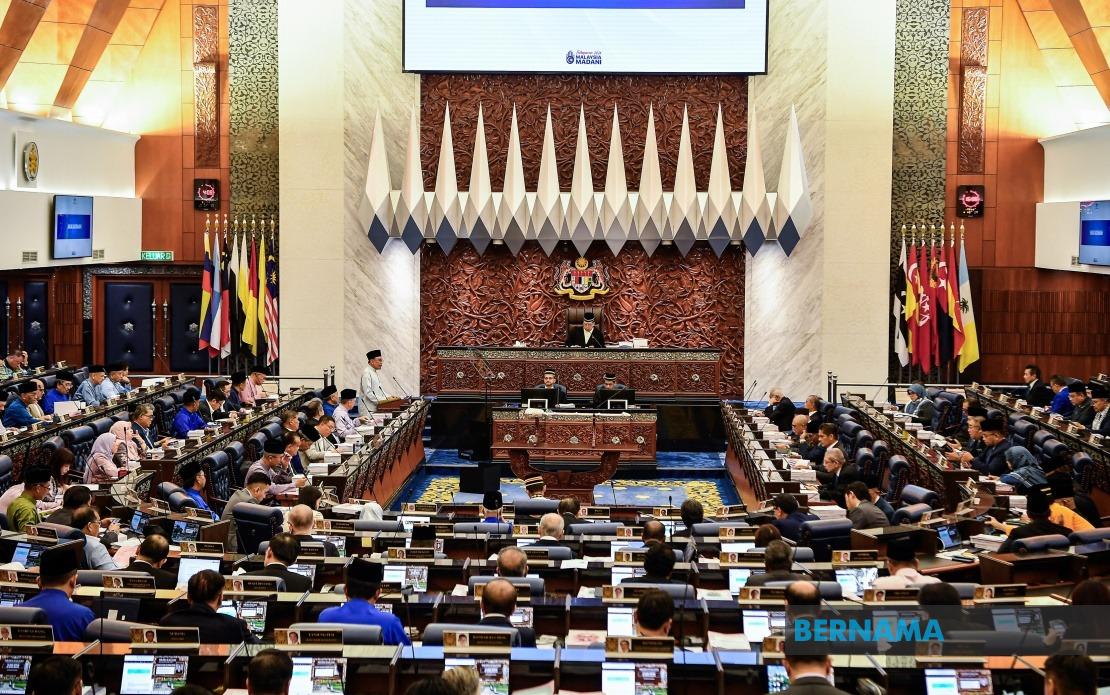
Parliament has endorsed significant reforms to the Malaysian Communications and Multimedia Commission framework through passage of the MCMC (Amendment) Bill 2026, reflecting broader efforts to modernise the nation's regulatory apparatus governing the rapidly evolving communications and multimedia sector. The legislation received endorsement from members across both government and opposition benches following deliberation by fourteen parliamentarians, signalling multiparty consensus on the necessity of strengthening institutional safeguards for Malaysia's primary communications regulator.
At the heart of the amendments lies a provision stipulating that the MCMC chairman must maintain distance from legislative bodies, a constraint designed to mitigate the risk of political capture and divergent loyalties that could compromise the regulator's impartiality. Deputy Communications Minister Teo Nie Ching underscored during parliamentary proceedings that the minister's authority to appoint the chairman and commissioners derives from longstanding statutory provisions dating to 1998, though the new requirement represents a recalibration of those powers toward greater institutional insulation from partisan pressures.
The regulatory framework governing MCMC appointments hinges on established criteria encompassing professional qualifications, demonstrated integrity, relevant sectoral experience, and proven capacity to navigate complex institutional environments. Teo outlined how the selection methodology continues to rest with the minister, a procedural continuity that drew scrutiny from parliamentary critics advocating for more transparent, merit-driven appointment mechanisms that might insulate the commission from accusations of political instrumentalisation.
One of the bill's most consequential provisions concerns financial authority, elevating MCMC's threshold for independent contract approval from RM5 million to RM50 million. This tenfold increase responds to practical operational realities that have accumulated across more than a quarter-century since the previous adjustment in 1998. The ministry justified the specific RM50 million ceiling by reference to federal procurement guidelines permitting statutory bodies to approve contracts up to RM499 million when internally funded, though officials deemed the lower figure more prudent for MCMC given its historical purchasing patterns.
Economic pressures have rendered the original RM5 million threshold increasingly obsolete as inflationary currents, accelerating technological complexity, and rising labour costs have driven up real project expenditures across the sector. Technical infrastructure investments, spectrum management initiatives, and digital economy regulatory frameworks now routinely exceed thresholds set during the pre-broadband era, creating administrative friction that the amendment seeks to alleviate. By realigning procurement authority with contemporary cost structures, lawmakers aim to enhance MCMC's operational agility without requiring ministerial sign-off for routine expenditures.
Opposition voices raised substantive concerns regarding the scope and safeguards embedded within the reform package. Dr Halimah Ali, representing Kapar, advocated for adoption of appointment mechanisms modelled on the Human Rights Commission of Malaysia, which incorporates greater transparency and relies upon expert selection panels rather than unilateral ministerial discretion. She pressed for systematic recording and parliamentary tabling of ministerial directives to MCMC, introducing an accountability layer that would render the regulator's compliance with political guidance matters of public record rather than administrative obscurity.
Datuk Mas Ermieyati Samsudin, speaking for Masjid Tanah, emphasised the necessity of robust checks and balances governing the Universal Service Provision Fund, a mechanism designed to extend communications services to underserved populations. She proposed that utilisation reports be presented to parliament on regular schedules, positioning fiscal transparency as essential to maintaining public confidence in the regulator's stewardship of resources dedicated to bridging Malaysia's digital divide. Such safeguards, proponents argued, would substantively constrain opportunities for discretionary allocation of public funds along politically expedient lines.
The amendments also contemplate strengthened audit frameworks and expanded transparency obligations surrounding ministerial directions to MCMC. These provisions respond to recurring concerns across Southeast Asia regarding the extent to which formally independent regulators remain susceptible to informal political influence, particularly in jurisdictions where clear statutory limitations on ministerial intervention remain ambiguous or weakly enforced. Malaysia's amendment reflects international best practice increasingly adopted by regional peers seeking to insulate telecoms regulators from short-term political interference while preserving ultimate democratic accountability.
Dr Richard Rapu, addressing parliament from the GPS benches, characterised the legislation as foundational to MCMC's evolution into an institution capable of navigating the exponentially accelerating demands of the digital economy. The amendment package, he contended, strengthens both the commission's structural capacity and its professional standing, essential attributes for a regulator confronting rapid technological disruption, cross-border service delivery, and the complex intersection of traditional telecommunications with internet-based communications platforms.
The bill's passage occurs amid broader regional scrutiny of how governments balance legitimate regulatory objectives against pressures to instrumentalise communications authorities for political advantage. Malaysia's amendment represents an incremental rather than transformative recalibration, preserving ministerial appointment authority while introducing specific guardrails intended to constrain the most egregious political pathologies. Whether these adjustments prove sufficient to satisfy critics demanding more fundamental structural independence remains contested among Malaysian communications law scholars and civil society observers.
Implementation will test the extent to which formal institutional constraints translate into substantive operational autonomy. The prohibition on legislative service by MCMC leadership addresses one transparent conflict of interest, yet leaves untouched the appointment mechanism's vulnerability to political patronage considerations. For observers monitoring governance trajectories across Southeast Asia, Malaysia's approach offers a case study in incremental regulatory reform where consensus-seeking legislatures gravitate toward modest institutional adjustments rather than systemic overhauls that might fundamentally rebalance power between elected officials and supposedly independent agencies.

