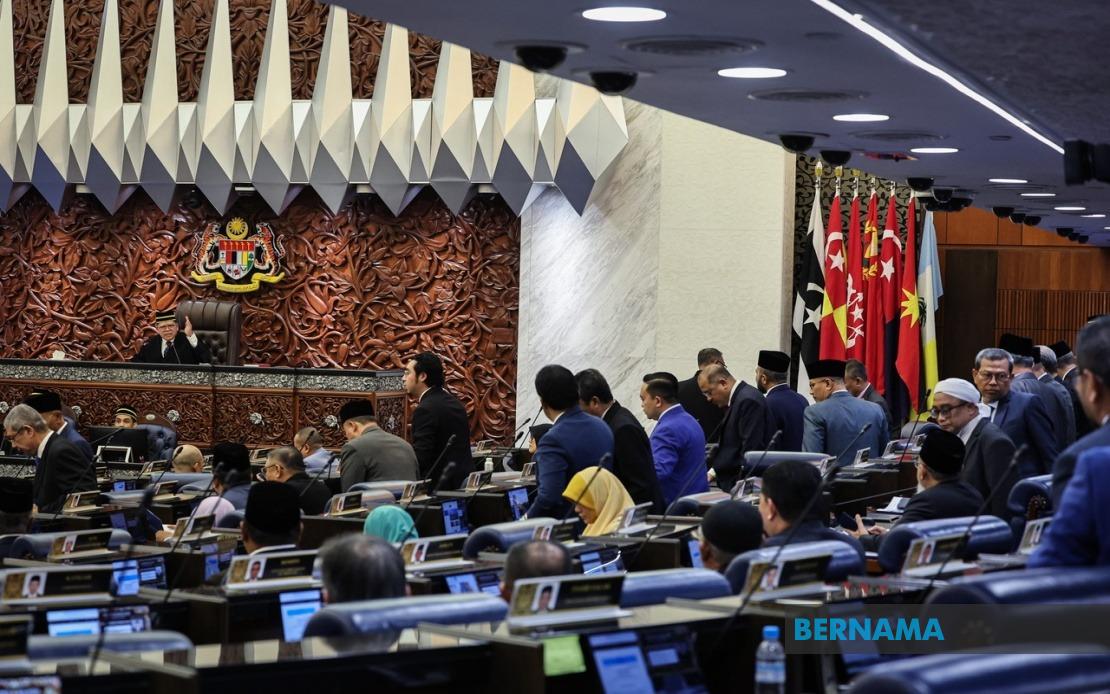
The Dewan Rakyat convened a special parliamentary sitting to enable comprehensive debate on the Royal Commission of Inquiry report concerning Lembaga Tabung Haji, with Speaker Tan Sri Johari Abdul emphasising the chamber's commitment to transparency and public accountability. The extraordinary sitting, which took place in Kuala Lumpur on August 11, was formally scheduled following a request from Prime Minister Datuk Seri Anwar Ibrahim, underscoring the significance government places on parliamentary scrutiny of the troubled pilgrimage fund's operations.
Tan Sri Johari explained that the special sitting was conducted under Standing Order 11(3) of the Dewan Rakyat's procedural rules, a mechanism that permits the Speaker to convene Parliament outside regular schedules when circumstances warrant heightened legislative attention. By invoking this provision, the government signalled its intention to ensure that the RCI's findings receive thorough parliamentary examination rather than being processed through ordinary legislative channels. The Speaker's decision to facilitate the sitting reflects institutional recognition that matters of substantial public concern—particularly those touching on the stewardship of funds belonging to Muslim pilgrims—warrant exceptional parliamentary focus.
The Speaker articulated that his approval of the special sitting was formally necessary once the Prime Minister submitted his request, indicating that the executive and legislative branches had coordinated on timing and procedure. This coordination between Putrajaya and Parliament suggests broad political consensus that the RCI report required immediate parliamentary engagement, though it also raises questions about whether opposition parties were fully consulted on scheduling and whether the special sitting framework guarantees genuinely unfettered debate or represents a controlled information release. The distinction matters significantly for Malaysian governance, as parliamentary oversight functions most effectively when legislative scheduling reflects genuine institutional independence rather than executive convenience.
The opportunity for cross-bench debate carries particular importance given Tabung Haji's status as a custodian of savings from millions of Malaysian Muslim pilgrims. The fund has faced substantial scrutiny over recent years, with concerns emerging regarding investment decisions, governance failures, and the financial security of contributors' deposits. A Royal Commission inquiry into such sensitive matters—touching on religious trust, financial stewardship, and public confidence in state institutions—necessarily demands careful parliamentary examination to determine whether governance reforms or legislative changes are warranted. The special sitting format ensures that this assessment occurs in Parliament's full view rather than within departmental or ministerial channels alone.
Tan Sri Johari's emphasis on providing MPs "ample opportunity" to debate reflects parliamentary tradition holding that legislators should exercise genuine scrutiny over executive actions and institutional performance. In Malaysia's Westminster-derived system, such debate serves multiple functions: it allows government ministers to explain the RCI's findings and policy responses, enables opposition to challenge executive interpretations, permits backbench members to raise constituency concerns, and creates public record of parliamentary positions on matters of governance. The quality of debate during such sittings often shapes subsequent public understanding of complex institutional matters and influences media coverage and public opinion formation.
The Speaker's reference to Standing Order 11(3) highlights how parliamentary procedure, though often perceived as technical and obscure, constitutes the actual mechanism through which legislative accountability operates. Different parliaments invoke extraordinary procedures with varying frequency and political consequence. The fact that Malaysian Parliament employed this mechanism to address the Tabung Haji RCI suggests either that the report's contents were deemed sufficiently momentous to warrant special procedures, or that political actors assessed that parliamentary debate would serve useful purposes in legitimising policy responses. Either way, procedural choices carry substantive implications for how institutions function and how publically significant matters receive governmental and legislative attention.
The involvement of both government and opposition benches in debate—as the Speaker explicitly noted—distinguishes meaningful parliamentary scrutiny from one-sided legislative endorsement. Malaysian Parliament's composition, which includes substantial opposition representation, means that RCI findings cannot pass unchallenged through debate. Opposition questioning of the government's interpretation of the RCI report, its proposed remedial measures, and any implications for broader governance could surface alternative analyses or highlight gaps in official responses. Such adversarial examination, while sometimes appearing uncomfortable or confrontational, functions as democratic quality control on executive power.
The public interest dimension that the Speaker emphasised reflects understanding that Tabung Haji matters transcend narrow institutional or financial concerns. Millions of Malaysians have entrusted their pilgrimage savings to this fund, establishing a relationship of fiduciary responsibility that carries moral and religious dimensions beyond standard financial regulation. Public transparency regarding governance failures, recovery efforts, and preventive reforms addresses legitimate public concerns about whether their savings remain adequately protected and whether responsible officials face appropriate accountability. Parliamentary debate in public thus serves accountability functions that internal institutional reviews cannot replicate.
For Malaysian readers and Southeast Asian observers, the RCI debate represents a test case in how Malaysia's institutions manage governance crises affecting large segments of the population. The willingness to convene special parliamentary sittings for such matters, and the Speaker's commitment to providing comprehensive debate, suggests institutional capacity for transparency and accountability, though the actual quality of debate and government responsiveness to parliamentary findings will ultimately determine whether procedural openness translates into meaningful reform. The wider region watches how Malaysia handles such challenges, as similar funds and governance questions arise across Southeast Asia, making Malaysian institutional responses potentially instructive for neighbouring nations addressing comparable accountability challenges.

