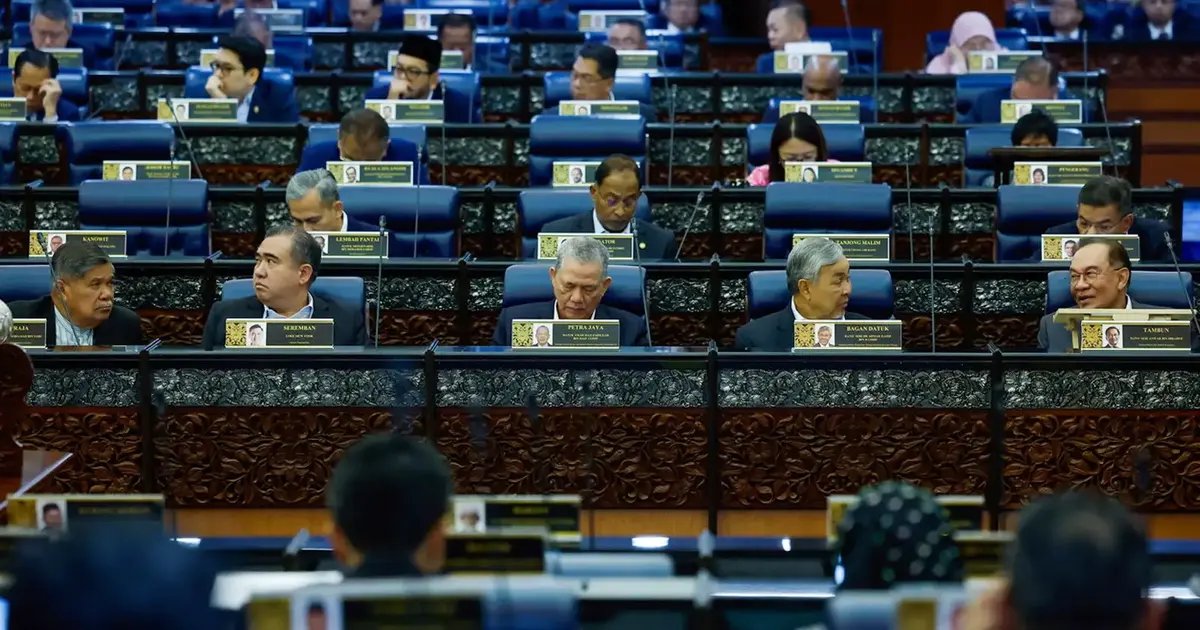
PKR's deputy secretary-general Saifuddin Shafi Muhammad has moved to dispel concerns that a ministerial reshuffle involving DAP would trigger constitutional complications, asserting that the dissolution of Parliament represents neither a legal requirement nor an inevitable consequence if the Democratic Action Party steps back from executive positions. His remarks address anxieties that have periodically surfaced within political circles regarding the stability of the current coalition government and the mechanics of ministerial transitions in Malaysia's constitutional framework.
The clarification comes at a time of persistent speculation about potential shifts in the composition of the federal cabinet, particularly regarding the role and representation of component parties within the ruling Pakatan Harapan coalition. By distinguishing between holding ministerial portfolios and maintaining parliamentary support for the government, Saifuddin has highlighted a fundamental but sometimes overlooked principle in Malaysian politics: that coalition members need not necessarily occupy cabinet positions to constitute part of the government bloc in the Dewan Rakyat.
This distinction carries significant implications for coalition stability and flexibility. In Malaysia's Westminster-influenced system, a government's viability in Parliament depends on commanding majority support in the chamber, not on the specific composition of the cabinet itself. A party can retain its position as part of the governing coalition whilst its members abstain from ministerial responsibilities, provided it maintains sufficient parliamentary numbers to support key legislation and confidence votes. This framework allows for considerable manoeuvrability in managing internal coalition dynamics without resorting to the extreme step of dissolving the legislature.
For DAP specifically, the statement suggests that the party could potentially adjust its role within the coalition architecture without triggering the kind of constitutional and political turbulence that a parliamentary dissolution would entail. Such a scenario might arise if negotiations within Pakatan Harapan necessitated rebalancing of ministerial positions or if DAP itself decided to recalibrate its participation in certain aspects of government administration. The assurance from PKR, a coalition partner, indicates that such an arrangement would be manageable within existing constitutional and parliamentary conventions.
The broader context of this statement reflects the reality of coalition politics in contemporary Malaysia. Since the historic 2018 general election that ended Barisan Nasional's decades-long dominance, Malaysia has operated under coalition governments requiring careful negotiation among multiple parties with sometimes divergent interests and constituencies. The current Pakatan Harapan arrangement, despite various challenges and realignments, has demonstrated that Malaysian coalition government can function effectively even when internal pressures mount or adjustments become necessary.
For Malaysian observers and investors concerned about political stability, Saifuddin's clarification offers reassurance that the government is not inherently fragile in the face of ministerial adjustments. Coalition governments globally have routinely accommodated shifts in cabinet composition, and Malaysia's constitutional framework permits considerable flexibility in this regard. The ability to adapt ministerial arrangements without parliamentary disruption actually strengthens rather than weakens the government's institutional resilience.
The statement also carries implications for regional stability and investor confidence. Southeast Asia has watched Malaysia's coalition politics with interest, as the region's experience with post-election transitions and multiparty governments offers lessons relevant to several other countries navigating similar challenges. Demonstrating that coalitions can adjust their internal structures without constitutional crises contributes to perceptions of institutional maturity and predictability that are valuable assets in a region where political volatility can have economic consequences.
DAP's position within Pakatan Harapan remains significant regardless of ministerial holdings. The party commands substantial parliamentary representation, particularly in ethnically diverse urban constituencies, and serves as a counterweight to other coalition partners within the government framework. Even without cabinet representation, DAP's role in supporting government legislation would remain crucial to the coalition's parliamentary arithmetic, making the party strategically important regardless of ministerial portfolio distribution.
The PKR deputy secretary-general's remarks also reflect the learning curve of Malaysia's political class in managing complex coalition arrangements. Early post-2018 experiences, including the Sheraton Move of 2020 and subsequent recalibrations, have underscored the importance of transparent communication about how coalition mechanics operate. When senior figures clearly explain that cabinet composition and parliamentary support are separable matters, it reduces the kind of confusion and misinterpretation that can amplify political uncertainty.
Looking forward, the statement establishes a precedent that ministerial transitions within the government coalition can proceed through negotiation and compromise rather than through constitutional dissolution or sudden parliamentary disruptions. This creates space for the Pakatan Harapan coalition to address internal differences, accommodate concerns from various members, and maintain the flexibility necessary for governing at a time of complex domestic and regional challenges. Whether or not DAP adjusts its ministerial presence in the near term, the clarification that such adjustments would not necessitate parliamentary dissolution removes one layer of uncertainty from Malaysia's political landscape.

