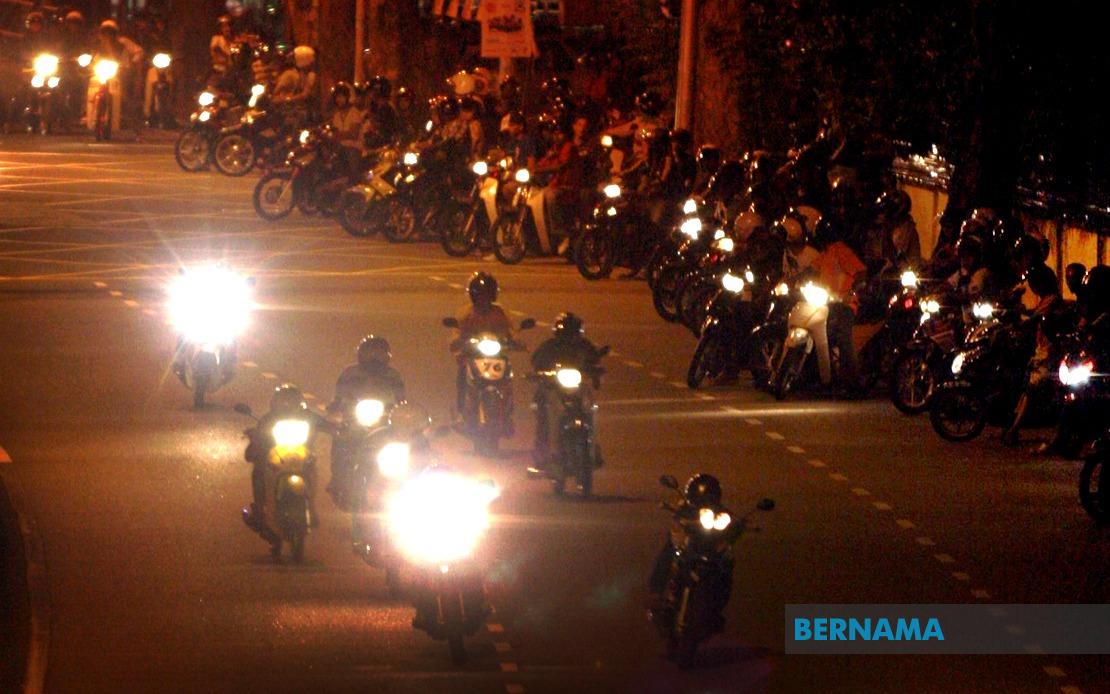
Parliament took decisive steps on June 23 toward addressing the persistent scourge of illegal street racing, with members of both government and opposition benches proposing increasingly stringent measures to deter dangerous road behaviour. The debate on the Road Transport (Amendment) Act 2026 revealed broad cross-party consensus that existing penalties have proved insufficient to curb the phenomenon, which has claimed lives and terrorised communities across Malaysia.
MPs articulated concerns that illegal racing represents not merely a traffic violation but a serious public safety crisis demanding comprehensive intervention. The urgency of the matter became evident through the range of proposals tabled, reflecting frustration with the current enforcement framework. Khairil Nizam Khirudin of PN-Jerantut advocated for a multi-layered approach combining punishment with education, suggesting that offenders undertake rehabilitation programmes incorporating discipline and community service alongside traditional penalties. This approach recognises that deterrence alone may prove inadequate without addressing the mindset and behaviour patterns that lead individuals toward dangerous driving.
A particularly notable proposal came from Datuk Willie Mongin of GPS-Puncak Borneo, who urged the government to implement permanent revocation of driving licences for street racers. Under his suggestion, penalties would escalate dramatically to a minimum fine of RM300,000 or five years imprisonment, coupled with the permanent bar from holding a valid driving licence. This represents an escalation from current practice and signals that Parliament views illegal racing with the gravity previously reserved for the most serious traffic offences. Mongin's position underscores a philosophical shift toward making the consequences genuinely life-altering for offenders.
The debate also exposed the evolving nature of illegal racing beyond the motorcycle culture from which it traditionally emerged. Wan Razali Wan Nor highlighted the June 1 tragedy in Simpang Renggam, Johor, where high-performance motor vehicles were involved in an illegal racing incident that resulted in multiple fatalities. This incident provided crucial evidence that illegal racing now encompasses luxury cars and high-powered vehicles, necessitating amendments that capture all vehicle categories rather than focusing narrowly on motorcycles. The Simpang Renggam incident serves as a catalyst for broader legislative revision.
Workshop regulation emerged as a critical enforcement gap that MPs sought to address. Khairil Nizam proposed that the Ministry of Transport collaborate with the Ministry of Domestic Trade and Cost of Living to develop new regulations targeting workshops engaged in illegal motorcycle modification. Such establishments enable illegal racing by enhancing vehicle performance and reducing safety features, yet currently operate in a regulatory grey zone. By invoking Section 66 of the Road Transport Act 1987, authorities could potentially establish legal mechanisms to prosecute modification workshops as accessories to racing offences.
Shaharizukirnain Abd Kadir advanced perhaps the harshest sanction, proposing mandatory destruction or disposal of excessively modified motorcycles seized during enforcement operations. This approach aims to eliminate tools of the crime while creating additional deterrent value—racers would face not only personal penalties but also permanent loss of their vehicles. The destruction option reflects international best practices in some jurisdictions and sends an unambiguous message that vehicles used for illegal purposes will not be returned or salvaged.
Parental accountability featured in discussions as well, with Khairil Nizam suggesting that families of offenders bear legal responsibility for their relatives' racing activities. This approach attempts to leverage family pressure as a social deterrent, recognising that many illegal racers are young people whose parents might provide financial support for vehicle modification or racing activities. Such accountability measures remain legally contentious but reflect the depth of frustration with current approaches.
Beyond racing itself, Parliament recognised the interconnected issue of driving under the influence of alcohol and drugs. Zahari Kechik and Datuk Seri Dr Ismail Abd Muttalib called for strengthened provisions under Sections 44 and 45A to 45C of the Road Transport Act 1987, particularly regarding victim compensation. They advocated establishing mechanisms whereby offenders convicted of driving whilst impaired would bear responsibility for hospital costs and victim welfare provisions. This shifts the financial burden from the public health system to perpetrators, creating powerful economic disincentives.
The parliamentary engagement demonstrated that combating illegal racing requires multi-agency coordination. Proposals implicitly acknowledged that the Ministry of Transport alone cannot succeed without cooperation from the Ministry of Domestic Trade and Cost of Living, law enforcement bodies, and community institutions. The scale of proposals suggests recognition that isolated enforcement efforts have failed to address a phenomenon that has become deeply embedded in certain subcultures and geographic pockets.
With 24 government and opposition MPs participating in the debate, the broad consensus suggests that revised legislation will likely incorporate several proposed measures. The focus on rehabilitation alongside punishment, permanent licence revocation, vehicle destruction, workshop regulation, and victim compensation mechanisms indicates a wholesale reimagining of how Malaysia approaches illegal racing enforcement.
For Malaysian readers, these developments carry significant implications. Young people who engage in illegal racing face increasingly severe consequences if proposals become law, while communities plagued by illegal racing activity may eventually see more effective enforcement. However, the success of even stringent penalties depends on consistent police enforcement and judicial willingness to apply maximum sentences. The debate's emphasis on permanent licence revocation and mandatory rehabilitation suggests Parliament expects a transformational shift in enforcement culture, not merely legislative window-dressing. Whether such transformation materialises remains the crucial question as the amended legislation advances through remaining parliamentary stages.

