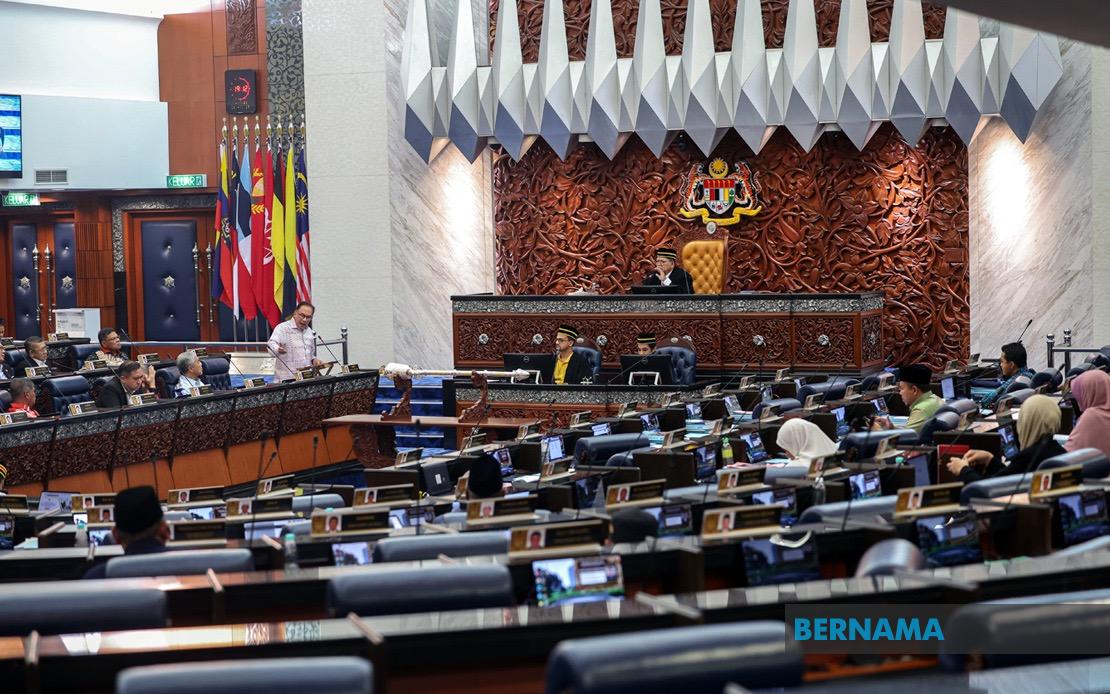
Parliament has given final approval to amendments to the Employment Insurance System (Amendment) Bill 2025, introducing a tiered fine structure targeting employers who breach notification requirements to the Social Security Organisation. The Dewan Rakyat voted to pass the legislation on June 30 following deliberation by 13 parliamentarians representing both government and opposition benches, setting the stage for enhanced compliance mechanisms in Malaysia's labour market infrastructure.
The legislative framework establishes three escalating penalty levels following consultation with stakeholders across numerous business sectors. First-time offenders will face fines of RM1,000, rising to RM3,000 for repeated violations and capping at RM5,000 for persistent non-compliance. These revised thresholds represent a significant moderation from the government's initial proposal, which had sought maximum penalties of RM10,000, demonstrating how parliamentary feedback and industry advocacy reshaped the final legislative outcome.
Deputy Human Resources Minister Datuk Khairul Firdaus Akbar Khan emphasised that the amendment prioritises education and voluntary compliance rather than purely punitive enforcement. Under the revised approach, employers will receive formal compliance notices providing opportunity to rectify breaches before financial penalties are imposed, reflecting an enforcement philosophy that balances accountability with business practicality. This graduated strategy acknowledges that many Malaysian enterprises, particularly smaller operations, may lack familiarity with regulatory obligations or systematic reporting procedures.
PERKESO has committed to continuing guidance and engagement programmes designed to support employer compliance across diverse industrial sectors. The Social Security Organisation will work alongside business associations and industry bodies to disseminate information about vacancy reporting requirements, helping companies understand procedures and minimising unintentional violations. This educational component addresses a fundamental challenge in regulatory implementation: ensuring that businesses possess adequate knowledge and tools to meet legal obligations.
The parliamentary debate revealed consensus around several implementation concerns. Multiple legislators emphasised the necessity for a streamlined digital reporting system that minimises administrative burden on employers whilst capturing data essential for national labour market analysis. Azahari Hasan from Padang Rengas highlighted how efficient vacancy notification supports PERKESO's job-matching functions, ultimately reducing unemployment and enabling more sophisticated workforce planning. Nurul Amin Hamid raised particular concerns about rural enterprises, which frequently operate with limited IT infrastructure and may require targeted support to meet reporting deadlines.
The reduced penalty framework represents tangible policy adjustment resulting from industry consultations. The government's original RM10,000 ceiling was lowered to RM5,000, whilst first-offence penalties were recalibrated to RM1,000 rather than higher initial thresholds. These modifications demonstrate responsiveness to employer feedback, suggesting that policymakers recognised that overly severe opening penalties might deter compliance through discouragement rather than encourage it. Such calibration matters substantially in Malaysian business contexts, where smaller enterprises operate with tighter margins.
Parliamentarians noted that vacancy transparency mechanisms serve broader employment policy objectives beyond simple fining regimes. Syerleena Abdul Rashid underscored the importance of standardised government portals ensuring equitable job advertisement access, preventing private platforms from monopolising recruitment information and creating information asymmetries that disadvantage job seekers from less-connected backgrounds. Accessible, transparent vacancy data strengthens labour market efficiency and supports social equity objectives.
The Employment Insurance System amendment reflects evolving regulatory philosophy in Southeast Asian labour governance, where enforcement increasingly incorporates graduated penalties designed to accommodate operational realities whilst maintaining compliance incentives. Malaysia's approach parallels international trends emphasising cooperative compliance rather than adversarial enforcement, recognising that sustained regulatory effectiveness depends on business buy-in and understanding. This represents maturation in how government engages with regulated industries beyond simple prohibition.
Implementation success will depend significantly on PERKESO's execution capacity and employer willingness to adopt reporting practices. The compliance notice system creates temporal space for remediation, encouraging good-faith compliance and reducing litigation burdens. However, information asymmetries remain, particularly affecting rural and smaller enterprises unfamiliar with digital systems or regulatory landscapes. Government agencies must therefore allocate sufficient resources toward outreach and technical support, ensuring that compliance requirements do not inadvertently exclude economically-vulnerable business segments from market participation.
The amended legislation addresses structural deficiencies in Malaysia's labour information systems. Comprehensive vacancy reporting enables more sophisticated matching between job seeker capabilities and available positions, reducing frictional unemployment and supporting evidence-based workforce development policy. For Malaysian readers and regional observers, this reflects recognition that modern labour markets require robust data infrastructure, which can only develop through mandatory reporting mechanisms balanced with practical enforcement approaches that accommodate diverse business operational contexts.

