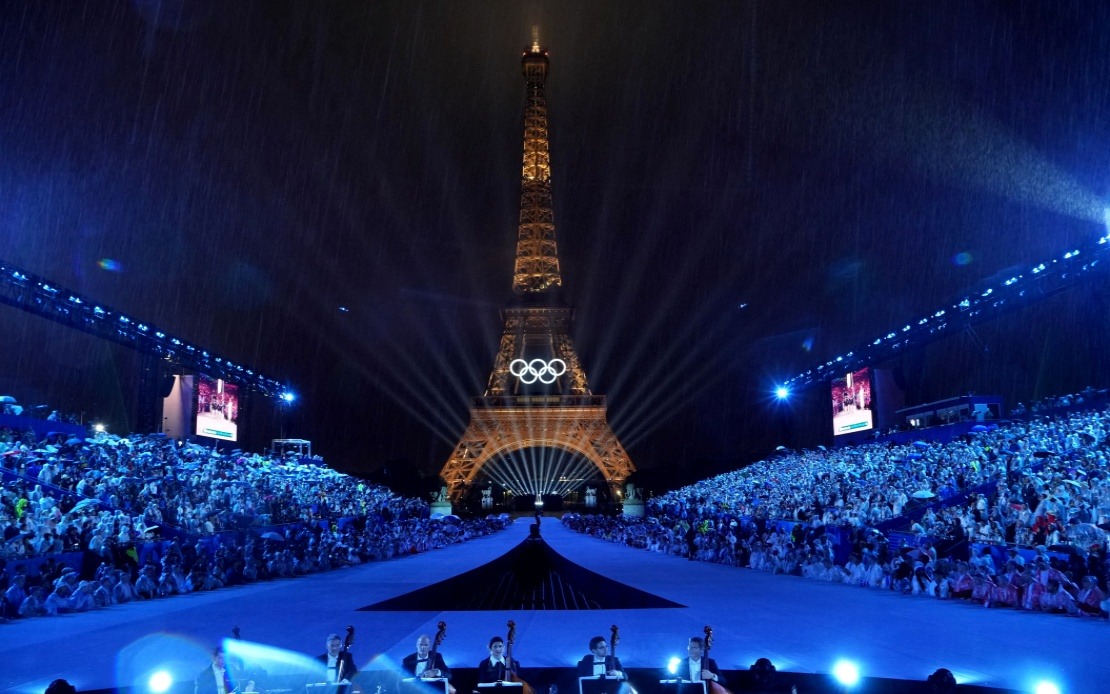
Paris's most celebrated monument, the Eiffel Tower, has taken the unusual step of shutting down early in response to dangerously high temperatures spreading across France. On Tuesday, the landmark ceased operations at 4:00 pm local time, restricting final entry to 12:15 pm as part of emergency measures adopted by its operating company, Sete. The decision underscores growing concerns about public safety during extreme weather events, a phenomenon becoming increasingly common across Europe as climate patterns shift.
Visitors planning to ascend the iconic iron structure during afternoon time slots will automatically receive refunds without needing to request compensation. Anyone holding tickets for stairs access from 11:30 am onwards, or lift tickets from 12:00 pm onwards, falls under this refund policy. The early closure represents a rare disruption to the tower's operations, reflecting the severity of the meteorological conditions forecasted for the French capital and surrounding regions.
Sete officials justified the extraordinary closure by emphasising that protecting both employees and tourists remained the paramount concern. In an official statement, the company acknowledged being compelled to adapt operational schedules to the extreme atmospheric conditions. This pragmatic approach reflects mounting awareness among major attractions and employers that heat-related health risks demand immediate intervention, particularly in urban settings where accumulated infrastructure intensifies ambient temperatures.
The Eiffel Tower is not isolated in its response to the crisis. The Louvre Museum, home to the world's most visited art collection, announced comparable contingency measures beginning Wednesday. Instead of maintaining its standard 6:00 pm closing time, the Louvre will shut its doors at 4:00 pm from June 24 through June 27, allowing staff to seek cooler environments during the period when temperatures peak. These coordinated closures among major Parisian attractions signal coordinated responses to an unprecedented atmospheric emergency.
Meteo-France, the nation's meteorological authority, has warned that the heatwave will persist through at least Thursday, with no immediate relief anticipated. Temperature readings in Paris reached 36 degrees Celsius by 4:00 pm on Tuesday, alarming considering that forecasters anticipate Wednesday's highs climbing to approximately 38 degrees Celsius. Such sustained heat poses serious risks to vulnerable populations, strains energy infrastructure, and complicates outdoor activities across the entire metropolitan region.
The geographical scope of the crisis extends far beyond the capital. Across mainland France, 54 administrative departments have been placed under the highest red heatwave alert status, signalling extraordinary danger requiring immediate precautionary action. An additional 35 departments operate under the secondary orange alert level, meaning nearly half the nation is experiencing or bracing for dangerous thermal conditions. This broad distribution underscores that France faces a systemic meteorological emergency rather than a localised phenomenon.
For Malaysian and Southeast Asian observers, France's situation carries important implications regarding climate resilience and public health management during extreme weather. Many tropical nations regularly experience high temperatures, yet the vulnerability demonstrated by European infrastructure and institutions suggests that heat adaptation remains a challenge even in developed economies. The closure of major tourist attractions due to weather demonstrates how climate variability can directly impact economic activity, employment, and visitor experiences.
The precautionary approach adopted by French authorities reflects evolving standards around occupational health and safety during extreme conditions. Rather than continuing standard operations and managing heat-related medical emergencies reactively, major institutions are proactively reducing exposure and adjusting schedules. This forward-thinking methodology offers lessons for tourist destinations and employers throughout Asia, where similar temperatures already prevail but infrastructure and protocols may not yet reflect comparable safety standards.
The incident also highlights broader questions about the sustainability of major tourism operations amid changing climate patterns. The Eiffel Tower attracts millions of visitors annually, and unexpected closures create cascading effects on tour operators, hotels, and transportation networks. As heatwaves become more frequent and intense, tourism-dependent economies must develop adaptive strategies that maintain operations while safeguarding human health, a balance that requires substantial investment in cooling infrastructure and flexible scheduling protocols.
French authorities and major attractions are clearly treating the heatwave as a serious public health emergency warranting immediate intervention. The automatic refund policy for displaced visitors demonstrates that safety considerations override revenue concerns, establishing a precedent that institutional responsibility extends beyond operational efficiency to encompass genuine welfare prioritisation. For Southeast Asian nations increasingly confronting climate-related challenges, such institutional responsiveness offers a valuable model for managing future environmental crises.