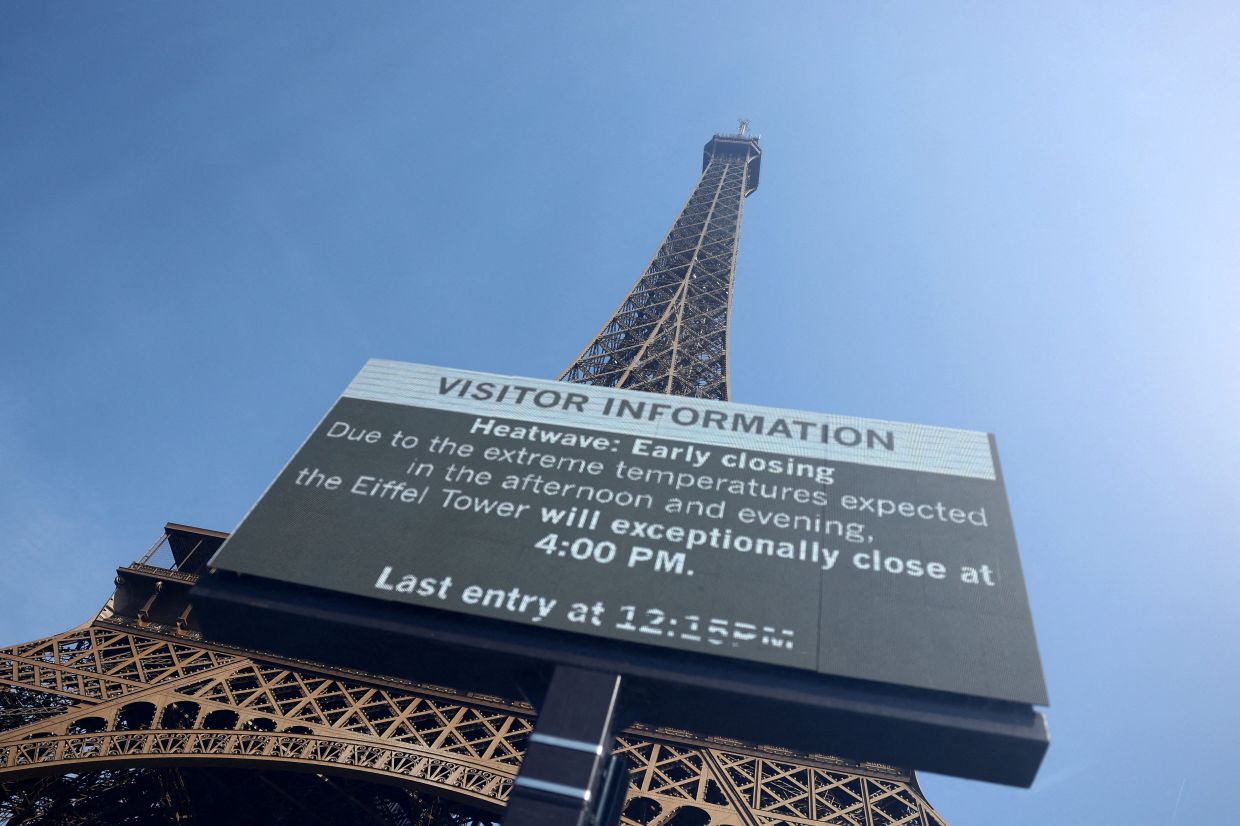
France is grappling with an extraordinary heatwave that has upended the travel plans of thousands of tourists visiting Paris this week, forcing celebrated landmarks including the Eiffel Tower and the Louvre to shut their doors ahead of schedule. The unrelenting temperatures have transformed what should have been memorable experiences into tales of discomfort and frustration, as visitors from across Europe find themselves battling sweltering conditions while trying to enjoy some of the world's most iconic attractions.
The severity of the situation became apparent on June 23, when France recorded its hottest day since temperature records began in 1947. This historic heat spike prompted the operators of the Eiffel Tower to announce an exceptional early closure at 4pm instead of maintaining their usual high-season hours extending past midnight. The 324-metre monument, which welcomes approximately seven million visitors annually, faces the likelihood of reduced operating hours continuing throughout the heatwave period. For the iconic structure, which dominates Paris's skyline and anchors the holiday experiences of international travellers, such restrictions remain highly unusual and speak to the genuinely exceptional nature of current conditions.
Among those affected is Maite Blazques, a 35-year-old Spanish nurse from Madrid who had spent months carefully saving to afford a trip bringing her six-year-old son to the French capital. The family's meticulously planned itinerary, which included visiting the historic Marais district on a guided tour, taking a river boat cruise along the Seine, and ascending the Eiffel Tower, has been fundamentally restructured due to the weather crisis. With key landmarks inaccessible and outdoor activities rendered unbearable by the heat, the family has had to abandon core components of their holiday at considerable emotional and financial cost. Blazques's quiet resignation as she held her son's hand illustrated the broader disappointment permeating the city's tourism sector.
American tourist Tamara Dancer discovered the scale of disruption when her scheduled guided tour was abruptly cancelled on Tuesday afternoon, leaving her vacation significantly compromised. Similar stories multiply across the capital, where American engineer John Beeler, aged 45, described visiting Paris during the heatwave as simply awful. Beeler and his wife found themselves suffocating not only on the pavements, which radiated heat so intensely that walking became physically exhausting, but also in the Paris métro system and even in their rental accommodation. The couple ultimately decided to relocate to a hotel offering air conditioning, an additional expense that underscores how the crisis imposes financial hardship alongside disappointment.
Drake Winners, a 66-year-old retiree visiting from London, encapsulates the fundamental challenge facing tourists during such extreme weather. Winners noted that Paris's charm traditionally reveals itself through walking its streets, discovering hidden corners, and experiencing the city at a human pace. In conditions where stepping outdoors becomes genuinely dangerous to health, this essential mode of engagement becomes impossible. Rather than wandering, Winners found himself confined to air-conditioned museums and churches, experiencing Paris through interiors rather than through the immersive street-level engagement that typically characterises a visit.
The Louvre, the world's most visited museum attracting approximately nine million visitors annually and home to masterpieces including Leonardo da Vinci's Mona Lisa, has also curtailed operations. Museum management attributed these restrictions to the facility's insufficient adaptation to the realities of climate change. The announcement raises uncomfortable questions about whether historical infrastructure across Europe can adequately serve visitors during increasingly common extreme weather events. The palace, constructed over centuries by successive French monarchs and presidents, was built during eras when such temperatures would have been virtually unthinkable, leaving its physical systems inadequately equipped for modern climate conditions.
The Louvre's current operational difficulties represent merely the latest challenge facing the institution. Over the past twelve months, the museum has contended with a brazen jewellery heist valued at approximately US$100 million, significant water leakage problems, and various other maintenance crises. These accumulating issues, combined with climate-related disruptions, paint a picture of infrastructure struggling under multiple simultaneous pressures. For the tourism industry and cultural institutions dependent on international visitors, the convergence of security challenges, maintenance problems, and climate extremes threatens operational viability.
Beyond Paris, the crisis extends across more than half of mainland France, where the national weather service has issued its highest alert levels. Even major attractions distant from the capital have implemented extraordinary measures. Mont Saint-Michel, the spectacular island fortress in Normandy that ranks among France's most visited tourist destinations outside the Paris region, has urged visitors to postpone their trips entirely during the red alert period. Such unprecedented guidance represents an extraordinary step, acknowledging that conditions have become genuinely dangerous for tourism and public safety.
The broader implications extend well beyond individual disappointed holidays or temporary closures. Climate scientists have long warned that extreme heat events will become increasingly frequent and severe across Europe, yet much of the continent's cultural infrastructure, particularly historic monuments and museums, remains fundamentally unprepared for such realities. The Louvre's explicit acknowledgement that it lacks sufficient climate adaptation speaks to a systemic challenge affecting heritage sites across the region. Unlike modern facilities designed with contemporary climate conditions in mind, centuries-old palaces and monuments were never engineered to protect visitors or preserve contents during sustained extreme temperatures.
For Malaysia and Southeast Asia, these developments offer important cautionary lessons. As the region experiences its own intensifying heat and increasingly volatile weather patterns, tourist attractions and cultural institutions must begin comprehensive climate adaptation planning immediately. The Paris situation demonstrates that even wealthy, developed nations struggle to manage the intersection of extreme weather, aging infrastructure, and tourism demands. Southeast Asian destinations, which depend significantly on international tourism revenue, cannot assume they are exempt from similar disruptions. Museums, temples, heritage sites, and outdoor attractions throughout the region should begin assessing their vulnerability to extreme heat and developing contingency plans.
The economic implications for tourism-dependent economies warrant serious consideration. When major attractions must close or reduce hours, the financial consequences ripple through hotels, restaurants, transportation services, and countless other businesses supporting the tourism ecosystem. While Paris will weather this particular crisis, the tourism sector in developing economies less able to absorb such shocks faces potentially severe consequences from climate-driven disruptions. Investment in climate-resilient infrastructure and adaptation strategies has become not merely an environmental imperative but an economic necessity for tourism-reliant regions.
Looking forward, the Paris heatwave signals that tourism's traditional business model may require fundamental restructuring in response to climate realities. Seasonal patterns, opening hours, and site management practices developed during decades of relatively stable climate conditions may no longer be viable. For the millions of international tourists who spent months planning and saving for holidays only to encounter impossible conditions and closed attractions, this week serves as a sharp reminder that climate change is no longer a distant theoretical concern but an immediate practical challenge affecting concrete travel plans and long-anticipated experiences.

