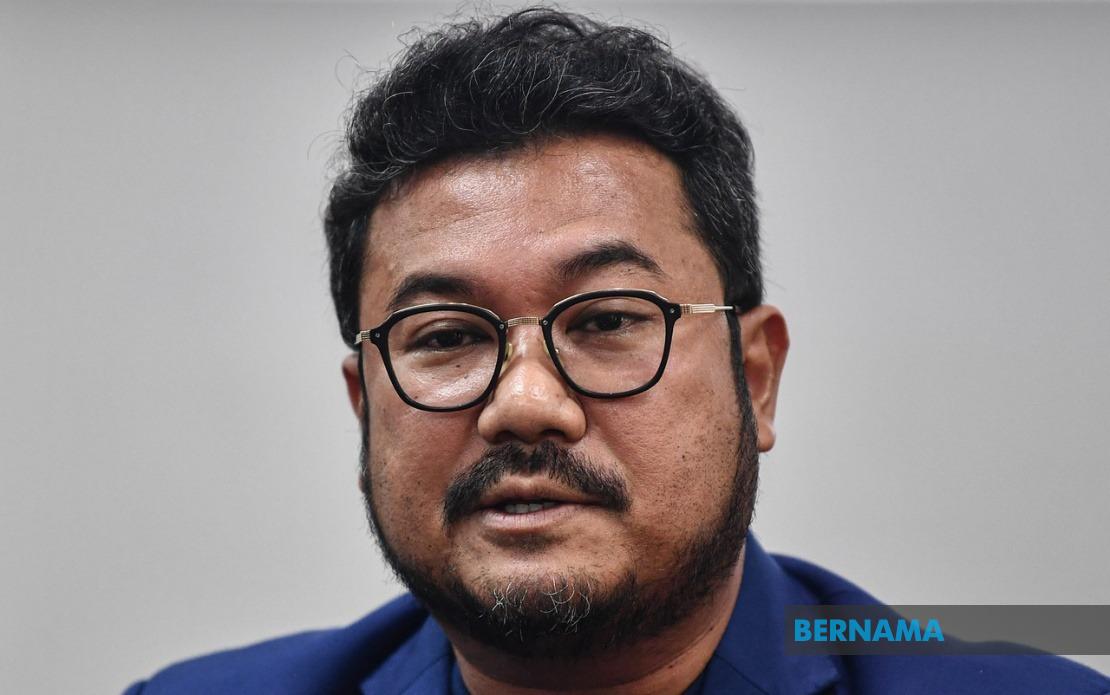
The Malaysian Paralympics Council president has entered the political arena as one of Parti Peribumi Bersatu Malaysia's candidates for the forthcoming Negeri Sembilan state election. Datuk Seri Megat D Shahriman Zaharudin, who also leads the Negeri Sembilan Canoe Association, was unveiled as Bersatu's contender for the Seri Menanti constituency during an official candidate announcement ceremony held at Dewan Aminah Hamid in Nilai on July 17. The announcement was made by Bersatu president Tan Sri Muhyiddin Yassin as part of the party's slate of 24 candidates competing in the 16th state election.
The inclusion of Megat D Shahriman in Bersatu's lineup represents a strategic move to leverage his standing in sports administration and community engagement within the state. His dual roles in parliamentary and non-governmental sports organisations have positioned him as a figure with connections across multiple sectors, potentially appealing to voters concerned with both governance and grassroots development. The Seri Menanti seat, a constituency in the heart of Negeri Sembilan, holds particular significance given the state's economic landscape and demographic composition.
Bersatu's full slate of candidates signals the party's commitment to contesting vigorously across the state despite navigating the complex political dynamics of Malaysian federalism. The announcement of 24 candidates demonstrates the party's determination to maximise its representation in what is shaping up to be a closely watched state election. Negeri Sembilan, as a state with historical significance in Malaysian politics and a diverse socioeconomic profile, remains a crucial proving ground for political movements seeking to expand their influence beyond their traditional strongholds.
The election calendar has been formally set by the Election Commission, with nomination day scheduled for Saturday following the announcement. Early voting is provisioned for July 28, allowing eligible voters unable to cast ballots on the main polling day to participate in the democratic process. The official polling day is fixed for August 1, giving political parties and candidates just over two weeks to campaign and mobilise voter support across their respective constituencies.
This timeline compresses the campaign period significantly, requiring candidates to execute efficient outreach strategies and leverage both traditional and digital platforms to reach constituents. For Megat D Shahriman, the compressed schedule means rapidly transitioning from his administrative roles in sports to intensive ground-level campaigning. The challenge lies in introducing himself as a political contender while maintaining credibility in sectors where he already operates.
The Seri Menanti constituency presents particular dynamics worthy of examination. As a seat contested during a state election rather than a federal one, local issues and state-level governance priorities take precedence in voter calculations. The constituency's composition likely includes both urban and semi-rural elements, reflecting Negeri Sembilan's character as a state balancing traditional economic activities with modern commercial development.
Bersatu's strategy in fielding established figures like Megat D Shahriman suggests an effort to appeal to voters seeking candidates with demonstrated organisational experience and community involvement. Unlike career politicians, candidates drawn from professional and sporting backgrounds often cultivate an image of independence from political machine politics, which can resonate with electorates fatigued by conventional political rhetoric.
The broader context of this election deserves consideration. Negeri Sembilan has witnessed significant political shifts in recent years, with voters demonstrating willingness to alter their electoral preferences based on performance and alternative offerings. The state's position within Malaysia's political federation means local election outcomes can signal national trends and sentiment shifts, making observers across the country attentive to results.
For sports administration and related sectors in Malaysia, the entry of figures like Megat D Shahriman into electoral politics raises questions about governance continuity and the relationship between sporting bodies and political institutions. His candidacy might influence how sports organisations navigate their relationships with state and federal authorities during the election period and beyond, depending on electoral outcomes.
The announcement also reflects Bersatu's broader personnel strategy as the party continues evolving its organisational structure and public profile following internal political developments. By recruiting candidates from diverse professional backgrounds, the party attempts to present itself as representing varied community interests rather than concentrating on traditional power bases. This approach aims to broaden appeal across different voter demographics and socioeconomic categories.

