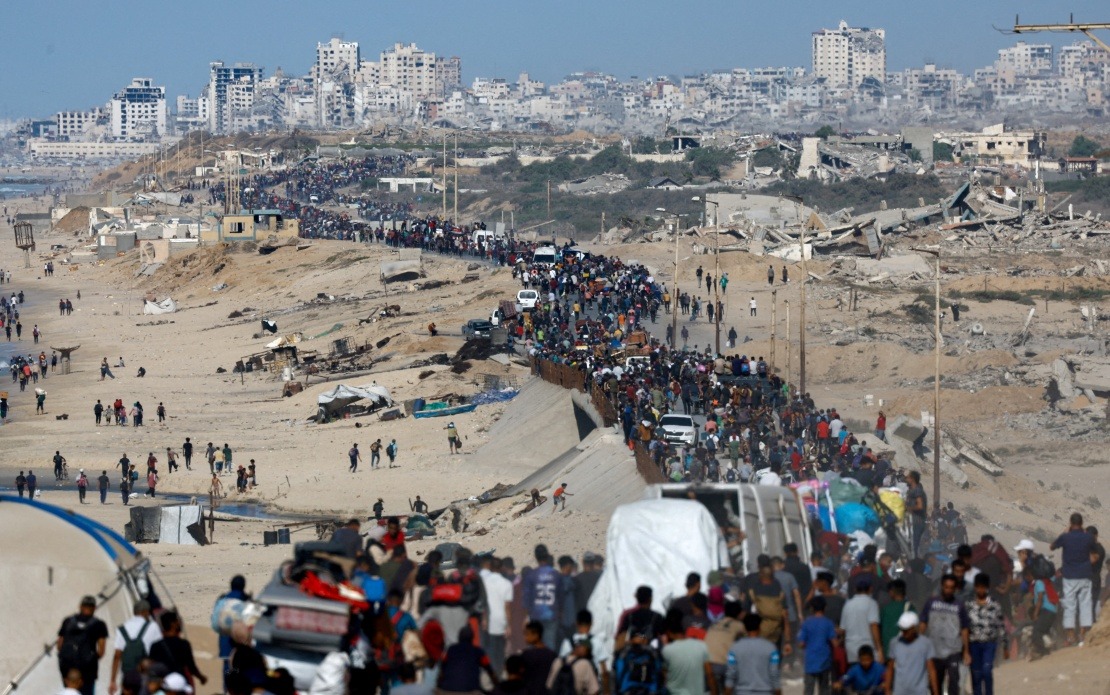
The Palestinian Foreign Ministry has issued a forceful rejection of international efforts to weaken or dismantle the United Nations Relief and Works Agency for Palestine Refugees in the Near East (UNRWA), reasserting the organisation's critical importance to the survival and wellbeing of Palestinian communities. The statement, released Wednesday, underscores growing tensions surrounding the agency's future amid shifting geopolitical calculations and proposed solutions to the Gaza conflict.
Palestine views UNRWA not merely as a humanitarian organisation but as a foundational institution sustaining Palestinian life across multiple dimensions. The agency provides comprehensive services spanning primary and secondary education, medical care and public health programmes, nutritional support and welfare protections, and urgent relief operations. These services function across the occupied Palestinian territories—encompassing the West Bank, East Jerusalem and the Gaza Strip—as well as in refugee camps situated within Jordan, Lebanon, Syria and other neighbouring states where Palestinian families have resided for generations.
The ministry's statement emphasises UNRWA's legal and institutional legitimacy, grounding its defence in international frameworks. UNRWA operates under an explicit UN mandate and adheres to established international law principles. Palestinian officials stress that the agency enjoys formal recognition from the State of Palestine and operates with its consent and support. Rather than a temporary intervention, UNRWA is characterised as a structural component of regional stability and a stabilising mechanism preventing humanitarian collapse.
Central to Palestine's position is the assertion that dismantling or restructuring UNRWA amounts to addressing symptoms rather than causes. The ministry contends that humanitarian provision cannot serve as a substitute for addressing substantive political grievances and legal entitlements. Palestinian leadership specifically invokes United Nations General Assembly Resolution 194, which enshrines refugee rights including the right of return—a cornerstone principle that transcends immediate aid delivery and touches upon questions of historical justice and permanent settlement.
The statement also contains a subtle but pointed rejection of language suggesting fragmentation of Palestinian territory or identity. Palestinian officials view proposals to isolate Gaza or treat it separately from the broader Palestinian political project as incompatible with their vision of unified statehood. They assert that Gaza constitutes an integral part of occupied Palestine, and that Palestinians represent a single people distributed across geographic zones and diaspora communities—a formulation that resists administrative or political divisions.
Palestinian officials have called upon all governments, multilateral institutions and international organisations to respect UNRWA's legal status, operational privileges and immunities as defined under international law. This appeal reflects anxiety about encroachment on the agency's independence and effectiveness. The ministry urges protection of UNRWA's personnel, facilities and mandate until comprehensive political resolution emerges that satisfies international legal standards and relevant UN resolutions.
These statements arrive amid public declarations from the Trump administration's Board of Peace, which declared Wednesday that UNRWA has "no place in the new Gaza." The board, established in January as an instrument for pursuing settlement initiatives, framed the removal of UNRWA within a narrative emphasising development and self-reliance rather than perpetual dependence on international assistance. This rhetorical positioning—suggesting that aid dependency perpetuates conflict—represents a fundamental disagreement with Palestinian arguments about UNRWA's indispensability.
The Board of Peace, operating under Trump's direct leadership following an initial meeting in February at the US Institute of Peace in Washington, functions as part of the second phase of a broader twenty-point plan designed to conclude hostilities in Gaza. This initiative received backing from a UN Security Council resolution passed in November, underscoring American diplomatic investment in reshaping Gaza's future administration and operating structures.
The impasse reflects deeper divergences about responsibility and accountability. Palestinian leadership emphasises that international law and humanitarian obligation demand sustained support regardless of political disagreements, and that suggestions to eliminate UNRWA represent abandonment rather than progress. The Trump administration's framing implies that traditional aid mechanisms inadvertently entrench conflict dynamics and that institutional transformation serves Palestinian interests more effectively than continuation of existing arrangements.
For Malaysia and Southeast Asian observers, this dispute carries relevance beyond Gaza. It illustrates how major powers attempt to reshape Middle Eastern institutions and governance arrangements, and how such interventions intersect with questions of sovereignty, international law and humanitarian principle. Malaysia, which maintains principled positions on Palestinian self-determination and has historically supported UNRWA, faces pressure to articulate positions on restructuring proposals that may affect millions of refugees across multiple countries.
The escalating rhetoric suggests that UNRWA's future remains contested terrain within broader negotiations about Gaza's postwar trajectory. Palestinian insistence on the agency's irreplaceability indicates that institutional preservation has become inseparable from questions about political settlement, refugee rights and the nature of eventual Palestinian statehood. How these competing visions resolve will shape humanitarian capacity, political possibilities and regional stability for years forward.

