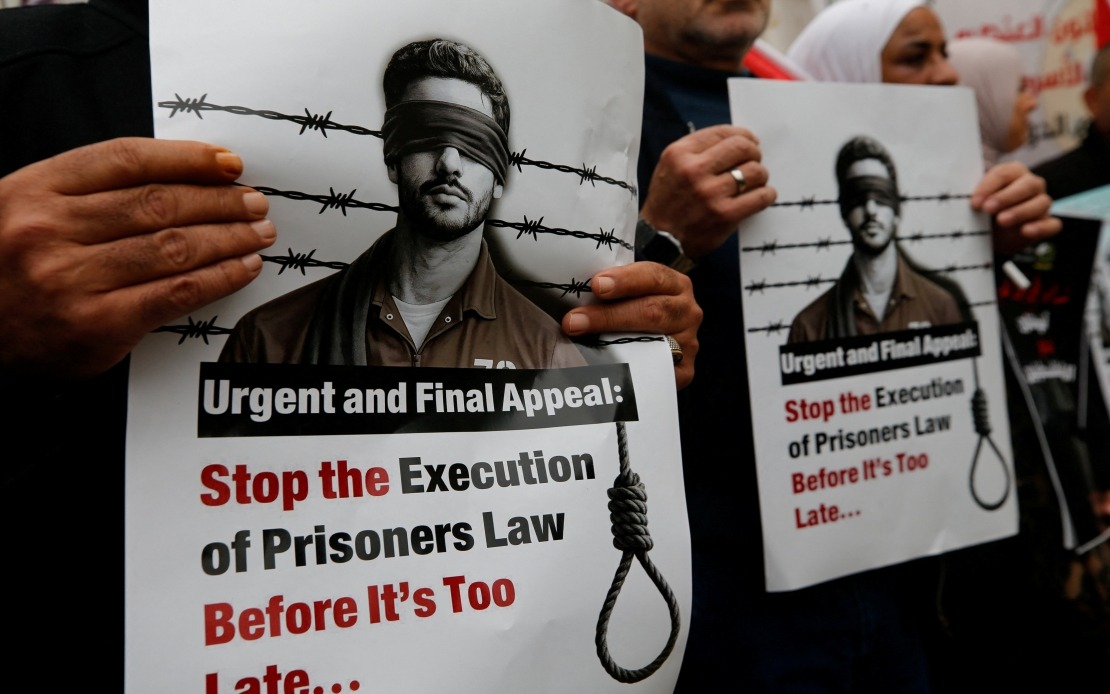
The Palestinian government released a comprehensive situation report this week detailing what it characterises as an entrenched pattern of human rights violations within Israel's detention system, a development that underscores the deepening humanitarian crisis within occupied Palestinian territories. According to Situation Report #92 issued by the Palestine Prime Minister's Office covering the period from June 22 to 29, 2026, Palestinian authorities have documented extensive abuse of detainees held by Israeli occupation authorities, ranging from physical violence to systemic denial of basic care. The report represents the latest in a series of allegations that have drawn concern from international human rights organisations and regional governments seeking to address the legal status and conditions of thousands of Palestinians in custody.
The scale of the detention issue appears substantial according to Palestinian figures. More than 3,376 Palestinians are being held as administrative detainees without formal charges or trial proceedings, a classification that enables indefinite detention under military orders. This category of detention has long been controversial under international humanitarian law, as it allows authorities to hold individuals based on secret evidence that detainees cannot challenge in court. Beyond these administrative cases, Palestinian authorities also report that 360 Palestinian children remain in detention, raising particular concerns about juvenile justice procedures and the psychological impact on minors. When combined with additional detention records, Palestinian government sources indicate that more than 9,500 Palestinian detainees are held across the West Bank including occupied Jerusalem, suggesting the issue affects a substantial segment of the Palestinian population.
The conditions within these detention facilities, as documented by Palestinian institutions, paint a stark picture of the treatment detainees reportedly face. Prisoners have allegedly been subjected to beatings, prolonged stress positions, electrocution, sleep deprivation, starvation, and sexual violence according to the report. These allegations align with long-standing claims by Palestinian human rights organisations and international monitoring bodies regarding interrogation and control methods. The report further documents prison conditions it describes as inhumane, including inadequate supplies of food and water, deliberate exposure to disease, and systematic denial of medical treatment. Such conditions would violate multiple provisions of international humanitarian law and the Geneva Conventions, to which Israel is a signatory.
Particularly troubling to Palestinian authorities is the situation of vulnerable detainees. The report specifically highlights three pregnant Palestinian women currently held in custody who face what Palestinian authorities describe as starvation, humiliation, harsh interrogations, invasive searches, and denial of adequate prenatal healthcare. The treatment of pregnant women in detention raises specific international legal concerns, as pregnancy is recognised as requiring special protections under humanitarian law. These cases exemplify the report's broader argument about how detention practices affect some of the most vulnerable segments of Palestinian society, with potential long-term implications for maternal and child health outcomes.
Beyond current detention, the Palestinian government documents the lasting consequences of past incarceration. Hundreds of previously released detainees reportedly suffer severe physical and psychological trauma, with some individuals dying shortly after their release due to complications from the abuse they sustained. This pattern suggests that the impact of detention extends far beyond the period of confinement itself, affecting family structures, economic productivity, and community stability across Palestinian society. The cumulative toll of these individual cases contributes to broader social fragmentation within Palestinian communities already affected by ongoing conflict.
The detention documentation forms one component of a more extensive accounting of casualties and losses that Palestinian authorities have compiled. According to figures released alongside the situation report, at least 73,054 Palestinians have been killed in Gaza since early October 2023, including a minimum of 21,638 children, while an additional 173,480 individuals have sustained injuries. Beyond Gaza, the West Bank including occupied Jerusalem has witnessed 1,175 Palestinian deaths including 246 children, with 12,919 others wounded as of the report's cut-off date. These aggregate figures underscore the scale of the humanitarian impact across Palestinian territories, extending well beyond detention issues to encompass the broader conflict dynamic.
The documentation of missing persons represents another dimension of concern outlined in the report. Palestinian authorities indicate that 11,200 Palestinians remain missing, a classification that typically includes individuals unaccounted for and whose whereabouts remain unknown. This missing persons category compounds the trauma experienced by families unable to obtain information about relatives potentially detained, displaced, or deceased. The absence of clear information about the status and location of missing individuals creates prolonged uncertainty for families and contributes to community-wide anxiety about personal security.
Professional casualties have also been substantial according to Palestinian accounting. The report indicates that more than 1,700 health workers have been killed, undermining the capacity of Palestinian health systems to deliver care. Additionally, 262 journalists and media workers have been killed, constraining the ability of Palestinian media outlets to document conditions and inform both local and international audiences about developments on the ground. These professional losses affect not only the individuals directly harmed but also the institutional capacity of Palestinian society to maintain essential services and communicate with external parties.
Securitywise, the West Bank has experienced continued military and settler-related incidents during the reporting period. Between June 22 and 28, the report recorded 362 military assaults by the Israeli army, 47 shooting incidents excluding airstrikes, and 114 incidents attributed to settler violence. This frequency of security incidents suggests an environment of chronic instability where ordinary Palestinian civilians face recurring threats to their safety. The breakdown between military operations and settler attacks indicates that security pressures come from multiple sources, complicating efforts to establish predictable conditions for Palestinian daily life.
Beyond the security documentation, the Palestinian Cabinet has signalled its intention to advance governance and administrative reforms. During its weekly session, Cabinet members reaffirmed commitment to strengthening financial management and institutional development within Palestinian authorities. President Mahmoud Abbas approved amendments to the Value Added Tax law intended to support comprehensive institutional development within the Ministry of Finance and establish a Higher Council for Public Revenues. These reforms aim to modernise financial administration in alignment with international standards, combat revenue loss through tax evasion and smuggling, and secure sustainable funding for essential public services that have been strained by years of conflict and economic constraints.
Digital transformation initiatives have also been incorporated into Palestinian government priorities. The Cabinet approved the General Policy for the Telecommunications and Information Technology Sector covering 2026 through 2028, designed to accelerate digital transformation and enhance government service delivery through improved digital platforms. In parallel, health sector modernisation is proceeding through replacement of paper-based health insurance cards with smart card technology. These digital initiatives reflect Palestinian efforts to improve data security, strengthen institutional capacity, and position the healthcare system for future technological expansion despite the challenging operational environment.
For regional observers including Malaysian policymakers, the Palestinian situation report illustrates the persistent intersection between security concerns, detention practices, and governance challenges in the occupied territories. The detention figures and allegations of abuse continue to generate diplomatic attention at international forums, while Palestinian administrative reforms attempt to build institutional resilience. The scale of casualties and missing persons underscores the humanitarian dimensions of the ongoing Israeli-Palestinian conflict, factors that increasingly influence regional sentiment and international legal discussions about accountability and transitional justice mechanisms.

