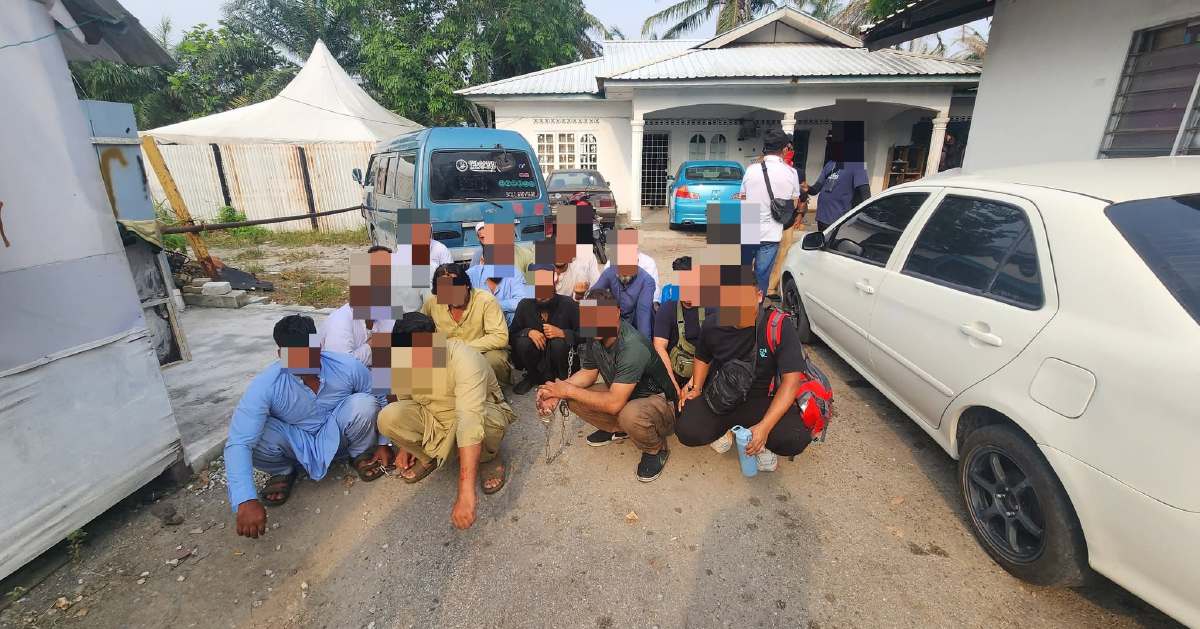
Immigration Department officials have successfully disrupted a large-scale automotive parts smuggling operation in the Klang valley, leading to the apprehension of 20 individuals during a coordinated raid yesterday. The operation, conducted at a location in Jalan Kapar, Klang, has been identified as a sophisticated car theft and dismantling enterprise that authorities believe was orchestrated by foreign nationals working within Malaysia's borders.
The bust represents a significant blow to organized auto crime in Selangor, a region that has increasingly become a hub for vehicle-related criminal activities. Investigators allege that the syndicate operated on a substantial scale, systematically acquiring vehicles—likely through theft or other illicit means—and then methodically disassembling them to extract and sell high-value components. This model of operation has become increasingly common across Southeast Asia, where organized groups exploit porous borders and fragmented law enforcement coordination to move stolen parts across jurisdictions.
According to immigration officials, a Pakistani national has emerged as the primary architect of the operation, though the precise extent of his alleged involvement remains under investigation. The presence of foreign criminal masterminds coordinating such activities underscores a troubling trend in Malaysia's security landscape, wherein international crime syndicates have identified loopholes in enforcement mechanisms to establish themselves within the country. The Immigration Department's ability to identify and apprehend this individual suggests an improvement in intelligence gathering and inter-agency coordination, though questions remain about how such an operation managed to function for what may have been an extended period.
The remaining 19 arrested individuals are believed to have played various roles within the syndicate's hierarchy, from those directly involved in vehicle procurement and dismantling to logistics coordinators and sellers who distributed parts through informal channels. The scale of arrests indicates that authorities have penetrated multiple layers of the organization, potentially securing valuable intelligence about its supply chains and distribution networks. Such networks typically extend beyond a single location, meaning that the raid at Jalan Kapar may represent only one aspect of a larger operation with connections across other parts of Malaysia or even in neighboring countries.
Vehicle parts trafficking carries particular significance for Malaysian law enforcement because it intersects with multiple criminal domains. Stolen car components supply both the informal automotive repair sector and organized crime groups requiring spare parts for illegal operations. The economic impact extends beyond direct losses to vehicle owners—insurance costs rise across the market, legitimate businesses in the automotive aftermarket sector face unfair competition from trafficked goods, and organized crime groups derive funding that supports other illegal enterprises including narcotics and weapons trafficking.
The Klang area's prominence in this case reflects its geography and economic characteristics. Located within the Selangor state and forming part of the greater Klang Valley metropolitan region, the area offers criminal enterprises strategic advantages including proximity to major ports, highways, and industrial zones where stolen vehicles can be concealed. The region's dense population and concentration of automotive workshops provide operational cover for dismantling operations that might otherwise attract attention in smaller communities.
The raid's execution suggests improved intelligence capacity within Malaysia's immigration and law enforcement agencies. Previously, such operations have been undertaken by individual police contingents, but the involvement of the Immigration Department indicates a broadening of institutional attention toward transnational crime networks. This shift reflects international pressure on Malaysia to strengthen border security and combat human trafficking, smuggling, and organized crime—objectives that naturally extend to monitoring the movement and activities of foreign nationals engaged in criminal enterprises.
The investigation into the 20 arrested suspects is expected to yield significant intelligence about syndicate operations, including the sources of vehicles, the scope of their distribution networks, and the financial mechanisms through which profits were channeled. Authorities will likely seek to establish whether this Malaysian-based operation forms part of a larger regional network extending into Thailand, Singapore, or Indonesia, where similar car-part smuggling rings have been dismantled in recent years.
The case carries implications for Malaysia's efforts to strengthen law enforcement credibility and security governance. As the nation positions itself as a regional hub for trade and investment, such operations underscore the necessity for robust internal security measures. The arrest of a foreign national allegedly orchestrating sophisticated criminal activity may also factor into broader policy discussions regarding immigration enforcement and the vetting procedures for long-term visa holders and migrant workers across Malaysia.
Moving forward, authorities will be tasked with determining whether additional arrests are warranted and whether other vehicles or stolen components can be recovered and returned to rightful owners. The case also provides an opportunity for inter-agency coordination improvements, particularly between immigration authorities, police criminal investigation departments, and customs officials who monitor the movement of goods. Such coordination remains essential given the cross-border nature of organized vehicle parts trafficking in Southeast Asia, where jurisdictional boundaries often hinder comprehensive law enforcement responses.

