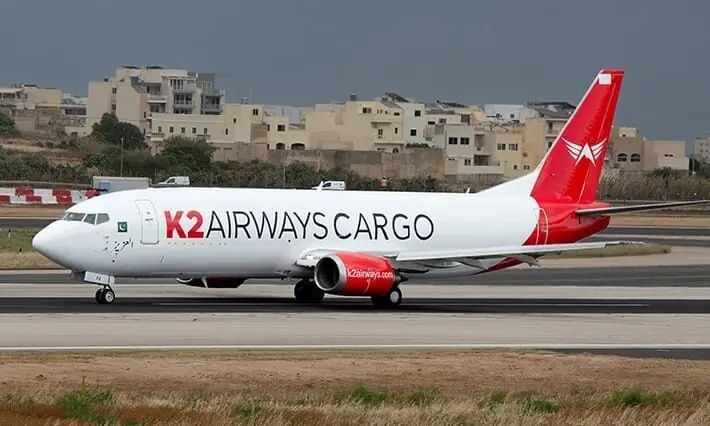
Pakistan mobilised its naval and air force assets on Wednesday to locate a K2 Airways Boeing 737-400 cargo aircraft that disappeared while approaching Karachi from the United Arab Emirates, with Prime Minister Shehbaz Sharif declaring the plane had crashed into the Arabian Sea carrying five crew members. The search operation represents one of the country's most significant aviation incidents in recent years, triggering an immediate response from multiple government agencies and military units to comb the waters west of Karachi.
The aircraft, registered with the Pakistan Airports Authority, vanished from radar at 21:21 pm local time on Tuesday evening approximately 155 nautical miles west of Karachi after reporting critical technical difficulties. Flight data recorded by the PAA indicated the plane had signalled a navigational system malfunction moments before beginning an unusual descent pattern that culminated in complete loss of radar contact and communication with ground control. The sequence of events unfolded rapidly enough to preclude any opportunity for the crew to declare a formal distress call or reach a recovery altitude.
Flightradar24, the independent flight-tracking service, released preliminary telemetry showing an erratic altitude profile during the aircraft's final minutes. The data revealed an initial descent, followed by a brief climb that suggested crew attempts at recovery, then a sudden and catastrophic drop that indicated either complete instrument failure or loss of structural integrity. This pattern has become a focal point for initial speculation among aviation analysts examining the incident, though investigators cautioned against drawing premature conclusions.
Prime Minister Shehbaz Sharif issued an official statement expressing profound sorrow and extending formal condolences to the families of the five crew members. Beyond acknowledging the tragedy, Sharif issued direct instructions to Pakistan's civil aviation authority, navy, and air force to prioritise rescue operations and deploy all available maritime and aerial resources toward locating the aircraft and recovering survivors, though the circumstances suggested minimal hope given the reported crash location in open ocean.
The search effort engaged both military vessels and commercial merchant ships operating in the Arabian Sea, supplemented by military reconnaissance aircraft capable of conducting broad-area surveillance operations. Coordination between naval commands and civilian maritime authorities represented a comprehensive mobilisation of state resources typical of major aviation emergencies in the region, reflecting the seriousness with which Pakistan's government treated the incident despite the remote likelihood of discovering survivors.
K2 Airways operates as a privately-owned cargo carrier conducting both scheduled freight services and charter operations across domestic Pakistani routes and international destinations throughout Asia. The airline maintains a relatively modest fleet focused on freight transportation, serving commercial and industrial clients requiring air cargo capacity across the subregion. The incident marks a significant blow to the carrier's operational history and safety record, though the precise cause remained undetermined pending formal investigation.
The aircraft itself carried considerable history before joining K2 Airways' operations. Originally manufactured in 1999, it served initially as a passenger aircraft for Aeroflot, Russia's state carrier, and subsequently flew passenger routes for Garuda Indonesia, the Indonesian national airline. The plane underwent conversion to cargo configuration in 2012, reflecting the global aviation industry's practice of extending airframe service life through reconfiguration and repurposing rather than retirement. Such conversions remain standard practice across South Asian freight operations where older aircraft achieve extended economic viability.
Pakistan's aviation sector has confronted considerable reputational challenges stemming from multiple catastrophic accidents during the past decade, with several high-profile crashes claiming substantial loss of life. The Karachi region itself witnessed previous aviation disasters, contributing to international perception of heightened aviation risk within Pakistan's civil airspace. These historical incidents shaped regulatory scrutiny from international aviation bodies and influenced decisions by foreign carriers regarding Pakistani airspace utilisation.
The European Union's previous four-year ban on Pakistan International Airlines reflected regulatory concerns regarding safety standards, pilot licensing protocols, and operational compliance mechanisms within Pakistan's national carrier. The EU lifted these restrictions during 2024, signifying that regulatory authorities concluded Pakistan had implemented sufficient remedial measures and safety enhancements to warrant restoration of full airspace access. The timing of the K2 Airways incident, occurring months after this regulatory endorsement, inevitably reignites questions about broader aviation safety conditions across Pakistan's commercial aviation sector beyond individual carriers.
The loss of the K2 Airways aircraft underscores persistent vulnerabilities within South Asian aviation infrastructure, despite regulatory improvements and international oversight mechanisms. Navigation systems failures, particularly those occurring during approach phases to major airports like Karachi, represent recognised operational hazards within the region's airspace, which experiences heavy traffic density and complex meteorological conditions. The incident will likely trigger comprehensive review of navigational equipment maintenance protocols, crew training requirements, and procedural responses to instrument degradation across Pakistani operators.
For Malaysian readers and regional observers, the incident demonstrates how aviation incidents in neighbouring South Asian countries reflect broader technical and regulatory challenges affecting the entire region's aviation ecosystem. Safety developments in Pakistan influence regional confidence in air transport systems, particularly given the substantial flow of passengers and cargo throughout Southeast Asia that transits through shared airspace corridors. The coming investigation findings will provide critical insights into whether the incident resulted from mechanical failure, maintenance deficiency, crew response protocols, or systemic factors requiring broader regulatory intervention across the subregion's aviation operations.

