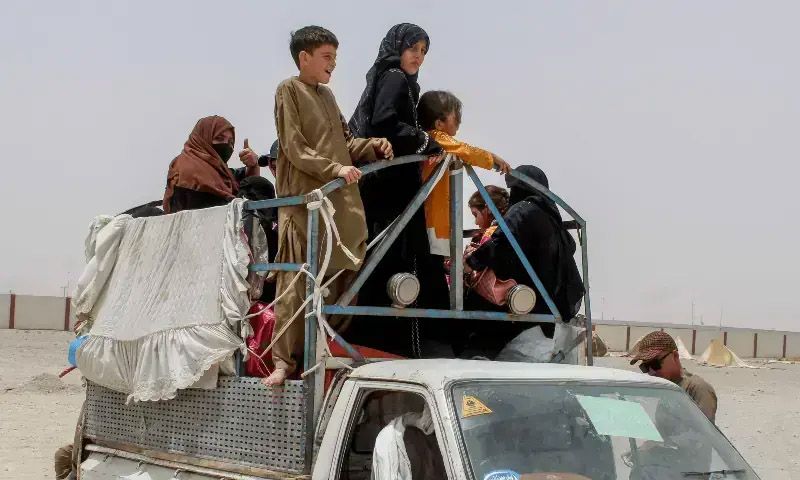
Pakistan has substantially accelerated its deportation of undocumented Afghan nationals, with federal and provincial authorities removing some 2.59 million people from the country since 2023. The scale of this enforcement action underscores Islamabad's determination to manage irregular migration flows at a time when Pakistan hosts one of the world's largest refugee populations. Punjab province, Pakistan's most populous and economically significant region, has emerged as the focal point of this operation, having independently detained and deported 138,342 Afghan nationals through its network of holding centres.
The enforcement push reflects deepening tensions between Pakistan's stated policy on immigration and the practical realities of hosting millions of Afghan migrants. According to a spokesman for Punjab's home department, the federal government has established an explicit position: any individual lacking valid documentation or visa status cannot legally remain in the country and faces automatic removal. This hard-line stance represents a significant shift in how Islamabad approaches the Afghan migration question, moving beyond toleration toward systematic expulsion. The policy operates across multiple fronts, combining targeted raids in commercial zones and residential neighbourhoods with detention infrastructure designed to process large numbers efficiently.
Punjab's foreign national security cell currently maintains 36 functional holding centres scattered throughout the province, where detainees are processed and prepared for deportation. At the time of reporting, these facilities held approximately 53 Afghan nationals awaiting removal. The operational model involves multiple stages: initial arrest during sweeps, detention at a holding centre, documentation completion, and finally escort through the Torkham border crossing into Afghanistan. This structured approach suggests a well-resourced, co-ordinated campaign rather than ad-hoc enforcement, indicating that Islamabad views the Afghan migration issue as requiring sustained governmental attention.
The deportation figures carry significant humanitarian and geopolitical implications for the broader region. Afghanistan remains wracked by economic instability and security challenges following the Taliban's return to power in 2021. Many Afghan nationals in Pakistan had fled their homeland seeking economic opportunity or safety, making forced return a consequential event for individuals and families. The removal of 2.59 million people since 2023 represents one of the largest migration reversals in recent South Asian history, though precise figures on voluntary versus coerced departures remain unclear from official statements.
For Malaysia and other Southeast Asian nations grappling with irregular migration, Pakistan's approach offers both cautionary lessons and points of reference. The enforcement intensity demonstrates how states can mobilise detention infrastructure and border management systems to process large migrant populations rapidly. However, the humanitarian dimensions—living conditions in holding centres, due process protections, and treatment of vulnerable groups including children and trafficking victims—remain underexamined in official accounts. Regional governments considering similar policies must weigh enforcement objectives against international obligations and domestic capacity.
Pakistan's campaign also reflects broader regional anxieties about Afghan stability. The Taliban government's consolidation of control has not generated economic recovery or security improvements that would reduce outward migration incentives. Consequently, Afghan nationals continue attempting unauthorised entry into Pakistan despite enhanced enforcement. The deportation programme thus operates within a cyclical pattern: individuals leave Afghanistan seeking better conditions, Pakistan intercepts and removes them, yet desperation continues driving new migration attempts. Breaking this cycle would require either significant economic development in Afghanistan or substantially harder borders throughout the region.
The Punjab government's invitation to residents to report undocumented Afghans via emergency hotline 15, coupled with assurances about anonymity, suggests an attempt to enlist public participation in enforcement. This approach distributes surveillance and detection responsibilities across society rather than relying solely on state apparatus. However, such mechanisms can incentivise discrimination or exploitation, particularly if community tension rises during intensive enforcement periods. The effectiveness of this reporting system in generating actionable intelligence versus generating false leads remains undocumented.
Pakistan's federal framework means responsibility for immigration enforcement is shared across multiple authorities, yet Punjab's disproportionate role reflects both its population size and strategic importance. The province contains major urban centres where irregular migrants concentrate and where informal employment sectors absorb migrant labour. By focusing resources on Punjab, Islamabad targets the epicentre of Afghan migration while leaving other provinces with less developed holding centre networks. This asymmetry in enforcement capacity creates potential disparities in how the national deportation policy is implemented across different regions.
The broader context involves Pakistan's changing economic circumstances and domestic political pressures. As the Pakistani economy has faced extended IMF adjustment programmes and fiscal constraints, public concern about irregular migrants competing for scarce employment has intensified. Political actors have increasingly framed Afghan migration as a security and economic burden rather than a humanitarian responsibility. The 2.59 million deportations since 2023 thus reflect not only immigration policy but also shifts in Pakistan's domestic political discourse and prioritisation of state resources.
For Afghan nationals remaining in Pakistan through legal channels, such as through UN refugee registration, the intensified enforcement environment creates uncertainty about long-term status. While official policy distinguishes between documented refugees and undocumented migrants, implementation details and potential future policy changes leave many uncertain about their security. This ambiguity may inadvertently incentivise irregular migration, as individuals facing eventual removal might attempt onward travel to third countries rather than awaiting formal deportation. Understanding these behavioural responses is crucial for regional migration management.

