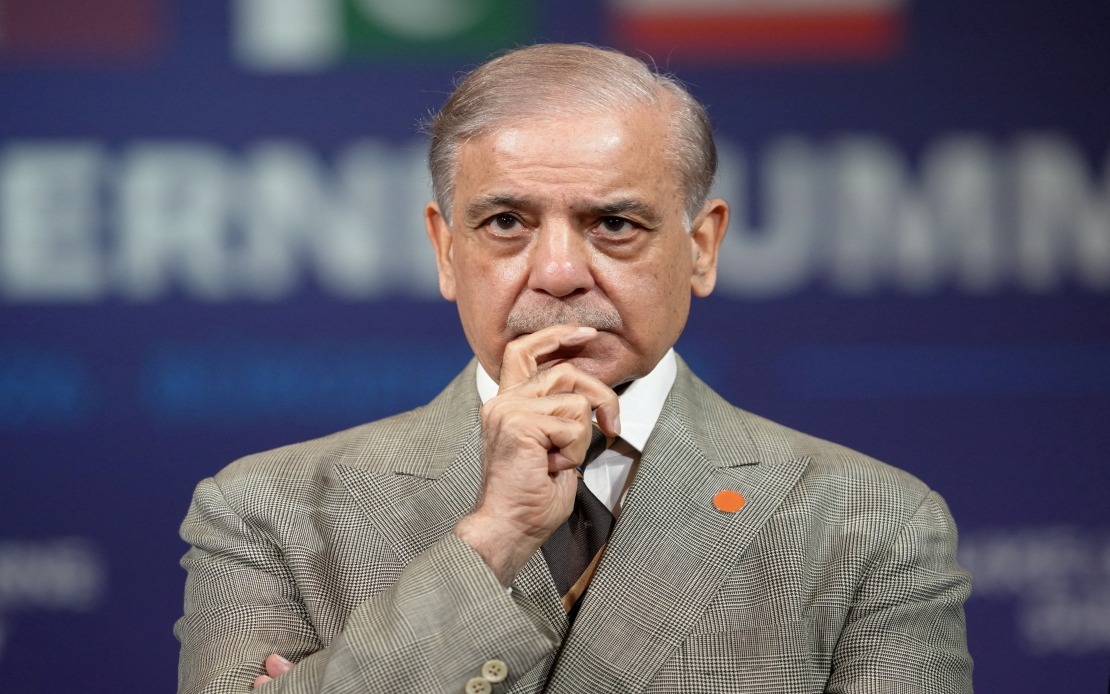
Prime Minister Shehbaz Sharif and Turkish President Recep Tayyip Erdogan have reaffirmed their nations' commitment to expanding bilateral economic cooperation following high-level talks in Istanbul. The meeting signals a strategic pivot by Pakistan to strengthen ties with key regional partners as the country navigates complex geopolitical dynamics and seeks to revive its economy. The discussions centred on practical mechanisms for deepening trade relationships and identifying new sectors for mutual investment, reflecting both governments' recognition that economic interdependence could underpin broader regional stability.
The centerpiece of the bilateral engagement involves an ambitious target to achieve US$5 billion in annual bilateral trade, a figure that would substantially exceed current volumes and position Turkiye as one of Pakistan's major trading partners outside of Asia. This target encompasses a comprehensive framework covering traditional sectors alongside emerging industries that align with global megatrends. The scope of proposed cooperation extends beyond conventional commerce to encompass strategic areas including energy security, transportation networks, extraction of critical minerals essential for technology and defence applications, and digital infrastructure development that would integrate both economies into a more cohesive regional bloc.
Among the most innovative proposals emerging from the talks is the establishment of a Pakistan-Turkiye digital corridor, an infrastructure initiative designed to facilitate seamless data flows across borders while maintaining robust security protocols. This digital bridge would serve multiple objectives: enhancing e-commerce capabilities between the two nations, streamlining digital service delivery for businesses operating in both markets, and positioning Pakistan and Turkiye as technology hubs within South Asia and the Middle East respectively. Such connectivity addresses a significant gap in regional digital infrastructure, where most cross-border data flows are routed through intermediaries rather than direct, secure channels between South Asian and Middle Eastern economies.
Prime Minister Shehbaz articulated this vision during bilateral discussions with Turkcell chief executive Ali Taha Koc, one of the region's most influential telecommunications operators. The focus on digital infrastructure reflects Pakistan's broader strategic objectives of modernising its economy and reducing dependence on commodity-driven trade models. For Turkiye, participation in such initiatives extends its technological influence eastward and creates new revenue streams in the rapidly expanding digital services sector across South Asia, where hundreds of millions of consumers are migrating online.
The business dimension of the visit proved equally substantive, with Pakistan's Deputy Prime Minister and Foreign Minister Ishaq Dar leading a delegation of sectoral ministers to engage directly with Turkish corporate leadership. Participants included officials responsible for maritime affairs, energy, petroleum, privatisation, information technology, and telecommunications portfolios, signalling the all-of-government approach Pakistan is adopting toward this partnership. The inclusion of ministers from resource-dependent sectors underscores recognition that Turkiye possesses expertise in managing energy transitions and industrial modernisation that could benefit Pakistan's development agenda.
Turkish business participation reflected the country's economic muscle and diversification strategy. Koc Holding, one of Asia's largest conglomerates with interests spanning automotive, consumer goods, and energy sectors, sent senior representatives to explore Pakistani market opportunities. Arcelik, a global leader in home appliance manufacturing, indicated interest in expanding production footprint in Pakistan to serve South Asian markets more efficiently. Aygaz, Turkey's leading gas distribution company, explored potential partnerships in Pakistan's energy sector, while Demir Export representatives discussed possibilities in manufacturing and industrial sectors. These companies represent the backbone of Turkish industrial capacity and their engagement suggests serious commercial intent rather than ceremonial diplomacy.
Discussions with these conglomerates concentrated on four principal areas: expanding energy cooperation through potential liquefied natural gas imports, joint ventures in manufacturing sectors where Turkish expertise could enhance Pakistani productivity, joint exploration and extraction of critical minerals increasingly vital for battery technology and defence applications, and industrial investment that could utilise Pakistan's labour advantages while leveraging Turkish management and technology capabilities. Pakistan's Ministry of Foreign Affairs emphasised that these conversations targeted identifying previously untapped opportunities to intensify the economic partnership beyond traditional bilateral trade frameworks.
The energy dimension carries particular significance for Pakistan, which faces persistent electricity shortages and infrastructure constraints. Turkish companies operating renewable energy projects and managing sophisticated distribution systems could provide both technology transfer and capital investment needed to upgrade Pakistan's energy infrastructure. Similarly, Turkish expertise in privatisation and industrial restructuring offers lessons Pakistan's government could apply as it attempts to revitalise state-owned enterprises that currently drain fiscal resources.
From a regional perspective, this partnership carries implications extending beyond bilateral commerce. Pakistan and Turkiye occupy strategically complementary positions: Turkey as a bridge between Europe and Asia, and Pakistan as a gateway to South Asian markets and the Arabian Sea. Enhanced connectivity between them creates potential for integrating regional supply chains and positioning both nations as alternatives to existing East Asian-dominated manufacturing networks. For Malaysian and broader Southeast Asian observers, this partnership demonstrates how countries outside traditional Western blocs are constructing alternative economic architectures that could reshape regional trade patterns and investment flows over the coming decade.

