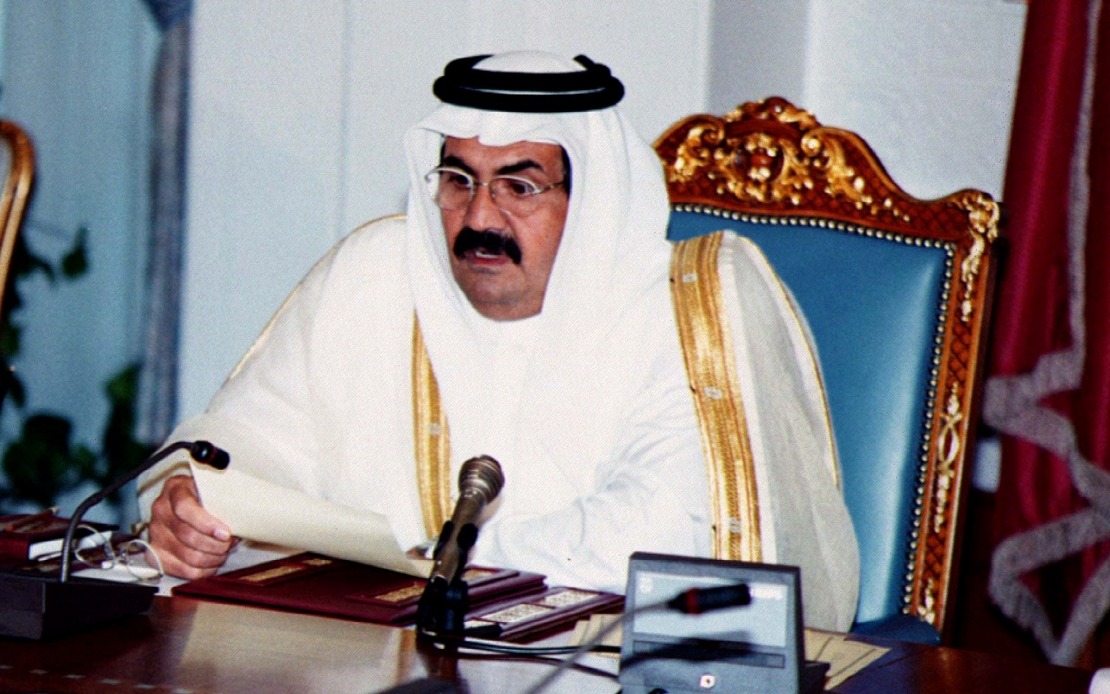
Pakistan's Prime Minister Shehbaz Sharif and Maldives President Mohamed Muizzu arrived in Qatar on Monday to convey their condolences to Qatari Emir Sheikh Tamim Bin Hamad Al Thani and members of the royal family following the death of former Emir Sheikh Hamad Bin Khalifa Al Thani. The visits underscore the regional significance of Sheikh Hamad's 18-year tenure and the enduring diplomatic ties between Gulf monarchies and South Asian nations.
Shehbaz Sharif's delegation to Qatar comprised several senior Pakistani officials, reflecting the importance accorded to the occasion. His entourage included his brother Nawaz Sharif, who served twice as prime minister of Pakistan, as well as Deputy Prime Minister and Foreign Minister Senator Ishaq Dar and Information Minister Attaullah Tarar. The composition of the Pakistani delegation highlighted the cross-party respect commanded by the deceased former ruler and Pakistan's commitment to maintaining strong relations with the Gulf state.
Sheikh Hamad passed away at age 74 on Sunday, bringing to a close a transformative chapter in Qatari history. His stewardship of the nation from 1995 until his abdication in 2013 witnessed Qatar's emergence as a regional and global power, fundamentally reshaping its economic, political, and cultural landscape. The former emir's 18 years in office preceded the current reign of his son, Sheikh Tamim Bin Hamad Al Thani, who now governs the wealthy Gulf state.
The mourning period has extended beyond the Gulf region, with governments across South Asia formally recognising the loss. Pakistan and India both declared Monday a day of national mourning in acknowledgment of Sheikh Hamad's historical significance and his contributions to international relations. Such gestures, while ceremonial, reflect the geopolitical weight carried by Qatar in South Asian affairs, particularly given the kingdom's substantial economic ties and political influence across the subcontinent.
Leading figures from across the Islamic world and beyond have issued statements praising Sheikh Hamad's transformative legacy. Bangladesh Prime Minister Sheikh Hasina's tribute emphasised the late emir's multifaceted achievements, noting that his contributions to regional peace, economic development, educational advancement, and international cooperation would resonate across generations. These accolades paint a portrait of a leader whose influence extended well beyond Qatar's borders and touched the broader Muslim world.
Maldives President Mohamed Muizzu's participation in the condolence mission further underscores the pan-Asian resonance of Sheikh Hamad's passing. The Maldivian leader acknowledged that the former emir's legacy and his work for Qatar, as well as the wider Arab and Islamic world, would endure as a benchmark for leadership and vision. This recognition from an Indian Ocean island nation illustrates how comprehensively Sheikh Hamad had established Qatar as a cornerstone of Gulf politics with ramifications stretching across maritime Asia.
Sheikh Hamad's reign witnessed Qatar's transformation from a modest hydrocarbon exporter into a diversified global player. The period encompassed massive foreign direct investment in international property, the establishment of world-class educational institutions, the hosting of major sporting events, and the development of a sophisticated financial services sector. His decisions regarding global engagement and cultural diplomacy set the trajectory that his successor continues to navigate.
The timing of these high-level visits reflects the delicate political equilibrium in the region. Shehbaz Sharif has worked to strengthen Pakistan's relationships with Gulf states, particularly given the kingdom's role in economic and energy partnerships that matter significantly to Islamabad. The delegation's composition sends a clear message about Pakistan's respect for Qatar and the continuity of bilateral ties under the new leadership of Sheikh Tamim.
For Malaysia and broader Southeast Asia, Sheikh Hamad's passing carries implications for regional diplomatic architecture. Qatar's economic footprint in Asia, particularly its liquefied natural gas exports and investment portfolios, positions the Gulf nation as an important actor in Asian affairs. The transitions of power in such strategically significant states warrant careful observation from ASEAN governments, which frequently coordinate with Qatari leadership on matters of trade, security, and development.
The formal tributes pouring in from multiple continents suggest that Sheikh Hamad achieved something rare among contemporary leaders: he successfully repositioned his nation globally while maintaining respect across diverse geopolitical constituencies. His abdication in 2013, a relatively uncommon occurrence among Gulf monarchs, demonstrated a willingness to cede power that added to his stature as a moderniser willing to depart from traditional templates of governance. This decision may have contributed to the widespread recognition of his achievements across the Muslim world and beyond.
The current Emir Sheikh Tamim inherits not only an economically prosperous nation but also his father's established relationships across major world capitals. The condolence visits occurring this week represent both an acknowledgment of the past and a reaffirmation of commitment to ongoing diplomatic partnerships. For South Asian nations including Pakistan and the Maldives, maintaining strong Qatari ties remains strategically important given the kingdom's economic significance and its influential voice within the Gulf Cooperation Council.
As Qatar enters a new chapter under Sheikh Tamim's continued leadership, the international responses to Sheikh Hamad's passing provide context for understanding the regional power dynamics that will shape Gulf-Asian relations in coming years. The visits by Pakistani and Maldivian delegations form part of a broader pattern of global recognition that will likely continue as other world leaders and dignitaries pay their respects to the Qatari royal family.

