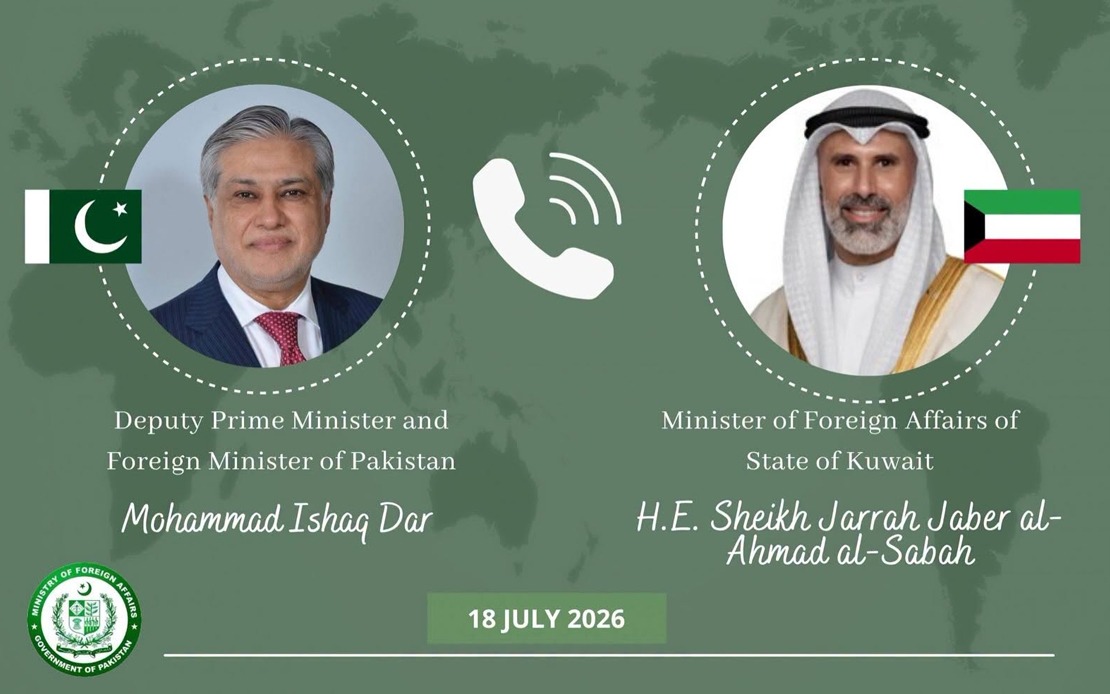
Diplomatic alarm bells are ringing across the Persian Gulf as Pakistan and Kuwait jointly expressed grave concerns about the deteriorating security situation between Iran and the United States, with officials warning that the renewed hostilities threaten to destabilize the entire West Asian region. The two nations coordinated their positions through a telephone conversation between Pakistan's Deputy Prime Minister and Foreign Minister Ishaq Dar and Kuwait's Foreign Minister Sheikh Jarrah Jaber Al Ahmad Al Sabah, signaling unified regional anxiety over the escalating military confrontation.
Kuwait has emerged as a direct casualty of the intensifying conflict, reporting that another critical infrastructure facility—specifically a power and water desalination plant—was struck in an Iranian attack on Saturday. This represents the second consecutive day of Iranian military action targeting Kuwaiti territory, raising immediate concerns about the vulnerability of the Gulf state's essential services and civilian population. The repeated targeting of desalination plants is particularly concerning given Kuwait's dependence on such facilities for freshwater supplies in an arid climate where water security is paramount to national stability.
At the heart of regional diplomatic efforts lies the Islamabad Memorandum of Understanding, a ceasefire agreement that Iran and the United States signed on June 17. This accord was designed to prevent precisely the kind of escalating military exchanges now occurring, making its apparent collapse a significant setback for international conflict resolution mechanisms. Sheikh Jarrah emphasized Kuwait's expectation that both signatories would demonstrate restraint and fully implement their obligations under the agreement, indicating that the small Gulf state views the memorandum as essential to preventing a wider conflagration.
Pakistan's position as a major regional player carries particular weight in this diplomatic calculus. As a nuclear-armed nation with significant economic and strategic interests throughout West Asia, Pakistan has consistently advocated for de-escalation and peaceful resolution of regional disputes. Ishaq Dar's intervention underscores Islamabad's concern that further deterioration could undermine stability across the broader Islamic world and potentially draw additional nations into the conflict through various alliance networks and sectarian considerations.
The scope of military operations has expanded dramatically beyond bilateral exchanges. The United States Central Command has reportedly conducted extensive strikes against Iranian infrastructure targets, while Iran has responded with threats of retaliatory attacks against American-allied states throughout the region. This tit-for-tat dynamic represents precisely the escalatory spiral that regional mediators fear could spiral beyond control, particularly given the interconnected security architectures and alliance commitments binding Gulf Cooperation Council members to Western powers.
Iranian actions have taken on increasingly disruptive dimensions with reports that the country has closed the Strait of Hormuz to commercial shipping—one of the world's most critical maritime chokepoints through which approximately one-third of global seaborne traded oil passes. Simultaneously, the United States military has initiated a naval blockade against Iran, creating a reciprocal closure of vital waterways that threatens global energy markets and international commerce. For Malaysia and other Southeast Asian nations dependent on stable Middle Eastern energy supplies, such disruptions pose direct economic consequences through potential fuel price inflation and supply chain disruptions.
The humanitarian implications of this conflict trajectory deserve serious consideration. Beyond military installations and infrastructure facilities, civilian populations face escalating risks from stray ordnance and unintended consequences of military operations. The closure of shipping lanes threatens food security across multiple nations, including those in Southeast Asia that import grain and other foodstuffs transiting through the Persian Gulf. Regional stability has global dimensions that extend far beyond the immediate belligerents.
For Malaysia specifically, the deterioration in West Asian security carries multilayered implications. As a Muslim-majority nation with significant economic interests in Gulf Cooperation Council countries and as a trading nation dependent on freedom of navigation through key maritime passages, Malaysia has compelling reasons to support diplomatic efforts aimed at de-escalation. Malaysian companies and workers operating throughout the region face potential safety concerns, and any further escalation could disrupt bilateral economic relationships that contribute meaningfully to Malaysian prosperity.
The failure or near-collapse of the Islamabad Memorandum of Understanding raises uncomfortable questions about the viability of international agreements in an era of deepening geopolitical competition. If major powers cannot adhere to signed commitments within weeks of their inception, the credibility of future diplomatic arrangements comes into question. This sets a troubling precedent for conflict resolution mechanisms that regional and international actors might otherwise pursue to manage tensions.
Regional diplomatic infrastructure, while currently showing signs of strain, remains the most promising avenue for preventing further deterioration. Pakistan and Kuwait's coordinated messaging demonstrates that even amid acute tensions, channels for communication among concerned parties remain functional. The challenge ahead involves transforming rhetorical calls for restraint into concrete behavioral changes from both Iran and the United States, requiring either significant shifts in calculation or the emergence of sufficient third-party pressure to alter the current trajectory toward escalation.
Looking forward, the international community's response to these developments will likely shape whether this confrontation remains contained or metastasizes into a broader regional conflict. Countries like Malaysia that have interests in regional stability without direct military stakes in the Iran-US dispute occupy a valuable diplomatic position, potentially serving as honest brokers in facilitating dialogue and encouraging all parties to recognize the mutual benefits of de-escalation over the mutual costs of continuing military exchanges.

