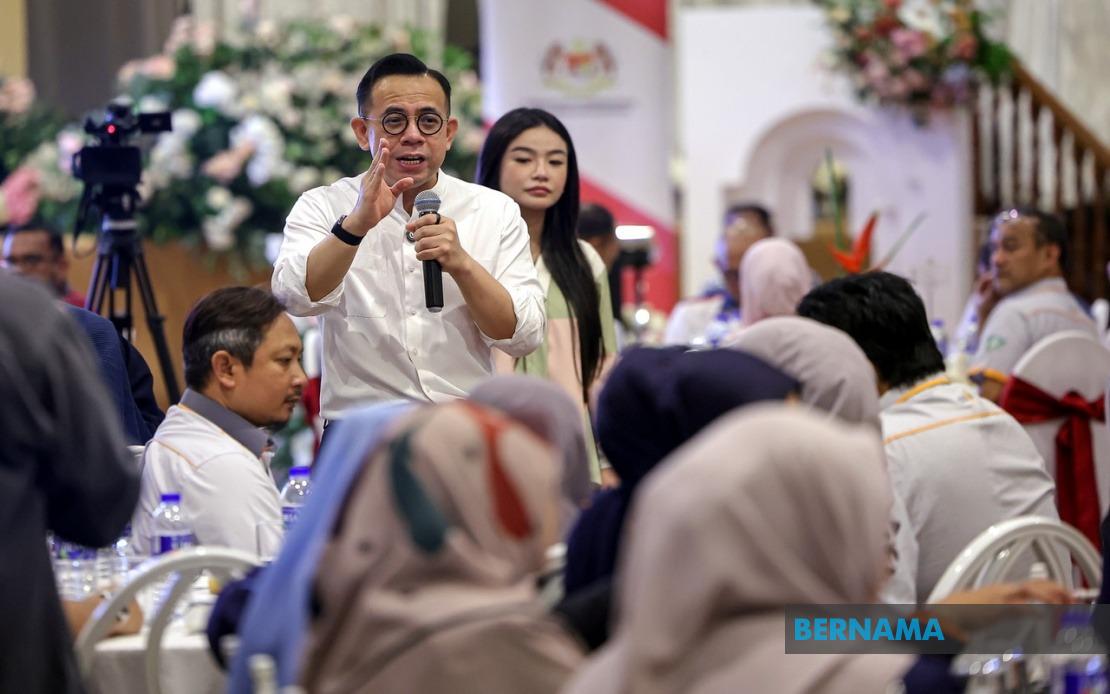
Pakatan Harapan is positioning its manifesto for the 16th Negeri Sembilan state election not as aspirational rhetoric but as a continuation of documented successes achieved during its tenure governing the state. Speaking in Seremban, Penang DAP chairman Steven Sim articulated this distinction as the coalition campaigns ahead of polling on August 1, emphasizing that the party's campaign platform reflects tangible results rather than speculative promises to voters.
The coalition's election manifesto articulates ten key policy commitments, but its central argument rests on demonstrating the difference between making pledges and delivering on them. Sim stressed that while any political organization can produce campaign documents, the credibility of PH's offer derives from the implementation experience accumulated under Menteri Besar Datuk Seri Aminuddin Harun's administration. This framing represents an implicit contrast with rival coalitions, positioning institutional memory and demonstrated competence as competitive advantages in the electoral contest.
Sim's remarks came during an assembly at the Negeri Sembilan Ministry of Entrepreneur Development and Cooperatives (KUSKOP), where he underscored the ministry's intention to maintain collaborative relationships with the state government regardless of the election outcome. However, his emphasis on continuity clearly signals PH's confidence in retaining state power and its vision for deepening existing development initiatives. This multi-level governance strategy—where federal ministries align with state administrations—has become increasingly important in Malaysia's competitive political environment, where state and federal governments controlled by the same coalition can execute integrated policy agendas more effectively.
A notable illustration of this strategic alignment appears in one of the manifesto's flagship commitments: the establishment of a youth entrepreneurs fund (TUB) designed to nurture emerging business owners in Negeri Sembilan. This initiative falls directly within KUSKOP's institutional mandate, suggesting that federal resources and expertise would be mobilized to support state-level implementation. For young Malaysians in Negeri Sembilan seeking to establish enterprises, such targeted funding mechanisms represent substantive policy differentiation between competing political offerings.
Sim's framing of tangible versus symbolic benefits carries particular resonance for Malaysian voters who have experienced multiple election cycles and may evaluate promises with increasing skepticism. By emphasizing that the state government's achievements are "truly felt by the people of Negeri Sembilan" rather than merely expressed in statistical abstractions, the DAP leader attempted to redirect electoral discourse toward lived experience. This rhetorical strategy acknowledges growing voter sophistication and demands for measurable returns on political support.
The state's economic performance has emerged as a central theme in PH's campaign narrative. The coalition argues that its stewardship has maintained Negeri Sembilan's relatively strong economic fundamentals, and that retaining the current administration would preserve momentum in development and entrepreneurship sectors. For a state that has historically positioned itself as a commercial and industrial hub within the Klang Valley region, sustained economic competitiveness remains electorally salient. The manifesto therefore seeks to position PH not merely as a caretaker administration but as architects of continued prosperity.
The timing of Sim's comments reflects the compressed campaign calendar mandated by the Election Commission, which scheduled early voting for July 28 and general polling for August 1. Within this narrow window, political parties must crystallize voter preferences around core messaging. For PH, the strategy centers on leveraging administrative incumbency and marshaling evidence of accomplishment, a gambit that requires disciplined communication across party hierarchies and all levels of government.
Negeri Sembilan's electoral dynamics have evolved considerably over recent years, with shifting demographic patterns and generational transitions among voters. The emphasis on entrepreneurship funding and youth empowerment suggests PH is attempting to secure support among younger voters who may prioritize economic opportunity and business support over traditional patronage networks. This represents a calculated pivot toward policy-driven rather than purely personality-driven campaign messaging, though Malaysia's political culture continues to emphasize individual leaders alongside institutional platforms.
The federal government's commitment to supporting state economic development if PH retains power carries implications beyond Negeri Sembilan's borders. Voters across other PH-governed states may interpret such assurances as indicators of resource flows and political priority under a unified coalition government. Conversely, states where opposition coalitions govern may view this as evidence of federal resource favoritism toward aligned administrations, fueling intergovernmental tensions that have periodically characterized Malaysian federalism.
Critically, Sim's remarks implicitly challenge opposition narratives suggesting that PH represents continuity with a discredited past or that alternatives offer genuinely different governance models. By anchoring the manifesto to demonstrable achievements, PH attempts to occupy the middle ground of proven competence rather than either radical transformation or restoration of previous arrangements. Whether Negeri Sembilan voters find this positioning persuasive will depend partly on their assessment of the state's current conditions and their expectations for alternative administrations.
The manifesto's ten commitments remain partially opaque in the available reporting, with only the youth entrepreneurs fund receiving substantive description. As the campaign progresses toward August 1, fuller details regarding other pledges will likely emerge, potentially revealing where PH believes it holds comparative advantage against rival coalitions. The strategy of grounding campaign promises in administrative track record requires consistent reinforcement throughout the campaign period, demanding that party speakers and government officials regularly demonstrate the connections between past performance and future policy intentions.

