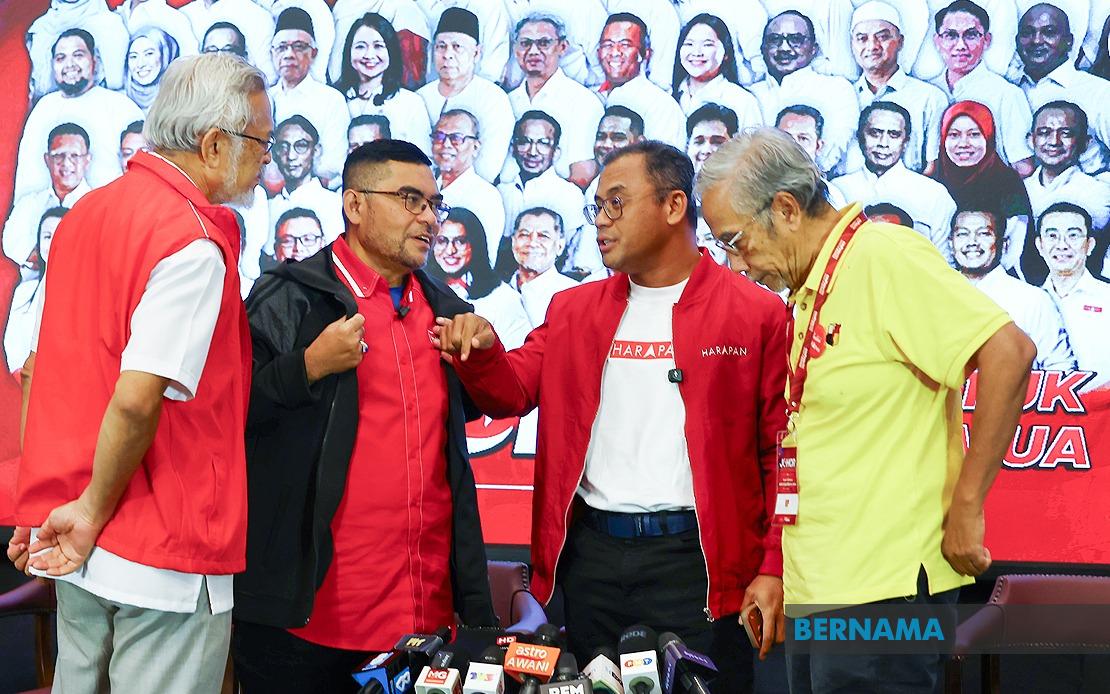
Pakatan Harapan intends to conduct a thorough examination of the Johor state election results and use those findings to recalibrate its electoral machinery before the Negeri Sembilan state campaign gets under way. Datuk Seri Amirudin Shari, a senior figure in the PH Presidential Council and Selangor Menteri Besar, outlined the coalition's plans during a press briefing at the PH Operations Centre in Johor Bahru, signalling that the loss in Johor has prompted serious introspection within the opposition bloc.
The comprehensive assessment will examine multiple dimensions of the election outcome, particularly the movements in voter behaviour and the trajectory of backing among younger Malaysians. Amirudin, who doubles as PKR's co-director for election affairs, cautioned against rushing to firm judgments while several state seats remained unconfirmed on the night of the count. He indicated that a week would be required to gather verified data across all polling stations before a complete picture could emerge. This methodical approach reflects the coalition's recognition that understanding the granular details of its defeat in Johor could prove instructive for its next electoral test.
Barisan Nasional emerged with a decisive majority in the Johor contest, securing 29 of the 56 state seats and achieving a winning margin exceeding 50 per cent of seats contested, according to Election Commission chairman Datuk Seri Ramlan Harun. The result represented a significant rebuff for Pakatan Harapan, which had held the state administration before the election. While the immediate focus turned to salvaging what influence remained, PH officials began looking ahead to Negeri Sembilan, a state where the coalition still holds the reins of power.
For the Negeri Sembilan contest, Amirudin expressed confidence that Pakatan Harapan would retain control of the state government under the stewardship of Menteri Besar Datuk Seri Aminuddin Harun. This optimism rests partly on what PH characterises as a solid administrative record in the state, distinguishing Negeri Sembilan from Johor where the coalition's performance proved insufficient to secure reelection. The explicit differentiation between the two states suggests that PH believes its governance record there remains intact and defensible before voters.
Candidate selection discussions were scheduled for July 12 to refine the coalition's strategic positioning and ensure that nominated candidates possessed sufficient local standing to resonate with constituencies. The full roster of PH candidates was set for announcement on July 14, allowing a narrow window for final adjustments to the slate. This compressed timeline indicates urgency within the coalition to consolidate its approach and move swiftly toward active campaigning, a response to the shock of the Johor defeat.
The Johor election outcome carries implications that extend beyond state politics into the broader architecture of Malaysian governance. Amirudin provided reassurance that fluctuations in state-level electoral fortunes would not destabilise the Federal Government, underscoring that all coalition partners, including those from Barisan Nasional, had committed to maintaining the federal administration intact until the end of its designated term or until the Prime Minister dissolves Parliament. This explicit acknowledgment of cross-coalition consensus at the federal level highlights the careful balancing act required to preserve the unity government framework even as component parties contest elections at the state level.
The Prime Minister, Datuk Seri Anwar Ibrahim, therefore faces a federal coalition that, while tested by state-level setbacks, remains committed to institutional continuity. Amirudin's statement that Barisan Nasional had reaffirmed this commitment signals that despite ideological differences and electoral competition, the pragmatic necessities of governing at the national level command priority. This separation of federal and state arenas, while operationally effective, nonetheless creates tensions within Malaysian politics as voters experience competing governance narratives at different jurisdictional levels.
For Pakatan Harapan, the Johor reversal presents both a tactical challenge and a strategic opportunity. The coalition's willingness to conduct a granular analysis of voting patterns and youth engagement suggests receptivity to the notion that its messaging or ground operations require adjustment. Whether this internal review translates into meaningful changes in candidate selection, policy communication, or campaign methodology will become apparent as the Negeri Sembilan contest unfolds. The state polls will offer early evidence of whether the coalition's self-correction efforts carry genuine weight or remain largely rhetorical.
Regionally, the Malaysian political dynamics reflected in these state contests merit attention from observers across Southeast Asia monitoring how multi-party coalitions manage internal disagreements while competing electorally. The Malaysia model demonstrates both the flexibility and fragility inherent in consensus-based governance structures, where parties collaborate on federal stability whilst simultaneously pursuing parochial state-level advantages. This balancing act distinguishes Malaysia's political system and generates distinct pressures absent in more centralised political architectures.
The path forward for Pakatan Harapan hinges significantly on whether its Negeri Sembilan campaign can demonstrate recovery from the Johor loss or whether it signals an erosion of opposition fortunes in peninsular states. The coalition's explicit confidence in retaining Negeri Sembilan, grounded in administrative performance metrics, will face voter scrutiny as campaigns intensify. The coming weeks will clarify whether the opposition bloc has genuinely absorbed lessons from Johor or whether institutional inertia and competing party interests within the coalition continue to hamper cohesive electoral strategy.

