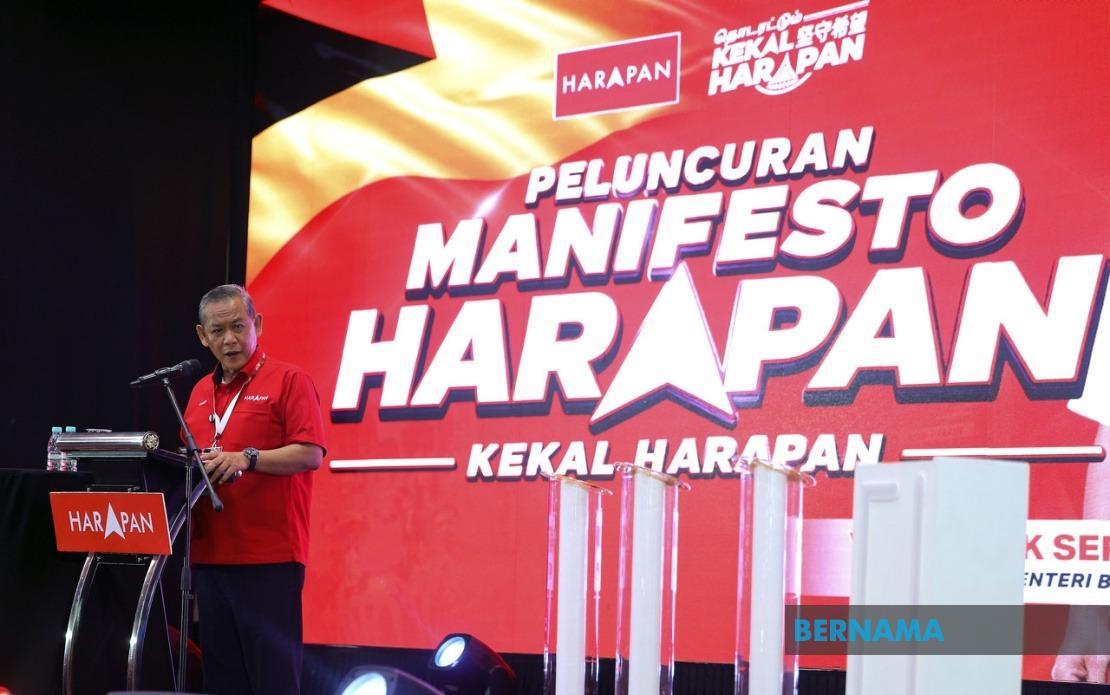
Pakatan Harapan has officially rolled out its campaign platform for the forthcoming 16th Negeri Sembilan state election, presenting voters with a comprehensive 10-point manifesto framed around the theme 'Negeri Sembilan Kekal Harapan' (Negeri Sembilan Stays With Harapan). The unveiling took place in Seremban, with Menteri Besar Datuk Seri Aminuddin Harun, who also chairs the coalition's state chapter, leading the presentation of the document that seeks to consolidate PH's electoral support in the state.
At the core of the manifesto lies a commitment to establishing governance characterised by stability, cleanliness, and responsiveness to citizen needs. This foundational pledge reflects a broader political positioning that emphasises institutional integrity and good governance—key themes that have resonated across Malaysian electoral campaigns in recent years, particularly following the dramatic political upheavals that preceded PH's ascent to federal power in 2018.
The coalition has highlighted its intention to reinvigorate the Skim Sejahtera Rakyat, a social safety net programme designed to provide direct welfare support to vulnerable populations. This commitment suggests an acknowledgment of persistent economic pressures facing ordinary Malaysians and a strategic pivot toward social welfarism as a differentiating factor from competing political narratives. For Negeri Sembilan voters, particularly those in lower-income brackets, such assurances carry weight given the state's proximity to the Klang Valley and its dependence on both manufacturing and service-sector employment.
On the economic front, PH pledges to foster a competitive business environment whilst simultaneously creating 30,000 high-income employment opportunities. This dual emphasis on competitiveness and job quality reflects an attempt to address both employer concerns and worker aspirations—a balancing act that has proven challenging for policymakers across Southeast Asia. The ambitious employment target, if realised, would represent a significant injection into Negeri Sembilan's labour market and would necessitate strategic investment in skills development and industrial diversification.
Educational access and quality feature prominently in the manifesto, with the coalition committing to ensure all citizens benefit from improved schooling. This pledge carries particular significance in a state where educational outcomes vary considerably across urban and rural districts. By prioritising universal access to quality education, PH appears to be signalling awareness of the nexus between educational investment and long-term economic productivity—a concern that extends beyond Negeri Sembilan to the broader Southeast Asian development agenda.
The housing commitment—targeting construction of 20,000 affordable units alongside resolution of lingering land disputes—addresses a chronic pain point for Malaysian citizens across income levels. Property accessibility has become increasingly fraught in recent decades, and the manifesto's explicit focus on affordability rather than simply housing supply demonstrates recognition that construction volume alone has failed to solve the housing crisis. The complementary pledge to resolve land issues touches upon a deeper structural challenge that affects not only urban residents but rural communities and indigenous populations in the state.
PH has also committed to strengthening support systems for youth, women, and families, categories that polling and social research consistently identify as economically vulnerable and politically fluid. This three-pronged focus suggests a sophisticated understanding of demographic shifts within Negeri Sembilan and the political salience of addressing intersecting inequalities. In Malaysian context, such commitments often carry implications for childcare provision, skills training, and domestic economic participation—areas where implementation frequently lags behind rhetorical commitment.
The manifesto incorporates a tourism and cultural heritage development strand, recognising Negeri Sembilan's potential as a destination beyond the economic gravitational pull of nearby Kuala Lumpur. Sectors focused on cultural preservation and heritage tourism have gained prominence across Southeast Asia as governments seek economic diversification and sustainable development models. For a state with significant historical sites and cultural institutions, such investment could generate employment and strengthen community identity whilst potentially creating tension between commercialisation and cultural preservation.
Felda Development Plan implementation represents another major commitment, carrying implications for the state's agrarian communities and rural governance structures. The Federal Land Development Authority scheme has long been central to Malaysian rural development policy, though its track record remains contested. Any reinvigorated commitment to Felda suggests PH's acknowledgment of agricultural constituents' continued political importance despite urbanisation trends.
Modernisation of the agricultural sector alongside food security enhancement addresses a structural vulnerability highlighted by global supply chain disruptions and climate uncertainties. Southeast Asia's agricultural productivity faces mounting pressure from climatic variability and resource depletion, making food security pledges increasingly central to electoral platforms across the region. Negeri Sembilan, despite its urbanisation, retains significant agricultural capacity, particularly in less accessible districts.
The infrastructure and healthcare components of the manifesto reflect basic service delivery expectations that have become baseline requirements for electoral competitiveness. Quality healthcare access, particularly in rural Negeri Sembilan areas, remains uneven, whilst infrastructure development—from transportation networks to digital connectivity—remains contested between competing state and federal priorities. These commitments essentially signal PH's determination to address service deficits that previous administrations may not have adequately tackled.
Interfaith harmony features as a distinct manifesto commitment, reflecting Malaysia's religious complexity and the political implications of communal tensions. In plural societies, such commitments serve both instrumental and substantive functions—they represent genuine efforts toward cohesion whilst also signalling political inclusivity and cosmopolitanism to diverse voter constituencies. For Negeri Sembilan, a state with significant Indian, Chinese, and indigenous populations alongside the Muslim majority, such messaging carries strategic weight.
The manifesto's comprehensiveness suggests PH's ambition to project itself as a complete alternative government rather than a single-issue challenger. By addressing economic opportunity, social welfare, service delivery, and social harmony simultaneously, the coalition positions itself within a broad governing framework. Whether implementation capacity matches these commitments remains an open question that voters will assess against PH's track record in Negeri Sembilan and at federal level since 2018.

