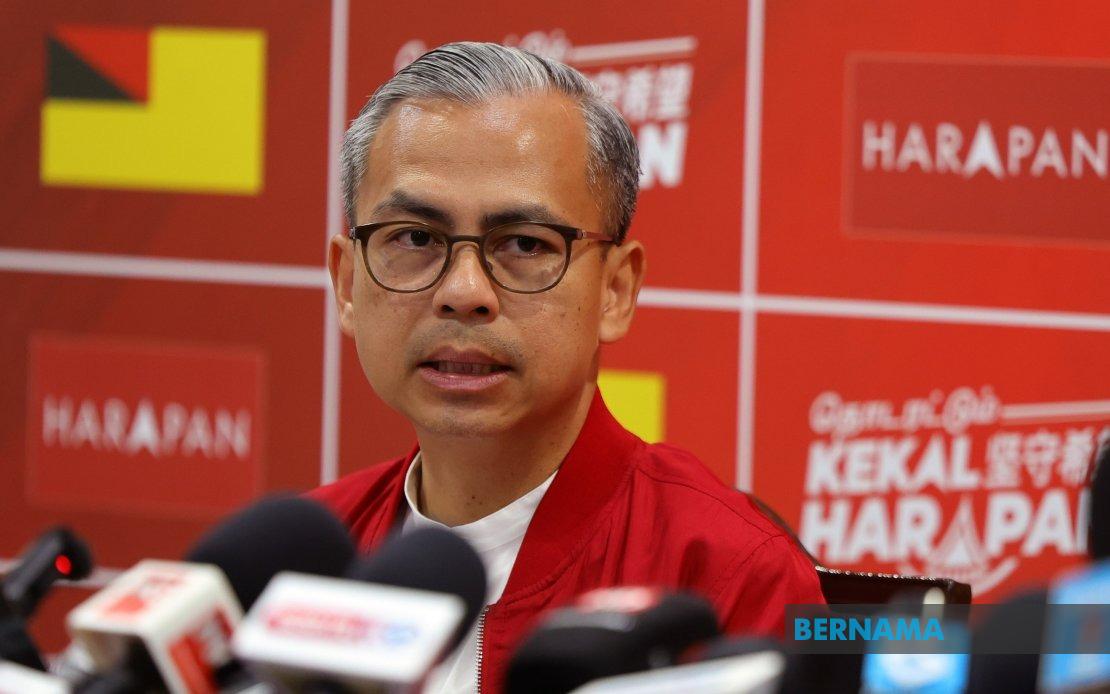
Pakatan Harapan has firmly rejected the proposition that Malaysia's Malay-Muslim community can be represented by only one political bloc, characterising such claims as fundamentally at odds with the nation's multicultural and pluralistic values. The coalition's rebuttal came during the Negeri Sembilan state election campaign, reflecting broader tensions surrounding representation and identity politics in Malaysian electoral contests. The statement signals PH's determination to counter narratives that portray communal politics along narrower ethnic and religious lines, particularly as the coalition seeks to retain support in a competitive state race scheduled for early August.
Datak Seri Fahmi Fadzil, who holds multiple prominent positions as PH communications director, PKR information chief, and Communications Minister, articulated the coalition's position with pointed examples. By asking rhetorically whether figures such as Khalid Abdul Samad and himself—both recognised Malay-Muslim leaders within PH—somehow lack credentials to represent their own community, Fahmi highlighted the intellectual inconsistency he sees in exclusionary claims about representation. This direct approach underscores a strategic effort to reframe the terms of political discourse, moving away from zero-sum ethnic calculations toward what PH frames as inclusive values-based governance.
The timing of these comments carries significance beyond Negeri Sembilan's state contest. Malaysia's political landscape has increasingly seen competitors framing themselves as uniquely positioned to champion particular communal interests, a dynamic that resonates across the country's diverse regions. By challenging this exclusivity claim now, during an active campaign period, PH seeks to establish a counter-narrative before voters cast their ballots. The presence of Khalid, the Amanah communications director, alongside Fahmi and DAP's Cha Kee Chin provided visual representation of PH's multicommunal character—a staging choice that reinforced the verbal message.
Fahmi emphasised that exclusive political positioning creates unhealthy divisions rather than reflecting Malaysia's actual diversity. This framing carries implications for how Malaysian voters understand their choices. Rather than accepting a binary where communal loyalty requires supporting a single bloc, PH invites voters to consider whether genuine community interests are better served through a coalition that includes diverse membership yet maintains shared programmatic commitments. The coalition's argument rests on the premise that inclusive representation need not mean diluted advocacy, but rather advocacy anchored in principles transcending parochial interests.
The coalition pointed to concrete achievements in Negeri Sembilan as evidence that Malay-Muslim interests have not been neglected under PH administration. Menteri Besar Datuk Seri Aminuddin Harun's government has overseen an expansion in mosque construction and a near two-and-a-half fold increase in zakat collections compared with the previous administration. These metrics matter symbolically and materially—they demonstrate tangible religious institutional growth and strengthened Islamic charitable infrastructure. For voters concerned about whether their communal priorities receive adequate attention under PH governance, such figures offer concrete reassurance that religious and community interests remain central to policy implementation.
Yet the figures also reflect deeper questions about how different political blocs prioritise and measure governance success. While PH highlights mosque construction and zakat collections as validation of Malay-Muslim inclusion, competitors may counter that such metrics represent minimum expectations rather than exceptional achievement. The debate thus hinges partly on whether voters assess communal representation through absolute indicators of investment and institutional development, or through comparative measures of priority and emphasis. This contested terrain—how to evaluate whether a community's interests are truly protected within a multiethnic coalition—remains a recurring challenge in Malaysian politics.
Fahmi's invocation of unity based on shared values and the common good rather than ethnic chauvinism articulates an alternative political philosophy. Rather than organising constituencies along rigid communal boundaries, this approach suggests Malaysians of different backgrounds can unite around substantive policy objectives and ethical principles. The framing positions PH as the modernising force promoting merit-based and values-driven politics, while implicitly characterising competitors as peddling outdated identity-focused appeals. Whether voters find this philosophical distinction compelling, particularly when they perceive their own communities' interests as distinct, represents a persistent challenge for the coalition.
The vision PH articulates—where Malays unite with one another, Chinese similarly consolidate their strength, Indians do likewise, and all these groups then stand together—contains interesting tensions. It suggests PH values intra-community solidarity alongside inter-community cooperation, a balance that itself can prove complicated in practice. The coalition essentially proposes that communities need not abandon their particular identities and interests to participate in a broader Malaysian political project, but that broader project remains essential. This sophisticated positioning attempts to thread the needle between acknowledging distinct communal concerns and transcending them through shared national purpose.
For Southeast Asia's broader political context, Malaysia's ongoing struggle to integrate inclusive governance frameworks with legitimate communal representation carries relevance. Other regional nations similarly navigate tensions between multicultural ideals and political forces organised along ethnic or religious lines. How successfully PH manages this challenge in Negeri Sembilan and beyond may offer lessons—both positive and cautionary—for neighbouring democracies grappling with similar dynamics. The state election results will provide one measure of whether voters find PH's alternative framing sufficiently persuasive to reject exclusionary political narratives.
The campaign context matters considerably for interpreting PH's intervention. In state elections, particularly in traditionally contested regions like Negeri Sembilan, coalition parties invest significantly in messaging designed to assuage communal concerns while maintaining broader alliance unity. PH's communications team has calculated that directly challenging exclusionary framing serves the coalition's interests better than allowing such narratives to circulate unchallenged. This aggressive stance reflects confidence in both the party's Malay-Muslim leadership credentials and voters' willingness to reject rigid identity politics.
Looking forward, whether this messaging resonates depends on multiple factors extending beyond political rhetoric. Economic conditions affecting Malay-Muslim communities, performance of Islamic institutions under PH governance, and broader national developments regarding religious affairs and communal representation will all influence voter assessment. Additionally, how effectively competitors counter PH's framing will shape the ultimate political outcome. The coalition's early-August polling date provides a relatively near-term test of whether this philosophical position finds sufficient electoral validation to vindicate the strategy.
The broader implication of PH's position is that Malaysian politics need not remain trapped in zero-sum communal competition. By presenting leaders like Fahmi and Khalid as representatives equally legitimate within the Malay-Muslim community, the coalition advances the proposition that diversity within each communal group offers opportunities for more nuanced, internally debated politics rather than monolithic bloc voting. Whether this vision gains traction during the Negeri Sembilan campaign and beyond remains an open question, but the coalition's willingness to challenge exclusionary framing directly suggests its leadership believes the argument worth making even in the most contested electoral contexts.

